Amid Lockdown, music lovers can continue to learn classical music with Music learning app Riyaz

Though much of the life’s activities has been put on hold by the current lockdown, RIYAZ app is encouraging music lovers to use this time to learn classical music and hone singing skills.
Riyaz, available both on Google Playstore as well as Apple’s App Store, enables people to learn classical and popular music in its entirety anywhere, anytime. Riyaz provides instantaneous feedback for learners to practice singing to perfection and has eliminated challenges of stepping outside the home to seek feedback.
Riyaz comes packed with well-curated courses and hundreds of practice lessons that serve both beginners and advanced learners in Hindustani and Carnatic classical music traditions, along. The app is also packed with necessary tools for singing such as Smart Tanpura, Breath monitor and Vocal monitor. Social features such as song feed and leaderboards make learning to sing fun and engaging.
“At Riyaz, we believe that quality music education must be accessible and affordable to every aspirant out there in the world.” Gopala says. He founded Riyaz with Prof. Xavier Serra who heads Music Technology Group in Barcelona, Spain. “Many of us have been bathroom singers and shied away from formal learning owing to challenges associated in learning music. Riyaz has eliminated those. A million plus learners on our android offering is a resounding testament to this!” says Gopala, a PhD holder in Music Technology.
The content on every music style on Riyaz is deep and allows music lovers to stay engaged on learning for a long time without any interference on feedback, correction and guidance as the app’s modules are laid out in a step-by-step instructional mode that makes it easy for users to learn music.
“Music learners have expressed immense interest to continue learning classical music on Riyaz during this lockdown. “We believe that music connects us all, and we are proud to share this philosophy with students and anyone who wants to learn singing and provide support to them at this difficult time of lockdown.” says Anil Kumar Alaham, Co-founder and head of marketing and partnerships at Riyaz.
With beautifully visualised screens and a highly resourceful feedback system on Riyaz, becoming a professional singer or even honing the skill as a hobby singer, is a boon for people especially during the lockdown.
Let the Truth be known. If you read VB and like VB, please be a VB Supporter and Help us deliver the Truth to one and all.
Bengaluru: Four South African cheetahs arrive at Bannerghatta Biological Park
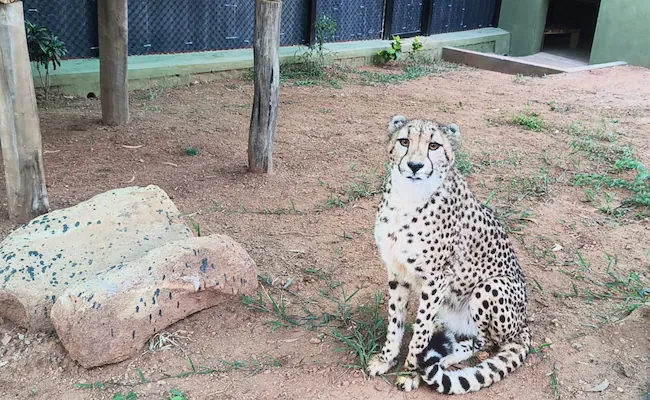
Bengaluru: Four cheetahs, including two females, have arrived at Bannerghatta Biological Park (BBP) from South Africa, NDTV reported.
The animals, brought from Induna Primate and Parrot Park in South Africa, landed at Kempegowda International Airport at around 1:15 am on Saturday. The transfer was carried out in accordance with the Wild Life (Protection) Act, BBP said in a statement.
Forest, Ecology and Environment Minister Eshwar Khandre received the cheetahs at the airport cargo terminal.
The Minister asked officials and veterinary teams to ensure strict quarantine protocols, a prescribed diet, and close health monitoring for 30 days to help the animals acclimate smoothly.
Highlighting that cheetahs, locally known as “Sivangi,” have disappeared from Karnataka’s forests, the minister stressed the need to raise public awareness through zoological institutions. He also instructed Dr Sunil Panwar, Member Secretary, Zoo Authority of Karnataka (ZAK), to prioritise the safety and well-being of the animals.
The BBP officials said that before transportation, the cheetahs underwent thorough health inspections and quarantine in South Africa as per the guidelines of the Department of Animal Husbandry.
Required No Objection Certificates (NoC) were also obtained from Animal Quarantine Services prior to import.
"Upon arrival at BBP, the animals have been placed in a designated quarantine facility for post-import health checks and observation, after which they will be shifted to their enclosures for public viewing," the BBP said.
This import underscores BBP's commitment to international collaboration in wildlife conservation, scientific management of animals, and strict adherence to regulatory protocols. It further strengthens the park's role in ex-situ conservation and environmental education, official said.