Annamalai questions Naxals surrender policy in Karnataka
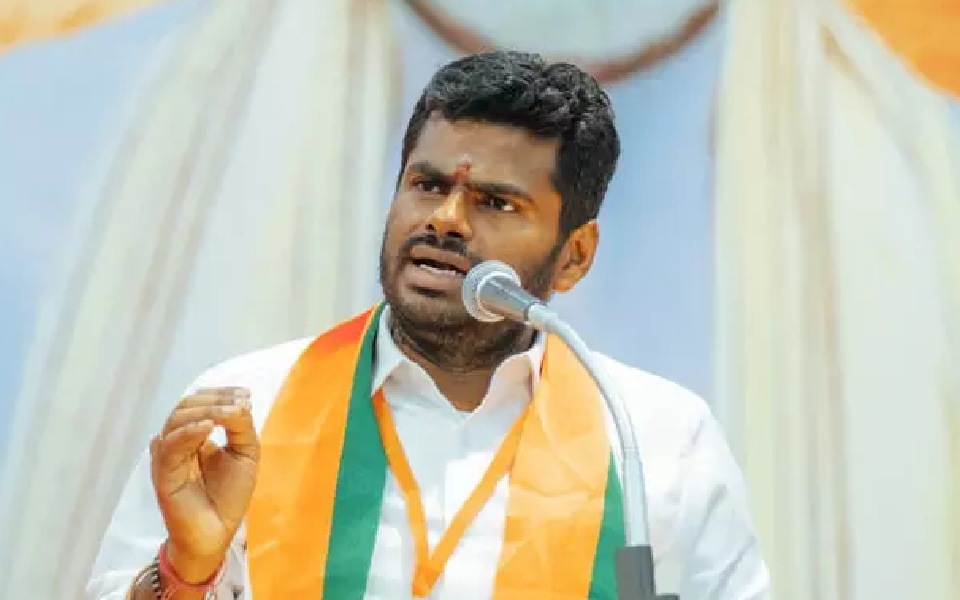
Udupi (Karnataka), Jan 11: Tamil Nadu BJP President K Annamalai has raised concerns over the Naxal surrender and rehabilitation policy in Karnataka, questioning its effectiveness and transparency.
Annamalai, who had served as Superintendent of Police (SP) in Udupi between January 2015 and August 2016 and as SP Chikkamagaluru, considered a hotbed of Naxals in Karnataka, in 2018, had convened a press conference in Udupi on Saturday.
According to him, while the policy aims to reintegrate former Naxals into mainstream society, doubts persist regarding its implementation.
He pointed out that surrender and encounter cases have sparked widespread speculation, with many questioning the circumstances under which these events unfolded.
"The recent Naxals surrenders, under the leadership of the Chief Minister, raise several questions. The process, which involves surrenders in the presence of the Deputy Commissioner and Superintendent of Police, appears to have been made too easy for Naxals," he said.
Annamalai also questioned the credibility of the surrender process, stating that the government's approach could create doubts about the policy's integrity. He cited the case of Vikram Gowda's encounter, which has triggered concerns among locals.
"There are reports that the Chief Minister himself was involved in the surrender process, and weapons were displayed in a remote forested location. The public is finding it difficult to believe this narrative," he added.
The remarks come amid growing debates on the handling of Naxal issues in Karnataka, with political leaders and activists weighing in on the government's approach to surrender.
Annamalai was in Udupi to launch "Samvidhana Badalayisisddu Yaaru?" (Who changed the Constitution?), authored by Vikas Kumar P, at an event organised by the Citizens for Social Justice today.
Taking to 'X' post the event, Annamalai wrote, "This book highlights the numerous amendments made during the Congress regime, which sought to undermine our citizens' fundamental rights, civic liberties, and even the very meaning of the Preamble."
He had also posted on X that he met today and received blessings from the current Paryaya Swami, His Holiness Sri Sri Sri Sugunendra Theerth Swamiji, of Jagadguru Sri Madhwaachaarya Moola Mahaa Samsthaanam, Shri Puthige Matha, Udupi.
Let the Truth be known. If you read VB and like VB, please be a VB Supporter and Help us deliver the Truth to one and all.
ED raids Kolkata Police deputy commissioner, businessman in PMLA probe
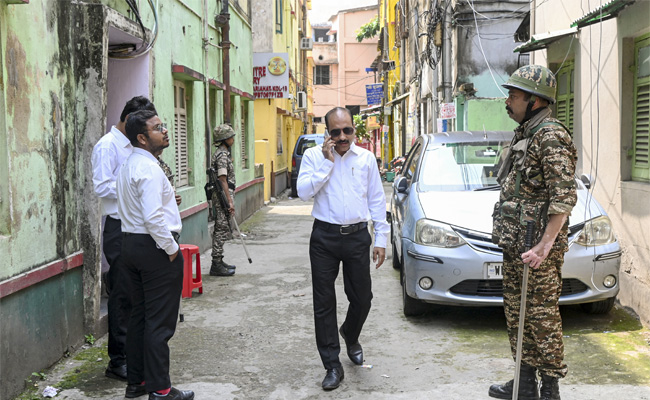
Kolkata (PTI): The Enforcement Directorate on Sunday conducted raids at the premises of Kolkata Police Deputy Commissioner Shantanu Sinha Biswas and a local businessman as part of a money laundering probe against an alleged criminal and his linked syndicate in the poll-bound state, officials said.
Two premises of Biswas, including his residence in Ballygunge area and one location of the businessman named Joy Kamdar, Managing Director of a company named Sun Enterprise, have been raided under the provisions of the Prevention of Money Laundering Act (PMLA).
Kamdar has been taken by the officials to the local ED office for questioning. Biswas, chief coordinator and nodal officer of the West Bengal and Kolkata Police welfare committee, was not present at his premises, they said.
The action is linked to a money laundering case against an alleged local criminal named Biswajit Podder alias Sona Pappu, who is booked in multiple cases on charges of attempted murder and extortion.
The federal probe agency had conducted the first round of searches in this case on April 1.
The ED had then seized cash of Rs 1.47 crore apart from gold jewellery and silver valued at Rs 67.64 lakh and a country-made revolver from some premises that were searched.
The probe stems from a Kolkata Police FIR against against Podder for his alleged involvement in rioting, attempt to murder, criminal conspiracy and Arms Act violations. The accused, including Podder, were engaged in organised criminal syndicate activities in the state of West Bengal and generated funds illegally by way of syndicate operations, the ED said in a statement on April 9.
Podder is also wanted by the police in a case of violence in Kankulia road near Golpark of Kolkata and is currently on the run.
The ED has issued summons to Podder but he has failed to join the investigation so far, according to the agency.
West Bengal will have a two phase poll on April 23 and April 29.