Ashraf lynching: Chargesheet expose role of BJP’s ‘RaviAnna’; Police earlier downplayed involvement
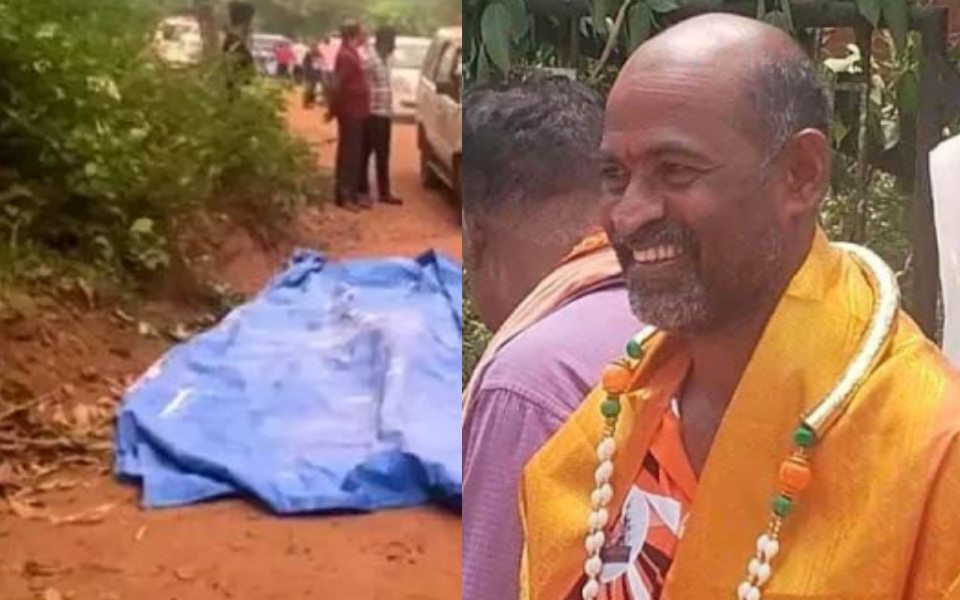
Mangaluru: Fresh details from the chargesheet in the April lynching of 38-year-old Ashraf, a mentally ill man from Kerala, have put the spotlight back on the role of Ravindra Nayak, husband of former BJP corporator Sangeetha Nayak in instigating the mob. The revelations have raised serious questions on the conduct of the Mangaluru City Police, who initially dismissed his involvement despite statements from all 21 accused pointing to his active role.
The case, which took place during a cricket tournament in Kudupu, had sparked communal tensions after some participants alleged that Ashraf shouted “Pakistan Zindabad” before being beaten to death. However, rights groups and several villagers have contested this narrative, saying Ashraf appeared mentally unstable and was targeted following a minor altercation.
Police Commissioner’s Statement vs Chargesheet Evidence
On April 30, just a day after the statements were recorded, the then Mangaluru Police Commissioner Anupam Agrawal told The News Minute that “nobody had complained” against Ravindra Nayak. This public denial came despite the fact that, according to the chargesheet, all accused had spoken in detail about his involvement during their interrogation on April 29.
The statements, now part of the court record, paint a consistent picture Nayak was present during the assault, dismissed attempts by some players to stop the beating, and openly encouraged the mob to “beat him to death” because he allegedly shouted pro-Pakistan slogans.
What the Accused Told the Police
In their accounts, several accused said that after Ashraf was first assaulted, a few members of the Konguru cricket team, including Deepak, urged others to stop. They pointed out that Ashraf seemed mentally unstable and had already suffered serious injuries, suggesting that he should be taken to hospital to avoid trouble.
However, according to the statements, Nayak, referred to as “Ravi anna” along with Manjunath and Devadas, overruled them. He allegedly told the group:
“If you simply let go of someone who comes into our area shouting ‘Pakistan, Pakistan,’ tomorrow more people will come and do the same. We will question him properly, then inform the police, and will make all arrangements so that none of us gets into trouble.”
The chargesheet quotes multiple accused as saying that Nayak’s words emboldened the crowd. Others, including Kishore Kumar and Anil Kudupu, reportedly supported him and urged, “Don’t let this sulemaga(b@st@rd) go. Beat him to death right here.”
Cover-Up and Instructions to Stay Silent
The statements also reveal that Nayak played a role after the assault in trying to cover up the incident. Another accused Devadas and Nayak allegedly told the group:
“What’s done is done. Now, we should all act as if we know nothing. Do not tell anyone about what happened. If the police come and ask, say you know nothing. If anyone opens their mouth, all of us will get into trouble. If the police call us for inquiry, inform us we’ll all go together. At the station, no one else should speak, I will do the talking. If no one reveals what happened, the police will file a C report and close the case.”
This assurance, according to the accused, gave them the confidence to stay quiet in the initial days after the killing.
Night Meeting at Nayak’s House
An additional statement from accused Sridutt adds another layer to the case. He recounted that later that night, he and fellow accused Dixit met a friend who they informed about Nayak’s presence at the scene. Following this, they went to Nayak’s house in Kudupu, where he reportedly told them:
“Nothing will happen to the people. Don’t be afraid. If no one speaks up, it will be over. I will take care of everything.”
From ‘Unnatural Death’ to Murder Case
Initially, the police registered the case as an “unnatural death” and claimed Ashraf had fallen while drunk. It was only after public outrage, media coverage, and pressure from rights groups that it was registered as a murder case. The post-mortem report that came-out on July 25, confirmed 35 external injuries, all caused by blunt force impact. Ashraf had bruises, cuts, tramline marks, and internal bleeding in multiple parts of his body, including his head and genitals.
Rights groups have alleged that the “Pakistan Zindabad” claim was fabricated to justify the brutal assault. The fact-finding report ‘Lost Fraternity: A Mob Lynching in Broad Daylight’ criticised the authorities for failing to act promptly and for shielding those politically connected.
Questions Over Police Integrity
The fact that the then police commissioner Anupam Agrawal denied Nayak’s involvement even when statements against him were already recorded raises troubling questions about whether the investigation was influenced to protect him. The delay in arresting key accused more than 48 hours after the lynching also points to lapses in handling the case.
After the transfer of the then Mangaluru Police Commissioner, Sudheer Kumar Reddy took charge, giving fresh momentum to the investigation into Ashraf’s murder and ensuring proper arguments were presented in court against the accused. However, on the question of Ravindra Nayak’s role, the new commissioner too maintained that there was no evidence against him. He went a step further by summoning to the police station those who posted on social media asking why Nayak had not been arrested, warning them that unless they had evidence against him, they should refrain from making such posts.
Activists say the chargesheet exposes a pattern where the police tried to control the narrative, initially downplaying the incident, pushing a communal angle, and avoiding action against a politically influential figure.
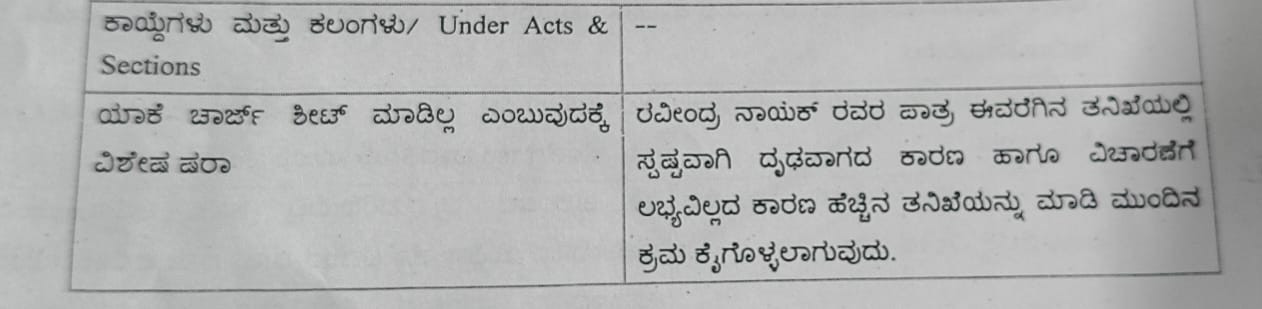
In the chargesheet, police have stated that since Ravindra Nayak’s role has not been “clearly established” in the investigation so far and he has not been available for questioning, he has not been named as an accused at this stage. The document notes that further investigation will be carried out to verify his involvement, and any necessary action will be taken based on the findings.
For now, Nayak remains named in the chargesheet only based on consistent testimonies from all accused, but whether this translates into accountability will depend on how the case proceeds in court.
Let the Truth be known. If you read VB and like VB, please be a VB Supporter and Help us deliver the Truth to one and all.
Power tariffs under BESCOM to rise from May 1
Bengaluru (PTI): Power bills for consumers under the Bangalore Electricity Supply Company Limited (BESCOM) will go up from May 1, following an order issued by the Karnataka Electricity Regulatory Commission (KERC) on Friday.
The hike comes after KERC allowed the BESCOM to recover a revenue deficit of Rs 2,068 crore incurred in 2024-25, from the consumers.
As a result, for every unit of electricity consumed in 2024-25, the customers will be charged an additional 56 paise, it said.
"BESCOM shall calculate, for each of the active consumers of FY2024-25 the amount to be recovered based on their actual energy consumption during FY2024-25. Such amount shall be recovered during FY 2026-27 in equal monthly instalments, to be called as 'FY25 True up Charges', commencing from the first meter reading date falling on or after 1 May 2026 and concluding with the reading date ending on 30 April 2027," the order said.
"It is further ordered that BESCOM shall maintain a separate head of account, allocated for the purpose, to record the adjustment of the said amount to ensure full recovery of the deficit," it added.
Similarly Chamundeshwari Electricity Supply Corporation Limited (CESC) has also recorded a revenue deficit of Rs 121.71 crore and can collect an additional 15 paisa per unit for consumption in 2024-25, official sources said.