Bantwal : Police accused of harassing youth attacked by a group
PSI Prasanna denies any assault or harassment
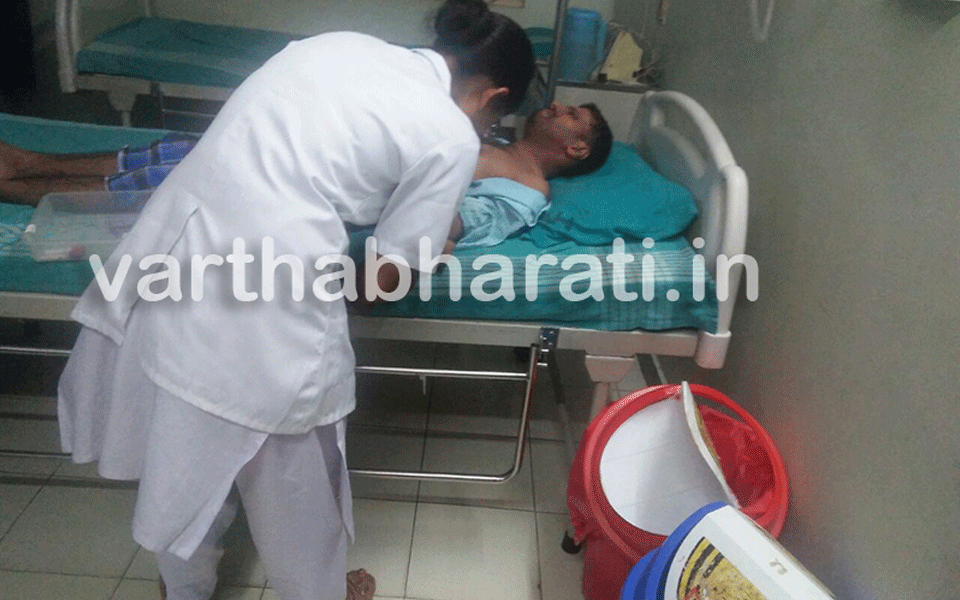
“Victim was taken to police station from hospital and assaulted”
Mangaluru, June 20: Police were accused of assaulting a youth, who was undergoing treatment at a hospital after being attacked by a group of people at Amai in Bantwal, after taking him to the police station from the hospital.
The victim is identified as auto driver Abdur Rehman (28) of Puriya in Bantwal taluk.
When Rehman was coming from Vittla on June 18, the fuel of his auto was empty and while he was going to a petrol station to bring petrol, a group of people who were discussing something among themselves, enquired Rehman and insulted him with foul language before assaulting him. Sometime later, a few others came and attacked him, he alleged.
Local people admitted Rehman to the hospital on the same day. Puttur town police station police personnel who came to hospital for collecting information, took him to the police station at around 7 pm without any information to the hospital. After forcing him to sit in the Puttur town police station for some time, he was taken to Bantwal police station in a jeep, he said.
While coming on the jeep, the police assaulted him on his cheek and ears. Even after bringing him to Bantwal police station, he was harassed till 12 am and beaten him up. Because of the assault, he was suffering pain in his legs and hands and he could not listen anything, he alleged.
Responding to the incident, Ashraf, brother of Rehman, said that they were not informed about taking Rehman to the police station from the Puttur government hospital. On June 19, the police called him and said his brother is in police station. Later, he was released on bail. On the same day, as Rehman was unable to walk and listen, he was admitted to a private hospital, he said.
Rehman urged the police to take legal action against the accused Kadeshalya gram panchayat member Sanath and Manoj of Perna village. Along with other accused, Sanath had come to Rehman’s house and threatened him. When Rehman’s sister had been to the police station to lodge a complaint, she was made to wait till 12 midnight in the police station, Ashraf said.
PSI denies any assault
Incident happened between two groups. Case was booked as per the information they have collected. One person was arrested and produced before the court related to this incident. But he was released on bail. He was brought to Bantwal police station and interrogated. But he was neither assaulted nor harassed. He was produced in the open court and if he was assaulted, he could have told this before the judge. Now he is making allegation.
PSI Prasanna, Bantwal rural police station
Let the Truth be known. If you read VB and like VB, please be a VB Supporter and Help us deliver the Truth to one and all.
Three trampled to death by wild elephants in Jharkhand's Ramgarh
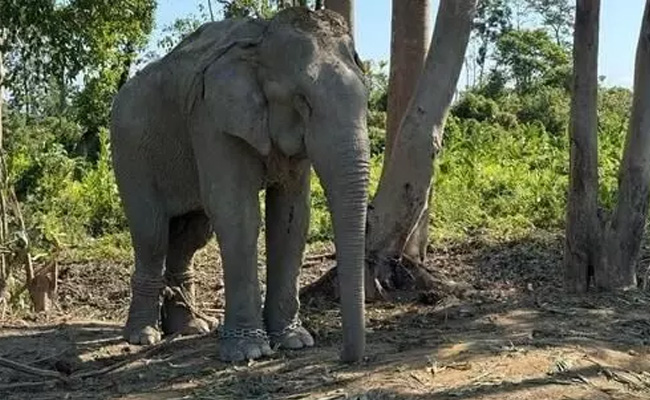
Ramgarh (PTI): Three persons, including an elderly man, were trampled to death by wild elephants in two separate incidents in Jharkhand's Ramgarh district on Friday, police said.
Both incidents happened within the Gola police station limits. One incident occurred at Banda village, where two persons died, while the second took place at Murpa village, where an elderly man was trampled to death by wild elephants, they said.
"Three people were killed by wild elephants on Friday at two different locations. All three were male. The bodies of the deceased have been recovered and are being sent for post-mortem examination at a government hospital," Officer in-charge of Gola police station, Abhishek Kumar, told PTI.
The deceased have been identified as Dheeraj Kumar (26) of Talatand in Patratu, Jugal Bhuiyan (30) of Murpa village, and Samdev Saw (73) of Murpa village, another police officer said.
"We have provided Rs 25,000 each to the victims' families as immediate relief, while the rest of the compensation will be given after completion of some official formalities," said DFO, Ramgarh, Nitish Kumar.
The Jharkhand government provides Rs 4 lakh as compensation in case of death caused by an elephant.