Beary community needs to up the ante in the field of education: U T Khader
Dubai BCF distributes educational scholarships and sewing machines
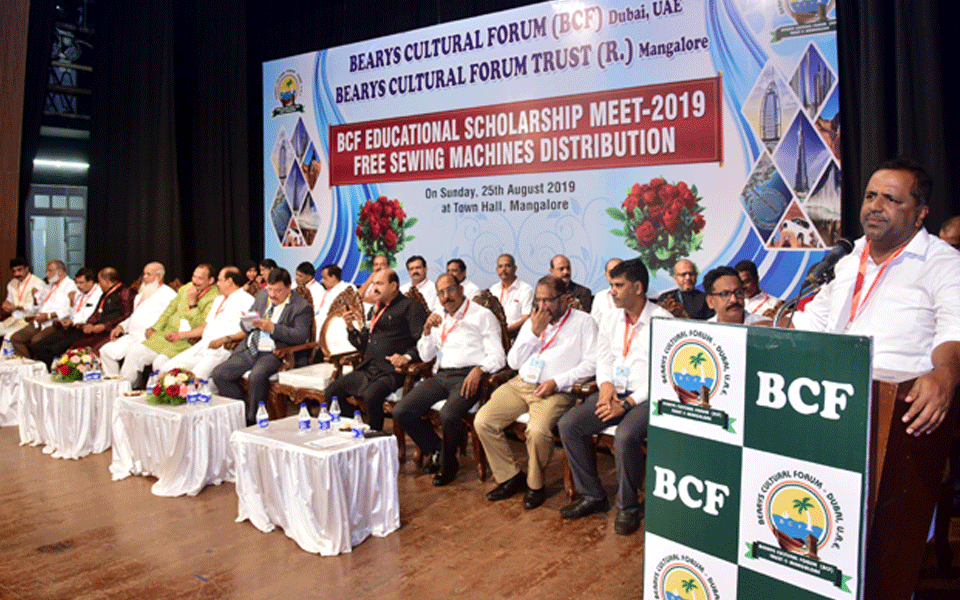
Mangaluru: MLA U T Khader on Sunday asserted that the Beary community should evolve in the field of education and work towards excelling in the field.
Noting that the community has achieved great height in the field of education and the youth of the community has turned up in making it possible, Khader said "There are no limits when it comes to education and an individual or organisation should never stop thriving for gaining more knowledge".
He was speaking at an event organised by Bearys Cultural Forum Dubai and Bearys Cultural Forum Trust Mangaluru in association with Talent Research Foundation at Town Hall.
After the inauguration of the event by Khader, scholarships were distributed among shortlisted deserving students while also distributing sewing machines to 60 women to encourage self employment among them.
Khader during his address advised the youth of the community to rise above being active only on social media as it will not help in building a strong community or nation.
"Dreaming alone will not take you anywhere in life unless you work towards fulfilling it" Khader added.
Bearys Cultural Forum Dubai President, B.K Yusuf in his address noted that the organisation has been helping the deserving students economically for last 17 years and this year it aims to provide scholarships to at least 480 students from PU colleges to Masters programs.
The function was attended by the chief guest Ivan D'souza, DCP Arunamshu Giri, Mangaluru City Corporation Commissioner, Mohammed Nazeer, former minister Vinay Kumar Sorake, ex-MLA Moideen Bava, Chairman of Bearys Chamber of Commerce and Industries S.M Rasheed Haji, Talent Research Foundation's founder president Abdul Rauf Puthige, Prof. UT Iftikhar, Syndicate member of RGUHS, Sulthan Gold Managing Director Abdul Ravoof, KCCI President P.B. Abdul Hameed, businessmen Haji K.S. Sayyed Karnire, Mohammed Harish Mukka, SA Shareef, SM Mustafa, Hidaya Foundation Founding director Khasim Ahmed, Hyder Parthipady, B.A. Mohammed Haneef, Khalid Ujire, Basheer Baikampady, Aziz Baikampady, Hussain Katipalla, Zahida Jaleel and others.
BCF Scholarship Committee President M E Muloor detailed about the organisation plans and operations for future. B.M Mumtaz Ali welcomed the gathering, Professor of Pumpwell Takwa Islamic School Hafil Salman recited Qirath.
UAE London American City College Director, Prof. Dr. Kapu also addressed the event with career guidance while Qazi Ibrahim Musliyar concluded the event with Dua. Rafeeq Master Comperred the event.
The chief guests President of state minority Association G.A Bava , Abu Dhabi Beary's welfare forum President Mohammed Ali Ucchil, businessmen Ashraf Karnire, Abdulla Madumoole and achievers of different fields Dr. Mariam Anjum Iftikhar, Dr. Najib Behzad Mohammed, Dr.Salma Suhana and Tabassum of Sneha Deepa were felicitated.
Student of Renjala Badriya Madrasa 5th standard Fathimat Nishma, Parappu Hidayatussibiyath Madrasa 7th grade student Fathimat Shaza, Noorul Islam Madrasa 12 grade's Asmeena and 10th grader Razna MA were awarded with BSF Madrasa excellence award.
Uppinangady Indraprastha school SSLC student Taj Amisha, Hebri SR PU college student Raeesa, Babbukatte Hira College commerce student Uzre Kairuneesa and khadija Ansa of arts department were also awarded for academic excellence.
Amaan KA of Uppinangady Indraprastha PU college and UA. Nachiketh Kumar were awarded BSF Youth scientist award.
Students of Crescent English Medium School presented cultural programs towards the end of the event.


Let the Truth be known. If you read VB and like VB, please be a VB Supporter and Help us deliver the Truth to one and all.
Why Your Instincts Matter on Fairplay24

Have you ever noticed the subtle change in a bowler’s run-up just before they deliver a wicket-taking ball? Or the way a team shifts its formation right before a counter-attack? These are the nuances that true fans live for. In 2026, the data might be elite, but the "human eye" is still the most powerful tool in the game. fairplay24 is built for the fans who see those small details, the ones who understand that sports are played with heart and instinct, not just spreadsheets. Every time you use your fairplay24.in login, you are bringing that unique perspective to a global community of experts.
Frictionless Entry for the Busy Fan via Fairplay24.in Login
We live in an age of "everything, everywhere, all at once." Our schedules are packed, but our passion for the game doesn't take a day off. This is why fairplay24 has optimized its experience for the fan on the move. A quick fairplay24.in login is all it takes to bridge the gap between your busy day and the excitement of the live arena. The platform is designed to be mobile-friendly and lightning-fast, ensuring you’re always just a tap away from the latest score. The simplicity of the fairplay24.in login means you can jump into the action during a lunch break or while commuting home.
Fairplay24 removes the clutter, giving you a clean and organized view of the sporting world. It’s a reliable companion for modern life, ensuring that even if you can’t be at the stadium in person, the spirit of the stadium is always with you through your fairplay24.in login. The developers of fairplay24 understand that time is precious, so they have made the fairplay24.in login process as efficient as possible. This commitment to user experience is what sets fairplay24 apart in the competitive world of sports engagement, making every fairplay24.in login a seamless transition into the world of live play.
Building a Culture of Fair Play Together at Fairplay24.in
In 2026, the digital world can sometimes feel like a "wild west," but fairplay24 stands as a beacon of reliability. The name itself, fairplay24, is a promise of a secure and honest experience. When you complete your fairplay24.in login, you are joining a network that prioritizes safety and transparency. This isn't just about technology; it's about the culture of the community. A fair platform is one where everyone has the same opportunity to succeed based on their own skill and knowledge, and that is exactly what fairplay24 provides.
Every fairplay24.in login is a commitment to this culture of integrity. Fairplay24 upholds this standard every day, providing a transparent system that mirrors the honesty of the athletes on the field. This commitment to a safe environment is what makes fairplay24 a trusted partner for millions of fans. By ensuring that every fairplay24.in login is secure, the platform allows the focus to stay on the thrill of the win and the lessons of a hard-fought game. Trust is the foundation of fairplay24, and it is earned with every single fairplay24.in login.
Conclusion
The way we experience sports is changing, moving from a "broadcast" model to a "participation" model. We are no longer just faces in the crowd; we are the strategists and the analysts of our own sports journey. Fairplay24 is proud to provide the platform for this evolution, ensuring that the human element of sports remains front and center. By making the fairplay24.in login part of your routine, you are choosing a more interactive, secure, and rewarding way to be a fan.
The 2026 sports season is already delivering unforgettable moments—don't just watch them happen. Join the fairplay24 family, trust your instincts, and celebrate the game with the transparency and excitement it deserves. Your seat in the digital stands is ready, and your fairplay24.in login is the key. Experience the difference that a dedicated platform can make, and let fairplay24 be your partner in every victory.