Belthangady: Woman delivers baby boy in ambulance
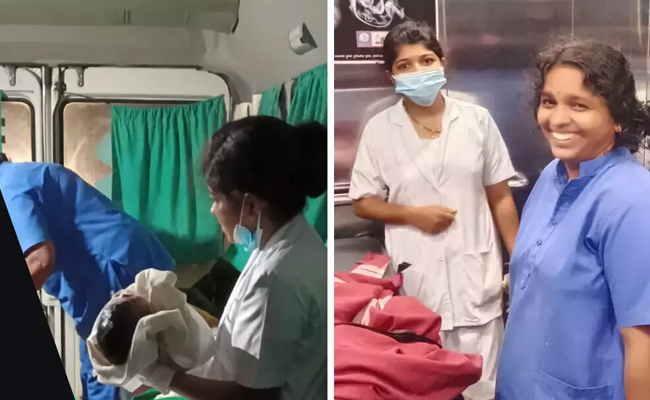
Belthangady: A pregnant woman delivered a healthy baby boy inside an ambulance while being shifted to Mangaluru for advanced medical care.
Lilavati, a resident of Sudemugeru under Belthangady Nagar Panchayat limits, had been admitted to Belthangady Taluk Hospital earlier in the day for delivery. After examination, doctors advised that she be referred to Lady Goschen Hospital in Mangaluru for further care.
ALSO READ: Fresh case registered against activist Snehamayi Krishna
She was subsequently shifted in the hospital’s ambulance to Mangaluru, accompanied by two nurses. As the vehicle approached Farangipet in Bantwal taluk, Lilavati began experiencing intense labour pains.
Nurses Kumuda and Soumya S. conducted the delivery inside the ambulance and safely delivered the baby boy.
Both the mother and the newborn are reported to be in good health.
Ambulance driver Dinesh Gowda was appreciated by locals for his timely response and for ensuring that the vehicle reached Lady Goschen Hospital promptly after the delivery.
Let the Truth be known. If you read VB and like VB, please be a VB Supporter and Help us deliver the Truth to one and all.
Gujarat voted for development & good governance, says Pradhan as BJP sweeps local body polls
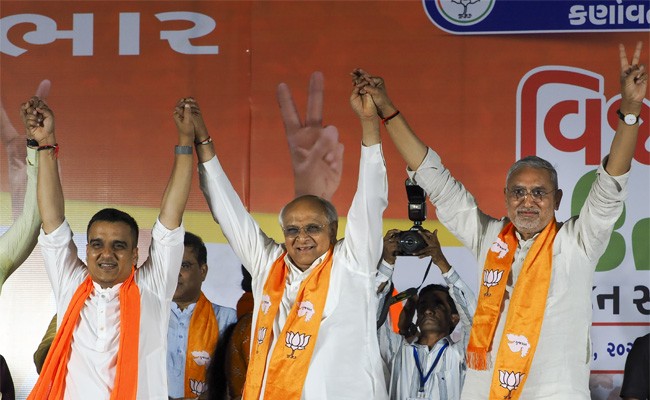
New Delhi (PTI): Union minister Dharmendra Pradhan on Tuesday said the people of Gujarat have reaffirmed their faith in the politics of development, stability and good governance as the BJP swept the local body elections by winning all 15 municipal corporations and 33 out of 34 district panchayats in the state.
Thanking the voters, Pradhan said the result is a testament to the people's unwavering trust in the BJP, the relentless hard work of the party workers and the strength of the organisation under the guidance of Prime Minister Narendra Modi and the leadership of Chief Minister Bhupendra Patel.
“The people of Gujarat have once again made it clear that their trust remains firmly aligned with the politics of development, stability and good governance. I express my heartfelt gratitude to the people of Gujarat for the support received by the BJP in the local body elections,” Pradhan posted on X.
“Under the guidance of the Hon'ble Prime Minister Narendra Modi and the leadership of Gujarat's Chief Minister Bhupendra Patel, this result is a remarkable testament to the people's unwavering trust, the relentless hard work of the Gujarat BJP workers, and the strength of the organisation,” he added.
Earlier, Prime Minister Narendra Modi thanked the people of Gujarat for what he termed a "sweeping mandate" in the local body polls, saying the bond between the state and the BJP has grown even stronger.
Modi said people have voted for the politics of good governance, and assured that the party would work harder to take Gujarat to new heights of progress.
Though final results for 250 taluka panchayats and 84 municipalities were awaited, data from the State Election Commission (SEC) showed that the ruling BJP won most of these local bodies while some were bagged by the Congress, AAP and Independents.
Polling was held on Sunday for 15 municipal corporations, 84 municipalities, 34 district panchayats and 260 taluka panchayats.
The BJP emerged a clear winner in the municipal corporations of Ahmedabad, Vadodara, Surat, Bhavnagar, Jamnagar and Rajkot, besides the newly created municipal corporations of Navsari, Gandhidham, Morbi, Vapi, Anand, Nadiad, Mehsana, Porbandar and Surendranagar.