Bengaluru-Mangaluru train services resume after landslide restoration
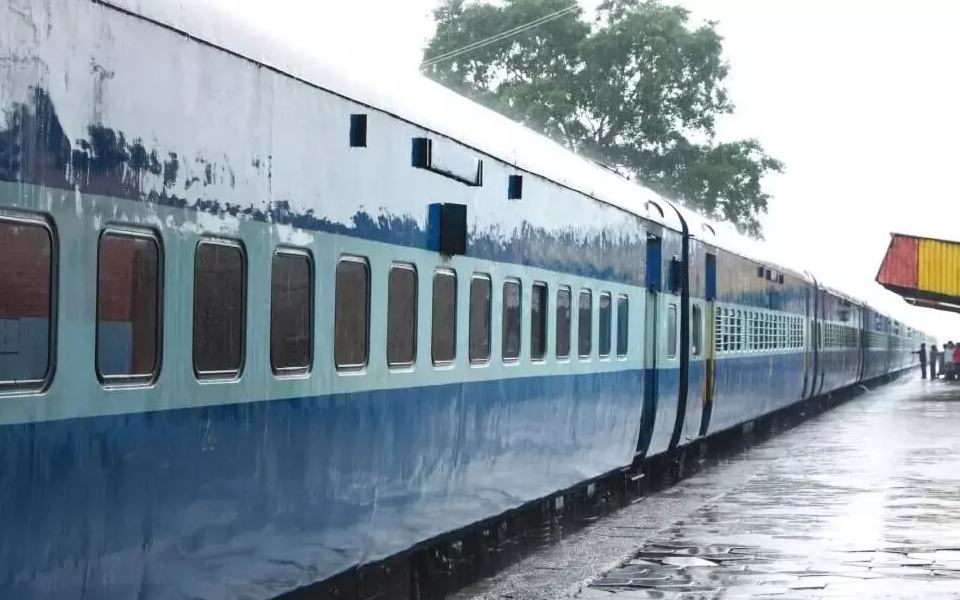
Mangaluru, Aug 8: The South Western Railway (SWR) resumed passenger train services on the Bengaluru-Mangaluru sector on Thursday.
The traffic on this line was disrupted due to landslides in the Sakleshpur-Subramanya sector on 26 July. The tracks that were covered with the debris were cleared by the Railways.
According to railway officials, the first train to pass through the restored section was Train No 16575, the Yeshwantpur-Mangaluru Junction Gomateshwara tri-weekly Express.
Overnight trains from Bengaluru and Vijayapura will resume soon. The return services from Mangaluru, Karwar, and Mangaluru Junction will start from Friday. However, trains on the affected stretch between Yadakumari and Kadagaravalli will operate at reduced speeds of 15 kmph until further notice.
ALSO READ; SSLC student commits suicide in Benjanapadavu
The landslide occurred on the evening of July 26, when a portion of the track embankment near a bridge slipped due to torrential rains. This prompted the Mysuru Division of SWR to halt train operations and begin restoration work. The task was challenging, taking nearly 10 days to complete due to the inaccessibility of the stretch by road and frequent rain disruptions.
Despite these challenges, dedicated teams worked tirelessly to restore the track, which was certified 'fit' on August 4. An engine rolling test and a successful passage of a fully loaded goods rake on August 6 confirmed the safety of the track.
The first passenger train, the Gomateshwara Express, successfully passed through the restored section on Thursday amid cheers from the workforce present on the site.
Let the Truth be known. If you read VB and like VB, please be a VB Supporter and Help us deliver the Truth to one and all.
Ordinance issued to increase number of Supreme Court judges from 34 to 38
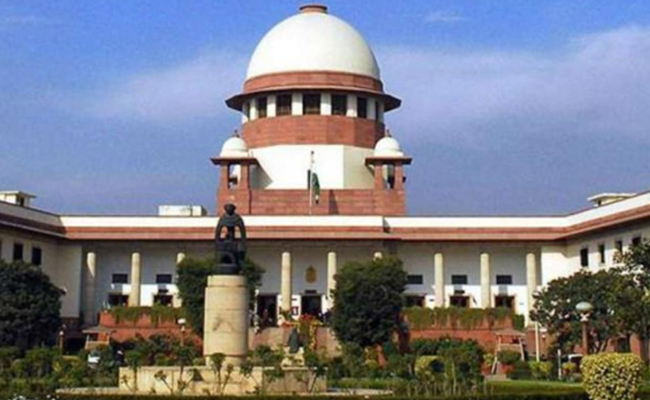
New Delhi (PTI): The government has promulgated an ordinance to increase the strength of the Supreme Court from the present 34 judges to 38, including the Chief Justice of India.
The law ministry notified the ordinance on Saturday, which amended the Supreme Court (Number of Judges) Act, 1956, to increase the sanctioned strength of the top court.
So far, the sanctioned strength of the top court was 34, including the Chief Justice of India (CJI). Now, the number of judges has been increased by four, taking the sanctioned strength to 38.
The top court will now have 37 judges, other than the CJI.
With the apex court having two vacancies at present, and the ordinance coming into force immediately, the Supreme Court Collegium will now have to recommend six names for appointment as judges in the top court.
A bill will be brought in the Monsoon Session of Parliament to convert the ordinance – an executive order – into a law passed by Parliament.
The Union Cabinet had cleared a draft bill on May 5 to increase the number of apex court judges.
The strength of the Supreme Court was last increased from 30 to 33 (excluding the CJI) in 2019.
The Supreme Court (Number of Judges) Act, as originally enacted in 1956, put the maximum number of judges (excluding the CJI) at 10.
This number was increased to 13 by the Supreme Court (Number of Judges), Amendment Act, 1960, and to 17 by another amendment to the law.
The Supreme Court (Number of Judges) Amendment Act, 1986, augmented the strength of judges from 17 to 25, excluding the CJI.
A fresh amendment in 2009 further increased the strength from 25 to 30.
Article 124(3) of the Constitution lists the qualifications required to become a Supreme Court judge.
An Indian citizen who has either served as a high court judge for at least five years, or as an advocate for 10 years, or is a distinguished jurist, can be appointed to the top court.
The strength of the Supreme Court is increased based on the recommendations of the CJI, who writes to the Union law minister. After consulting the finance ministry, the Department of Justice under the law ministry moves the Cabinet with a draft bill.