Bhatkal: Collective body of Jamaats rules against fielding Muslim candidate in assembly elections
Bhatkal: The representatives of collective body of Jamaats, in a meeting led by Majlis-e-Islah wa Tanzeem here on Monday evening, decided not to field a Muslim candidate from Bhatkal in the upcoming Assembly elections.
The decision, however, proves to be a setback to the candidature of Inayatullah Shabandri, president of Tanzeem, who was considered a strong aspirant for the Bhatkal seat.
There had been heated debates regarding the fielding of a Muslim candidate in the constituency this year. There had also been an insistence that the Muslims, who have about 60,000 voters here, should unfailingly support a Muslim candidate.
In the backdrop of such demands and debates, the Tanzeem, which is a sociopolitical organization of Muslims in Bhatkal, called a meeting of collective body of Jamaats representatives here to discuss the issues. The meeting was attended by 48 representatives of various Jamaats, including those of Bhatkal, Shirali, Manki, Murudeshwara, Uppana, Samshi and Honnavar.
After much discussion at the meeting, followed by voting too, the plan to field a Muslim candidate was dropped. Most representatives in the Bhatkal area had supported the plan but a majority of the representatives from the Jamaats of the neighbouring areas had opposed it, as a result of which, it was decided not to give support a Muslim contestant.
The matter is learned to have been discussed earlier in a political affairs committee and executive committee meeting of the Tanzeem, where it was decided unanimously to field a Muslim candidate. When placed before the Sarva Jamaat, however, the decision taken at the Tanzeem meeting lost out.
Inayatullah Shabandri, who had contested the 2013 polls as a JD(S) candidate with the support of the Tanzeem, lost to the Independent candidate Mankalu Vaidya, in spite of getting more than 27,000 votes. The high number of votes he won, however, had fuelled the plan of fielding a Muslim candidate. In 2018, however, the JD(S) denied ticket to Shabandri as the Tanzeem had refused him support.
This year, Shabandri, who had high hopes of contesting and had even readied himself for a fight, is again disappointed with the decision of the Tanzeem. Being the president of the Tanzeem, however, Shabandri is forced to accept the decision of the organization.
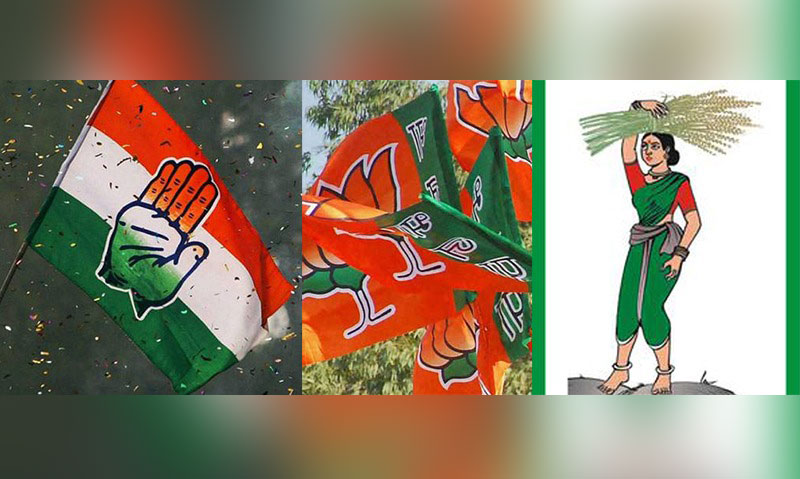
The supporters had argued that there was excellent opportunity for a Muslim candidate to win the polls, as BJP legislator Sunil Naik is facing opposition in the party, while there are two factions in the Congress. In addition to such favourable winds, gaining other community members’ votes along with Muslim votes would ensure victory from a Muslim candidate, they argued. The decision in the Tanzeem meeting, however, proved a major setback for the argument.
Following the decision at the meeting, people are curious to find out whom the Tanzeem would support during this year polls.
Let the Truth be known. If you read VB and like VB, please be a VB Supporter and Help us deliver the Truth to one and all.
Chadha, others wouldn't have left AAP had it followed 'right' path: Anna Hazare
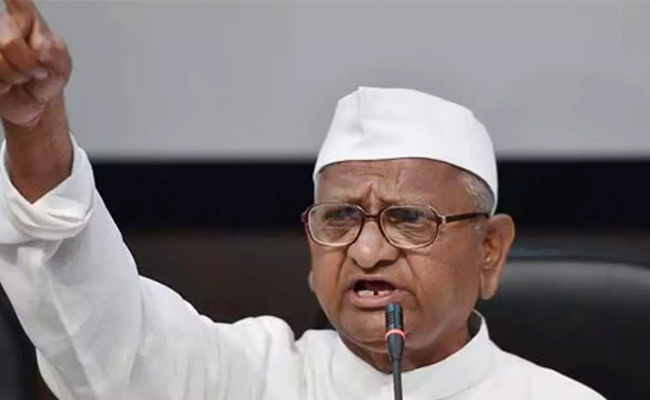
Mumbai (PTI): Social activist Anna Hazare has said Raghav Chadha and six other Aam Aadmi Party (AAP) Rajya Sabha members would not have quit the party had it followed the "right" path.
"Everyone has the right to hold an opinion in a democracy. They (Chadha and others) must have faced some trouble, which is why they left," Hazare told reporters on Friday in Ahilyanagar district of Maharashtra.
AAP Rajya Sabha members Raghav Chadha and Sandeep Pathak addressed a joint press conference in Delhi on Friday, announcing their exit from the Arvind Kejriwal-led party to join the BJP.
Chadha claimed that nearly two-thirds of AAP's Rajya Sabha members had quit the party and would function as a separate faction.
"It is their (AAP leadership’s) fault. Had that party followed the right way, they would not have left," Hazare said.
Hazare reiterated that Chadha and others must have faced difficulties within AAP, and that is why they left. "Had the party gone in the right direction, they would not have quit the party," he added.
"There must be some or the other reason (for their leaving AAP). In a democracy, every person has a view about where to stay and leave," Hazare said.
The Chadha-led exodus marks a significant setback for the Kejriwal-led party since its formation in 2012, which followed the momentum of Anna Hazare’s anti-corruption movement.