Brain dead woman donates organs to seven persons
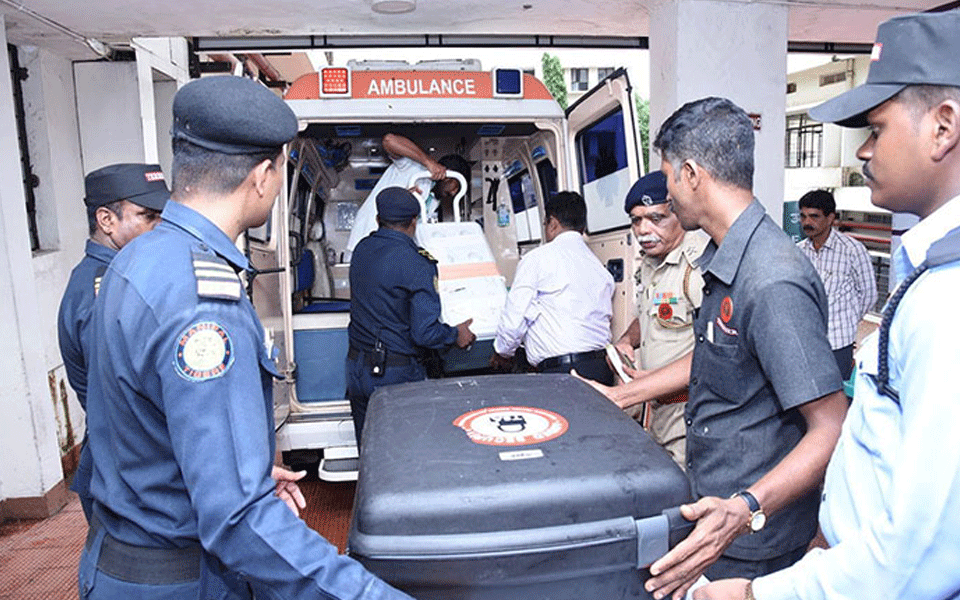
Manipal, June 26: The organs of a brain dead woman gave rebirth to seven patients at the KMC hospital in the city on Tuesday. Nirmala Bhat (51) of Karkala was declared brain dead. After the family members approval, her organs were donated to seven patients.
Nirmala Bhat sustained serious injuries when a motorbike knocked her down while walking on the road near her house on June 22 and she was admitted to KMC hospital on June 23. Nirmala Bhat who was treating in the Intensive Care Unit of the hospital was declared brain dead on June 25 at 12.30 pm by the four senior doctors of the Medical Council as per the Human Protection Act 1994.
Later, with the consent of her husband Vasudeva Bhat and family members, the doctors separated her two heart valves, carnea, kidney and liver from her and prepared for transplant. Two carneas and one kidney will be transplanted to three patients admitted in the KMC of Manipal, liver and two heart valves will be given to the patients identified in Bengaluru and another kidney will be donated to another patient identified in Mangaluru, said KMC medical superintendent Dr Avinash Shetty.
Technical snag in helicopter
It was planned to airlift the organs through Mangaluru airport to Bengaluru from Manipal. But the helicopter which reached Adi Udupi helipad developed a technical snag and in the last moment, the organs were transported to Mangaluru airport by road. Liver and two heart valves were sent to Bengaluru through flight at 3.15 pm and a kidney was sent to Mangaluru at 3.50 pm. The ambulances which carried the organs were given zero traffic facility with police escort.

Let the Truth be known. If you read VB and like VB, please be a VB Supporter and Help us deliver the Truth to one and all.
Allahabad court restrains FIR order against Gandhi
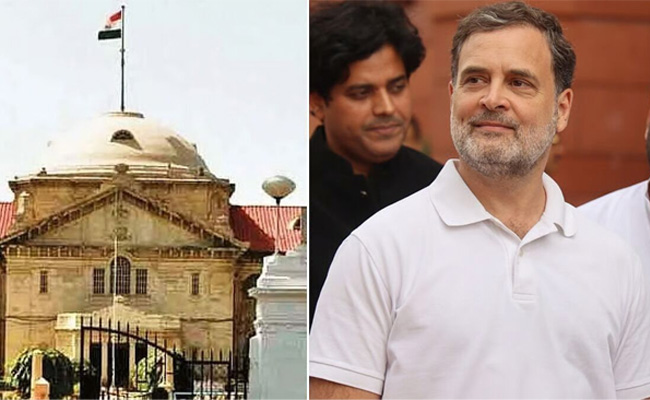
Lucknow (PTI): The Lucknow bench of the Allahabad High Court has restrained its order directing an FIR against Congress MP Rahul Gandhi in connection with the alleged dual citizenship controversy.
The court will now hear the parties on whether prior notice to the accused was legally required.
A bench of Justice Subhash Vidyarthi, which had in Friday in an oral order observed that prima facie cognisable offences appeared to be made out against Gandhi, and permitted the Uttar Pradesh government to hand over the probe to a central agency, said it would first examine the legal position on issuance of notice before passing any direction.
The development came after the bench, before signing its dictated order, came across a full court verdict mandating that notice be issued to the proposed accused in such matters.
The court noted that none of the counsel brought this legal requirement to its attention in the earlier hearing.
ALSO READ: Argument over bike accident leads to murder, triggers mob violence, arson in Ahmedabad; 2 held
The bench has posted the matter for April 20.
The order was passed on a plea filed by Karnataka-based BJP worker S Vignesh Shishir.
During the Friday proceedings, Deputy Solicitor General of India S B Pandey produced records of the Centre relating to the citizenship controversy, while government advocate V K Singh submitted on behalf of the state that the allegations prima facie disclosed cognisable offences.
After a hearing, the bench observed that material on record indicated that Gandhi had allegedly committed cognisable offences and that the matter warranted investigation.
In his petition, Shishir alleged that Gandhi was a UK citizen and had incorporated a company, M/s Backops Ltd, in August 2003, declaring his nationality as British.
The petitioner claimed that Gandhi submitted the company's annual returns in October 2005 and October 2006 listing his nationality as British, and that the firm was dissolved in February 2009.
He sought registration of an FIR against the former Congress president under provisions of the Bharatiya Nyaya Sanhita, the Official Secrets Act, the Foreigners Act and the Passport Act.
The complaint was initially filed before a special MP/MLA court in Rae Bareli and was later transferred to Lucknow on the petitioner's request.