CFTRI Scientist Dr. Alok Kumar Srivastava calls for sustainable agriculture
SURF - 19 International conference in BEADS and BIT, Mangaluru

Mangaluru: Dr. Alok Kumar Srivastava, Central Food Technological Research Institute (CFTRI) Scientist on Friday said that with sustainable crops the soil fertility and nutrition in crops will increase. He was addressing the inaugural session of International Conference on “Sustainable Urban Development, Resource Conservation and Food Security” ‘Surf- 19’ organised by Bearys Institute of Technology (BIT) and Bearys Enviro-Architecture Design School (BEADS) at Bearys Knowledge Campus here in Mangaluru.
The two-day international conference was inaugurated on Friday morning and will conclude on Saturday April 27. The conference also holds the significance of being the first carbon neutral conference.
“India accounts for 18.7% of world population with just 2.7% of total land area of the world. After the independence Green (Agriculture), Blue (fish production) and White (Milk) revolutions in the country has resulted in increase of food production but due to the use of chemicals fertility of the soil is damaged. This is also the reason for various diseases found today. More than 30% of children in our country are suffering from nutritional deficiency ” Dr. Alok Kumar said while calling for sustainable agriculture as a counter.
Bearys Group Chairman Syed Mohammed Beary, in his presidential address added that the greed and pride of humans have led to the destruction of natural resources. “If this continues, the scenario will soon change and in next few years people of metro cities like Bengaluru and others will have to migrate during summer to other places” he said while adding that India was leader in sustainable developing till a century ago. “Some of the examples for this are Taj Mahal and the architecture of temples in Tamil Nadu. We are accountable for the protection of environmental resources” he added.
Renowned Researcher and Professor of IIUM, Malaysia, Dr. S. A Khan, Writer and Environmental Activist from Mumbai Bharat Mansata, Ecological Architect, Harvard University Deepa Vedavyas, Entrepreneur, Sustainable Farming from Madhurai Amarnadh Adusumali, BEADS Principal Ashok LP Mendonca, Director, BIT Polytechnic Dr. Aziz Musthafa, Trustee, Bearys Academy of Learning Mazha S Beary and Surf-19 convener Dr. Mustafa Bastikodi were present on the dias during the inaugural event of the conference.
BIT Principal Dr. P Mahabaleswarappa welcomed the guests and audience.
The two-day conference is scheduled to conclude on Saturday evening with several events, panel discussions and paper presentation ceremonies regarding Sustainable Urban Development, Resource Conservation and Food Security, being part of the conference during the course of two days.


Let the Truth be known. If you read VB and like VB, please be a VB Supporter and Help us deliver the Truth to one and all.
Telangana survey flags 89,000 child labourers, highlights caste disparities in employment
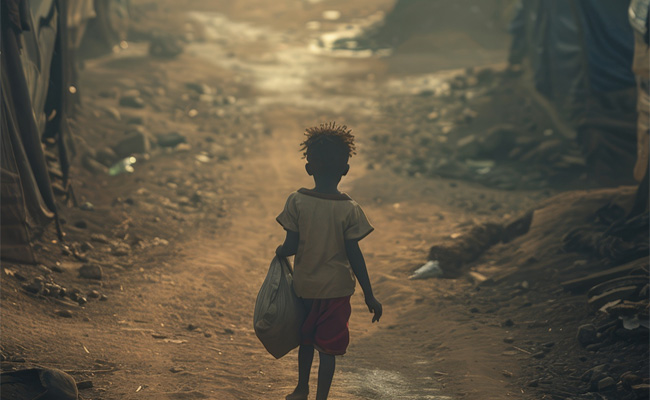
Hyderabad: A caste-based survey conducted by the Telangana government for 2024–25 has identified around 89,000 children engaged in labour across the state, with a large share belonging to Scheduled Caste (SC) and Scheduled Tribe (ST) communities.
The findings are part of the Socio, Economic, Educational, Employment, Political and Caste (SEEEPC) Survey, which covered about 3.5 crore people across 242 caste groups. According to the report, nearly one per cent of individuals below 18 years are involved in daily wage work. While the percentage appears small, officials noted that the absolute number reflects a serious concern.
The survey found that 11 per cent of identified child labourers belong to the ST Lambadi community, while 14 per cent are from the SC Madiga community. The highest incidence was reported among the ST Kolam group, where 7.2 per cent of minors are engaged in daily wage labour.
The data also revealed wider socio-economic disparities. Nearly half of the Scheduled Caste population is dependent on daily wage work, while only around 5 per cent are employed in the private sector, compared to about 30 per cent among General Castes.
State Welfare Minister Ponnam Prabhakar said the findings show that SC and ST communities remain three times more backward than General Castes, while Backward Classes are about 2.7 times more disadvantaged.
The report further noted that, on average, 31.3 per cent of people in the 25–65 age group depend on daily wage work. Among communities, the BC-A Odde group recorded the highest share at 55 per cent. In contrast, only 2.6 per cent of OC Brahmins rely on such work.
Several SC and ST communities, including Kolam, Beda, Madiga, Koya, Gond, Yerukulas and Mala Sale, were found to have among the highest proportions of daily wage earners. On the other hand, most General Caste communities and some Backward Class groups such as Goldsmiths and BC-C Christians showed lower dependence on daily wage employment.
The survey also pointed to inequalities in access to formal employment. Communities such as OC Rajus, OC Brahmins and Kapus were found to have a higher presence in private sector jobs, with up to 27 per cent of their population employed in such roles.