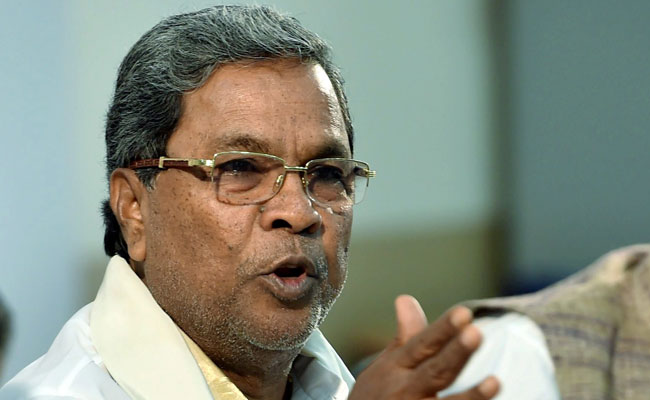
CM Siddaramaiah to lay foundation stone for RGUHS regional headquarters in Mangalore

Mangalore: Chief Minister Siddaramaiah will lay the foundation stone for the Mangalore regional headquarters of the Rajiv Gandhi University of Health Sciences (RGUHS), Bangalore, on January 17. The new center, to be located in Maryhill, aims to enhance health education and research in the coastal region.
Speaking at a press conference at the Press Club in Mangalore on Tuesday, Dr. U.T. Iftikhar Ali, Chairman of the Karnataka State Allied and Health Protection Council, announced the establishment of the regional center as a significant step in better managing affiliated institutions in and around the coast.
The facility, to be built at an estimated cost of ₹25 crore, will feature state-of-the-art infrastructure, including an innovative simulation lab, an air-conditioned auditorium, advanced research centers, a sports complex, a fitness center, entertainment facilities, and a seminar hall. Dr. Ali noted that it will be the first such center in India equipped with these amenities.
Prominent dignitaries attending the foundation stone-laying ceremony include Speaker U.T. Khader, Dakshina Kannada District In-charge Minister Dinesh Gundurao, State Medical Education Minister Dr. Sharan Prakash Patil, MP Brijesh Chowta, MLA Dr. Bharat Shetty, Director of Medical Education Dr. Sujatha Rathod, Principal Secretary to the Government Muhammad Mohsin, Director of Karnataka Health and Family Welfare Services Dr. Triveni, and RGUHS Vice-Chancellor Dr. M.K. Ramesh. The event will be held near the Excise Department building in Maryhill.
Ahead of the ceremony, RGUHS will host its syndicate meeting and the annual Senate meeting at the Goldfinch Hotel in Mangalore on January 16 at 2:30 PM, said RGUHS Senate member Dr. Shivsharan Shetty.
RGUHS Senate members Prof. Vaishali Sreejith, Dr. Salimulla, Dr. Charishma D’Silva, and Dr. Muhammad Suhail were also present at the press conference.
Let the Truth be known. If you read VB and like VB, please be a VB Supporter and Help us deliver the Truth to one and all.
Three arrested for killing Buddhist woman monk in Himachal

Shimla (PTI): Three people have been arrested for allegedly murdering a Buddhist woman monk in Mandi district of Himachal Pradesh nearly a month ago, police said on Friday.
The accused -- Gagan Sharma (23), Vishal (23) and Gaurav Sharma (20), all residents of Mandi -- were arrested on Thursday night, police said.
According to police, the 78-year-old Buddhist woman monk, Orje Shoki, was found murdered in a cave near Sarkidhar village, following which a Special Investigation Team (SIT) was constituted to nab the accused.
Mandi Superintendent of Police (SP) Vinod Kumar said that during the investigation, more than 50 suspects were questioned and DNA samples of several suspects were also collected.
After a detailed investigation, the accused were arrested from different locations on Thursday night, he said.
Kumar said all the accused are drug addicts and they committed the crime with the intention of looting the victim, so that they could buy drugs.
Efforts are on to nab two more accused wanted in the case. They will be put behind bars soon, the SP said.