Colleges to reopen: Udupi DC Kurma Rao holds peace meet

Mangaluru, Feb 15: A peace meeting was held at Udupi on Tuesday by district deputy commissioner M Kurma Rao to seek the support of students and the public to ensure smooth conduct of classes in the junior and degree colleges, set to reopen on Wednesday.
The pre-university and degree colleges will resume classes from Wednesday after a week-long holiday declared by the state government in the wake of troubles in campuses due to the hijab-saffron shawl controversy.
Leaders of political parties, student's organisations, religious leaders and other prominent persons attended the meeting.
The DC appealed to all sections of society to abide by the High Court's interim order not to wear any religious attire to educational institutions until the final judgement on the issue is pronounced. Leaders of all the organisations who attended the meeting agreed to maintain law and order.
Rao said prompt action will be taken if any attempt is made to disturb peace in the colleges in the district.
Udupi district superintendent of police N Vishnuvardhan said additional police force has been deployed to maintain law and order in the district. A total of 700 police personnel will be on duty, including those from the state reserve police, he said.
The district administration has clamped prohibitory orders under Section 144 of CrPC within 200-metre radius of all colleges and polytechnics in the district from 6 AM on February 16 to 6 PM on February 23 as a precautionary measure to prevent any untoward incident.
On January 1, six girl students of a college in Udupi attended a press conference held by Campus Front of India (CFI) in the coastal town protesting against the college authorities denying them entry into the classroom wearing Hijab.

Let the Truth be known. If you read VB and like VB, please be a VB Supporter and Help us deliver the Truth to one and all.
CJI calls for deepening technology and AI-based judicial architecture for faster justice delivery
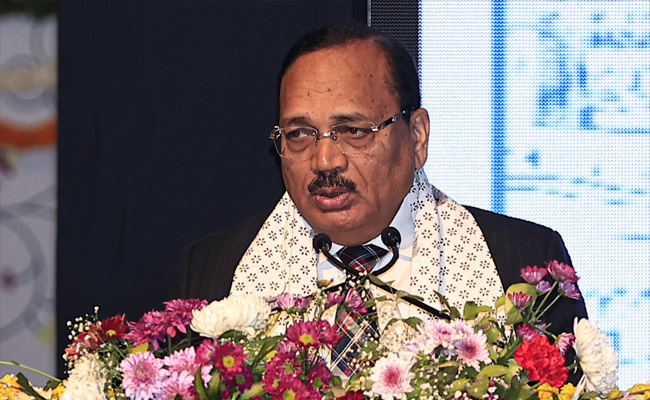
Jabalpur (PTI): Chief Justice of India (CJI) Surya Kant on Saturday called for deepening technology and artificial intelligence (AI)-based judicial architecture, and using technological advancements to expedite justice delivery.
Stating that technology was the only effective answer to wastage of judiciary's time, he said the country's judiciary was committed to ensuring optimum utilisation of technological advancements and AI for the benefit of the common man.
The CJI was speaking at a programme organised by the Madhya Pradesh High Court on the topic of "Fragmentation to fusion, empowering justice via united digital platform integration". He also launched the MP high court's newly-developed digital platforms.
"Indian judiciary is committed to ensuring optimum utilisation of not only technological advancements that have been going on and which are integral part of our system since 1990, but also of latest designs of AI and how we can use them for the benefit of the common man," he said.
"We should think of deepening technology and AI-based judicial architecture. Technology is the only effective answer to wastage of judiciary's time," the CJI added.
He stressed the need to embrace technological advancement in judiciary for expediting the justice delivery system.
Praising Madhya Pradesh HC for developing these platforms, the CJI said that as stated by the Union Minister of State for Law and Justice Arjun Ram Meghwal, there was a need to roll out these technological advancements at the pan-India level.
A committee has been constituted by the Supreme Court on how to use AI for the benefit of the judicial system, especially in speedy disposal of cases, according to him.
Minister Meghwal, Madhya Pradesh Chief Minister Mohan Yadav and MP High Court Chief Justice Sanjeev Sabharwal also spoke on the occasion.
VIDEO | Jabalpur, Madhya Pradesh: CJI Surya Kant says, "... The launch of this software should not be limited to Madhya Pradesh High Court. It should implemented in courts across the country. I will take up this initiative. An all-India digital platform can be created and the law… pic.twitter.com/wHdwrved0f
— Press Trust of India (@PTI_News) May 16, 2026