Consumer forum imposes penalty of 50k on postal dept for withholding interest amount of customer

Udupi (Karnataka), May 10: A district consumer forum here has slapped a penalty of Rs 50,000 on India Post for failing to pay the interest amount on PPF contributions made by a customer and directed the department to remit the sum.
According to Ravindranath Shanbhag, convenor of the Human Rights Protection Federation, the postal department is the respondent in this matter. "This ruling came about after Kamath accused the postal department of deficient service for refusing to pay an interest sum of Rs 11 lakh on his investment in the central government-sponsored Public Provident Fund (PPF).”
Venkatesh Kamath, as the head of a Hindu Undivided Family (HUF), opened a Family Public Provident Fund (HUF) account at the Karkala Post Office for the benefit of his family members and his own retirement security.
The account was opened in 2001 for a 15-year tenure, with PPF contributions made annually.
Upon approaching the post office in 2016 for withdrawal, Kamath was advised by the postmaster to extend the PPF account for five additional years, a course he pursued until 2021, making regular contributions each year.
The post office duly recorded the contributions and accrued interest in Kamath's passbook. In March 2021, Kamath agreed to continue contributing for another five years, as suggested by the postmaster.
These transactions proceeded smoothly until March 2023, when a letter dated June 22, 2023, from the postal department caught him off guard. The Senior Post Superintendent at Puttur instructed Kamath to promptly close his PPF account and visit the post office with the necessary documents.
Upon inquiry with the postmaster regarding the letter, Kamath was informed of a new regulation issued on May 13, 2005, stipulating that henceforth, only individual Public Provident Fund Accounts could be opened, with family PPF accounts disallowed.
It was further stated that PPF accounts opened before May 13, 2005, should have been closed upon expiry (of 15 years), with no interest paid for the period after 2016. Kamath contested this, questioning how the postmaster could have advised him to contribute annually to the PPF account and duly record it in the passbook if such a regulation did not exist.
The postal department admitted to understanding the discrepancy only during an audit conducted on May 22, 2023. Subsequently, Kamath sought recourse through the Human Rights Protection Foundation (HRPF) in Udupi, which lodged a complaint on his behalf before the Consumer Disputes Redressal Commission in the district.
Let the Truth be known. If you read VB and like VB, please be a VB Supporter and Help us deliver the Truth to one and all.
Congress using hijab issue to pacify minority anger, alleges Karnataka LoP R Ashoka
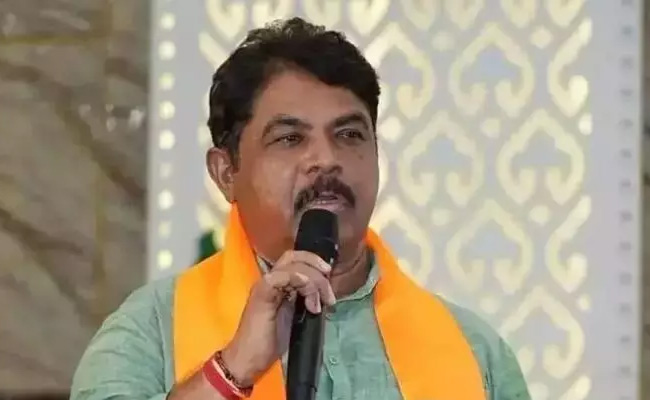
Bengaluru: Leader of Opposition in the Assembly R. Ashoka has accused the Congress government of using the hijab issue to placate what he described as discontent among minority voters after the Davanagere by-election.
In a post on X on Wednesday, Ashoka alleged that the state government, instead of addressing issues such as price rise, corruption, farmers’ distress and law and order, was attempting to retain its minority vote base by reviving the hijab issue.
Referring to the 2022 dress code introduced by the BJP government, which prohibited hijab in schools and colleges, Ashoka said the Karnataka High Court had upheld the policy and emphasised the importance of discipline in educational institutions.
He questioned the Congress government’s move to revisit the issue and asked whether setting aside the court-backed policy to benefit one community could be described as secularism.
Ashoka further alleged that while the government was willing to permit hijab, it continued to prohibit saffron shawls.
He accused the government of dividing students on religious lines rather than treating schools and colleges as spaces of equality.
Drawing a comparison with Mamata Banerjee’s government in West Bengal, Ashoka claimed that excessive appeasement politics had harmed the state and warned that the Congress in Karnataka could face a similar political response.
He said voters in Karnataka would teach the Congress a lesson for what he termed “vote-bank politics” and for compromising constitutional and judicial principles.