CPI(M) alleges unconstitutional cow slaughter law awareness drive inside mosques in Dakshina Kannada

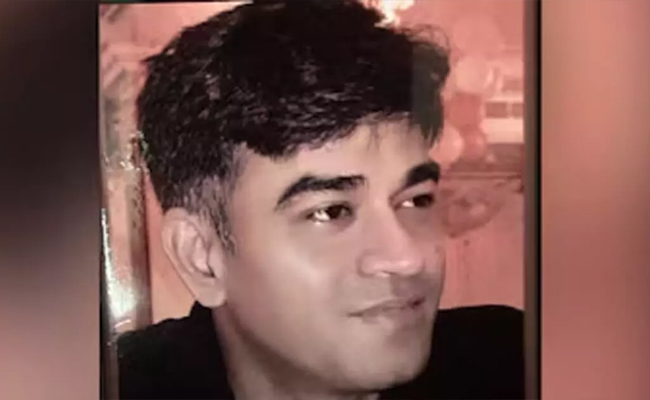
Mangaluru: CPI(M) Dakshina Kannada district secretary Muneer Katipalla has lodged a complaint with the Western Range IGP, alleging that police personnel in Dakshina Kannada district have committed an unconstitutional and discriminatory act by visiting mosques under the pretext of conducting awareness programmes on the Karnataka Prevention of Slaughter and Preservation of Cattle Act.
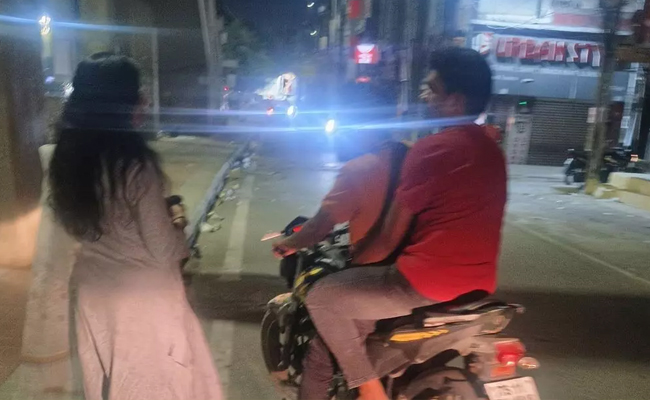
The complaint states that police officers from Dharmasthala visited the Kokkada Mosque and, in the name of awareness, warned worshippers of legal consequences. Similar visits reportedly took place in mosques across Sullia taluk, including Sullia Central Juma Masjid, Mogarpane Juma Masjid, Dugaladka Masjid, Sunnamoole, Kumbhakkodu, and Arantodu, where police allegedly stopped people during prayers and explained the provisions of the cattle slaughter law, warning that violators’ houses would be seized.
According to the complaint, this act sends a message that only Muslims violate the Karnataka cow slaughter law and, therefore, amounts to criminalising an entire community. “Just as the British once branded tribal and nomadic groups as ‘criminal tribes,’ are the Dakshina Kannada police now declaring the Muslim community as a ‘criminal community’?” the complaint asks.
The complaint further highlights that in several past cattle theft and illegal transport cases, including those registered in Karkala, Moodbidri, Belthangady, Uppinangady, Puttur, and Byndoor between 2020 and 2021, many accused individuals were non-Muslims. Yet, no similar awareness drives or property-seizure warnings were carried out in temples or other community centers. The selective targeting of mosques, the complaint argues, indicates bias and an attempt to stigmatize one community.
It questions the connection between Dharmasthala Police Station Crime No. 72/2025 and Kokkada Mosque, asserting that the police’s actions were not about awareness but about intimidation and communal targeting.
The complaint points out that Articles 25 and 26 of the Indian Constitution guarantee freedom of religion and the autonomy of religious institutions in managing their affairs. Therefore, any interference by state authorities, including the police, within a place of worship, especially on a sensitive issue like cow slaughter, violates the constitutional principle of state neutrality in matters of faith.
It further cites the Karnataka Police Act, 1963, which mandates that police duties must be carried out within the legal framework and under competent authority, not arbitrarily. Conducting an unofficial awareness campaign about a specific law inside a religious place, and implying that it applies only to a particular community, amounts to misuse of power and violation of law, the complaint argues.
Let the Truth be known. If you read VB and like VB, please be a VB Supporter and Help us deliver the Truth to one and all.
Sujit Nair raises concerns over speculation of DMK-AIADMK understanding to block TVK
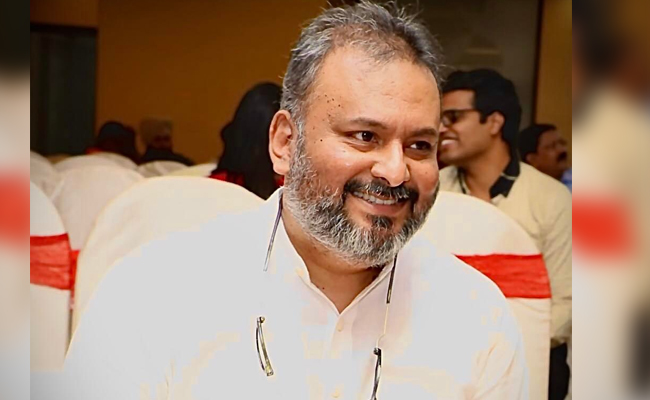
Chennai: Journalist and political commentator Sujit Nair has expressed concern over speculation that the Dravida Munnetra Kazhagam and the All India Anna Dravida Munnetra Kazhagam could explore a post-poll understanding to prevent Vijay-led Tamilaga Vettri Kazhagam from forming the government in Tamil Nadu.
In a social media post, Sujit Nair said the election verdict in Tamil Nadu reflected a clear public demand for political change and argued that the mandate should be respected irrespective of political preferences.
Referring to reports and political discussions surrounding a possible understanding between the DMK and AIADMK, he said he hoped such developments remained only speculative conversations and did not turn into reality.
Nair stated that if such an alliance were to take shape, it would raise serious questions about ideological politics in the country. He said TVK had emerged through a democratic electoral process and that the legitimacy to govern in a parliamentary democracy comes from the people’s verdict.
According to him, attempts to prevent an electoral winner from forming the government through unexpected political arrangements may be constitutionally valid, but many people could view them as politically opportunistic.
He further said that such a move could particularly affect the political image of the DMK, which has historically projected itself around ideology, social justice and opposition politics. Nair said that in ideological terms, the DMK appeared closer to TVK than to the AIADMK, and joining hands with its long-time political rival only to remain in power could weaken its broader political narrative.
He added that the same questions would apply to the AIADMK as well, as the party had spent decades positioning itself against the DMK and such an arrangement could create discomfort among its cadre and supporters.
Drawing a comparison with Maharashtra politics in 2019, Nair said he had expressed similar views when the Shiv Sena formed an alliance with the Indian National Congress and the Nationalist Congress Party after the Assembly elections.
He said post-poll alliances between long-standing political rivals often create a public perception that ideology and electoral mandates become secondary when political power equations come into play.
Nair also said such developments increase public cynicism towards politics and reinforce the belief among voters that ideology is often sidelined after elections.
He maintained that the Tamil Nadu verdict was emphatic and said respecting both the spirit and substance of the mandate was important for the credibility of democratic politics.