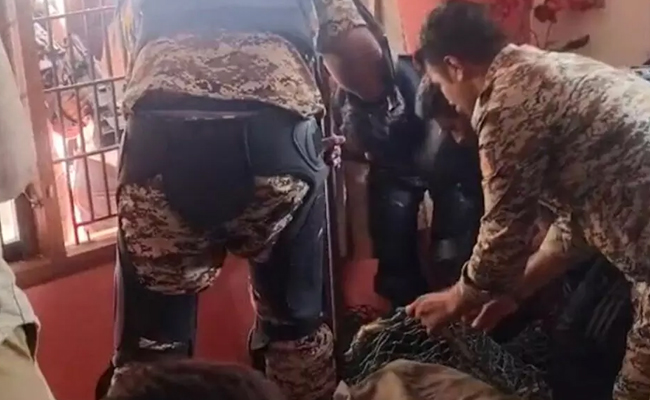
Dharmasthala Mass Burial: Earth work was carried out at marked site number 1, says Sujatha Bhat
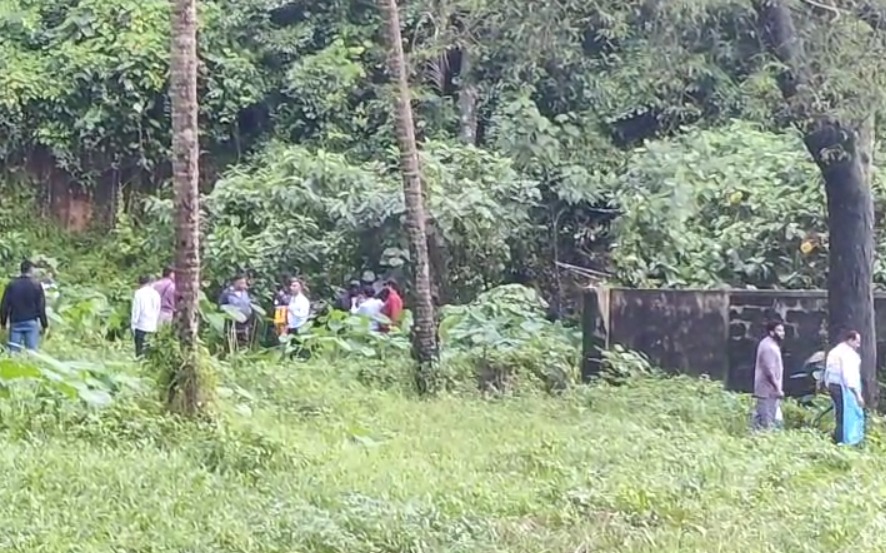
Mangaluru: In back-to-back press releases issued on July 29 and July 30 by Advocate Manjunath N, Sujatha Bhat has expressed her gratitude to the Special Investigation Team (SIT) for its dedicated efforts in the ongoing exhumation process related to the Dharmasthala case.
According to the first press statement issued on July 29, Sujatha Bhat thanked the SIT for its meticulous work during the exhumation at Site No. 1, which was carried out earlier that day. The statement mentions that a total of 14 sites were identified on July 28, and the operation at Site No. 1 marked the first official step in the process. It also noted that although the exhumation did not yield any positive results, Sujatha Bhat remains undeterred. She conveyed her full confidence in the SIT, appreciating the seriousness with which the investigation is being conducted, particularly the involvement of senior officials including the Assistant Commissioner.
The statement further mentioned that earthwork had reportedly taken place at Site No. 1 around five years ago.
In the second press release issued on July 30, Sujatha Bhat’s legal counsel shared further insights reportedly based on information from reliable sources. According to this information, the complainant-witness had provided specific details about the number of bodies believed to be buried at each of the marked sites. The data shared through the press note are as follows:
Site No. 1: 2 bodies
Site No. 2: 2 bodies
Site No. 3: 2 bodies
Sites No. 4 and 5: 6 bodies
Sites No. 6, 7, and 8: 8 bodies
Site No. 9: 6 to 7 bodies
Site No. 10: 3 bodies
Site No. 11: 9 bodies
Site No. 12: 4 to 5 bodies
Site No. 13: The highest number among the currently marked sites
The press note also claimed that a separate site, not among the 13 marked locations, is said to contain an even higher number of bodies as per the complainant-witness. This site is reportedly located further away and is expected to be taken up after the current round of exhumations concludes.
Sujatha Bhat reiterated through the press statement that for her, this process is not just a legal investigation but a personal and emotional journey in search of truth and closure, not only for her daughter but also for many other missing individuals. She was quoted in the release saying, “I will watch out for each and every exhumation. My heart aches for answers, and I have full faith that the SIT’s painstaking work will unearth the truth, no matter how long it takes or how deep they must dig.”
Let the Truth be known. If you read VB and like VB, please be a VB Supporter and Help us deliver the Truth to one and all.
Power tariffs under BESCOM to rise from May 1
Bengaluru (PTI): Power bills for consumers under the Bangalore Electricity Supply Company Limited (BESCOM) will go up from May 1, following an order issued by the Karnataka Electricity Regulatory Commission (KERC) on Friday.
The hike comes after KERC allowed the BESCOM to recover a revenue deficit of Rs 2,068 crore incurred in 2024-25, from the consumers.
As a result, for every unit of electricity consumed in 2024-25, the customers will be charged an additional 56 paise, it said.
"BESCOM shall calculate, for each of the active consumers of FY2024-25 the amount to be recovered based on their actual energy consumption during FY2024-25. Such amount shall be recovered during FY 2026-27 in equal monthly instalments, to be called as 'FY25 True up Charges', commencing from the first meter reading date falling on or after 1 May 2026 and concluding with the reading date ending on 30 April 2027," the order said.
"It is further ordered that BESCOM shall maintain a separate head of account, allocated for the purpose, to record the adjustment of the said amount to ensure full recovery of the deficit," it added.
Similarly Chamundeshwari Electricity Supply Corporation Limited (CESC) has also recorded a revenue deficit of Rs 121.71 crore and can collect an additional 15 paisa per unit for consumption in 2024-25, official sources said.