
Disqualified MLAs can contest from BJP: Union Minister DV Sadananda Gowda
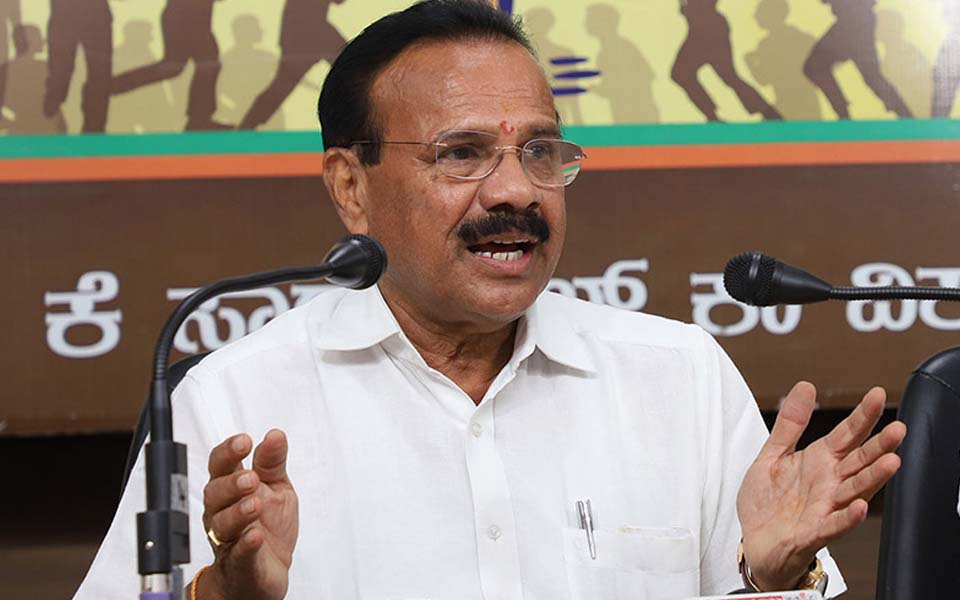
Udupi: Union Minister DV Sadananda Gowda on Saturday asserted that the BJP began with its preparations for by-elections from the very first day of forming government in the state and that it is prepared for the October 21 polls.
Speaking to reporters in Udupi on Saturday, former Karnataka CM Gowda added that the party will decide on the disqualified MLAs.
"We have to wait for the SC to pronounce the order. It's a matter of one day, in a single hearing judgement will most probably come out. The MLAs then will have to join the BJP to contest the by-elections on party ticket" Gowda said.
Speaking about JD(s) MLA Shivalinga Gowda's remarks that Siddaramaiah should once again become the CM of the state, Sadananda Gowda said "People in JD(s) and Congress will do anything for power. To get some position, he might have said it. Siddaramaiah himself is also aspiring for the CM's seat, he is going to all the parties to put forth his case. But there is no entry for him in the BJP".
Commenting in DK Shivakumar, who has been arrested by the ED in alleged money laundering case Gowda added that it was wrong to comment on it as the investigation was still under process. Gowda however added that whoever has done wrong should be punished irrespective of their party. "If anyone from our party also does something wrong, he will be punished under law," he added.
Let the Truth be known. If you read VB and like VB, please be a VB Supporter and Help us deliver the Truth to one and all.
Boat carrying 250 people, including Rohingya and Bangladeshis, sinks in Andaman Sea
_vb_00.jpeg)
Dhaka (AP): At least 250 people, including Rohingya refugees and Bangladeshi nationals, were missing after a boat capsized in the Andaman Sea recently on the way to Malaysia, according to the United Nations' refugee and migration agencies.
When the boat sank and the status of any search Wednesday were unclear.
The UN High Commissioner for Refugees and the International Organisation for Migration in a joint statement said Tuesday that the trawler departed from Teknaf in the southern Bangladeshi district of Cox's Bazar carrying a large number of passengers to Malaysia.
Overcrowding, strong winds and rough seas caused the vessel to lose control and sink, the agencies said.
UNHCR and IOM said the disappearance reflected the protracted displacement of Rohingya people and the absence of durable solutions.
They said ongoing violence in Myanmar's Rakhine state has made the Rohingyas' safe return to Myanmar uncertain, and limited humanitarian assistance, restricted access to education and employment in refugee camps, continue to push vulnerable Rohingya refugees to choose risky sea journeys, often based on false promises of higher wages and better opportunities abroad.
UNHCR and IOM urged the international community to strengthen funding and solidarity to ensure lifesaving assistance for Rohingya refugees in Bangladesh, which has sheltered more than 1 million Rohingya from Myanmar.
_vb_80.jpeg)
_vb_77.jpeg)
_vb_92.jpeg)