Dr. Kaup Mohamed presents lecture at Accreditation Services for Schools, Colleges & Varsities in UK
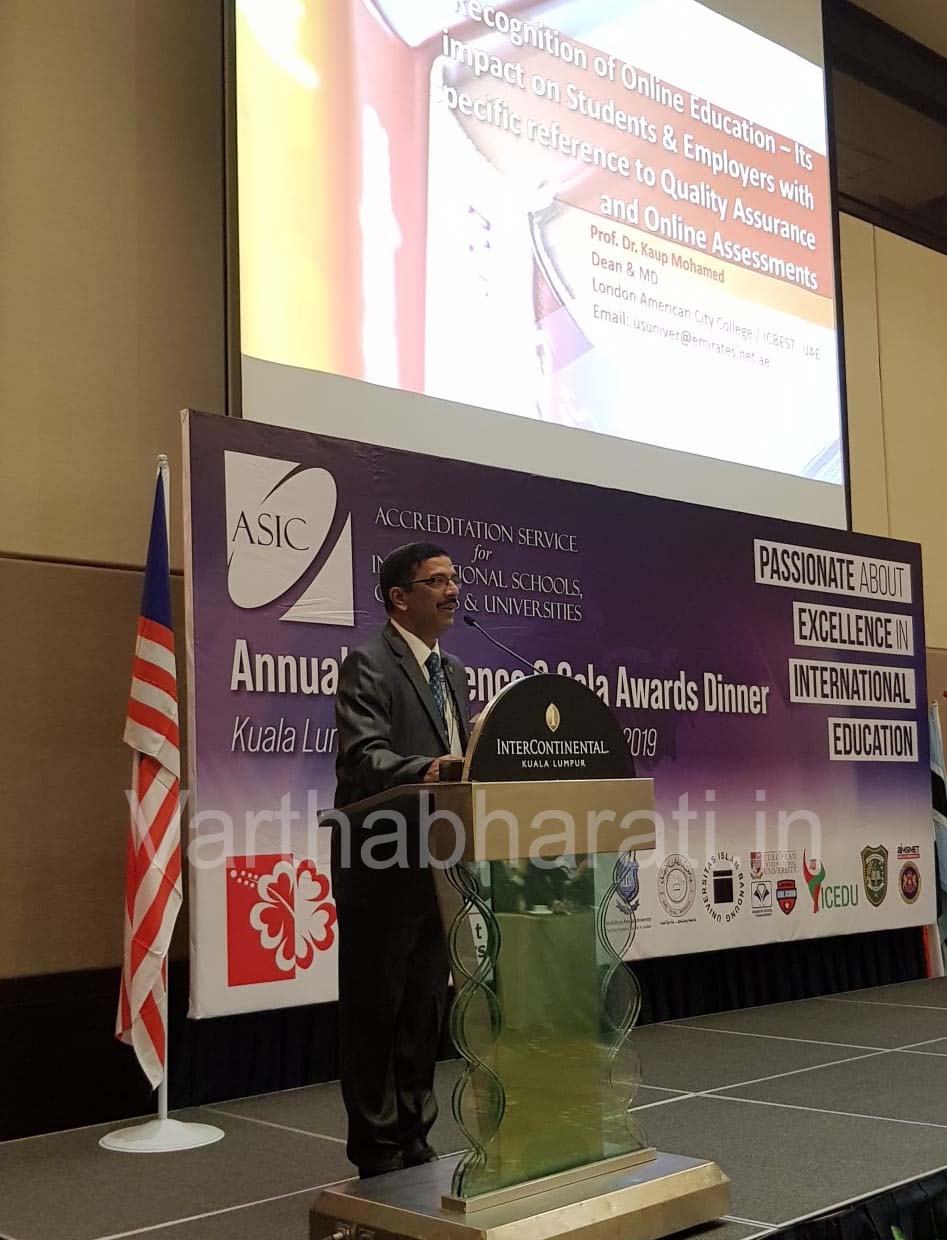
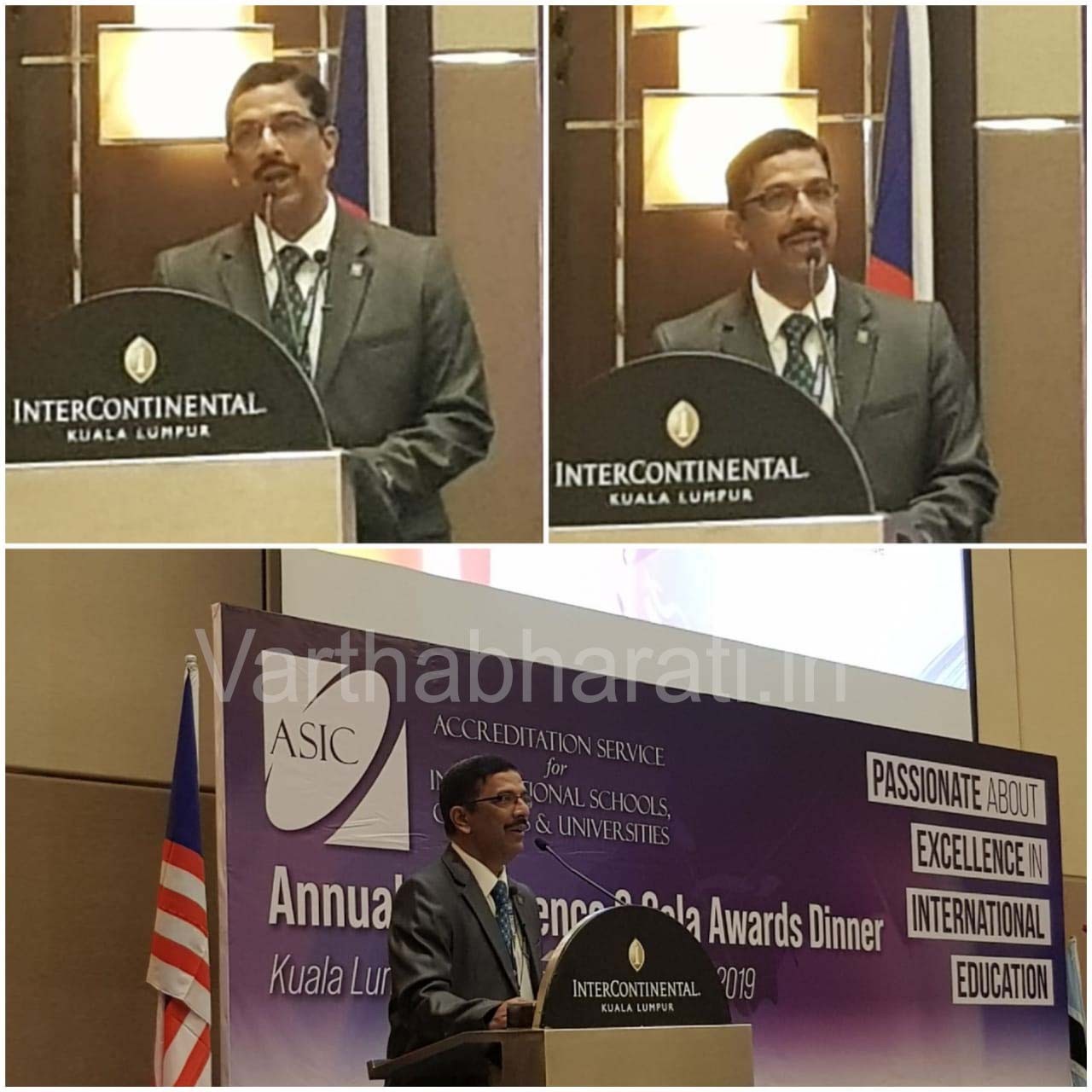
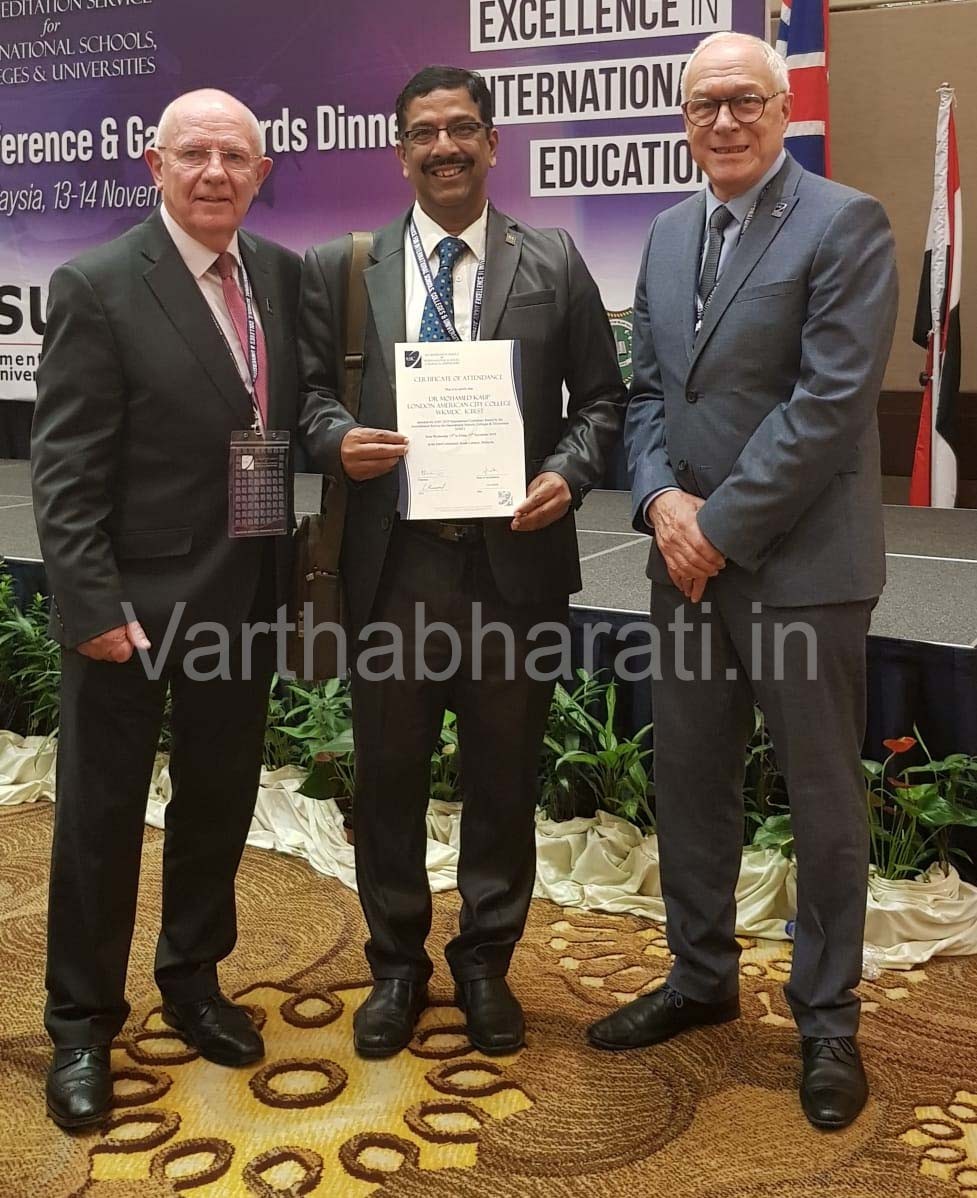
Prof. Dr. Kaup Mohamed, the Dean and Managing Director of London American City College and its sister concern and also the Adjunct Professor of the Madonna University, Michigan, USA presented a research paper and delivered a lecture at the Accreditation Services for International Schools, Colleges, and Universities (ASIC), UK, a British Accreditation Body at Inter Continental Hotel Ball Room, Kuala Lumpur, Malaysia.
Dr. Kaup provided an insight into the facts of acceptance of online education in the world employment. He also emphasized on the empirical evidence from various authors in regard to the use of online education versus the traditional education. Several concerns have been identified by Dr. Kaup relating to the acceptance of the online degrees and the analysis also focused on the trends of online education amongst the best colleges in the year 2019. Dr. Kaup reviewed the facets of the KPI for ensuring quality assurance in the institution covering the Quantitative indicator and Qualitative performance indicators whereby the measurement is done between the desired situation (goals) and the current situation (results). Dr. Kaup discussed the KPIs in regard to productivity, satisfaction, value, feedback and academic and institutional quality.
Dr. Kaup Mohamed is the only person in Beary community holding several Doctorates in various fields of study from India and abroad. Dr. Kaup has published several scholarly research articles and a thesis in strategic Management area and other allied areas of management. Dr. Kaup has delivered lectures at various countries including USA, UK, Netherlands, Belgium, Denmark, France, Germany, Austria, Macedonia, Singapore, Thailand, Spain, Russia, India, Australia, New Zealand, Srilanka, Turkey. His current area of research interest is in Business Strategies, Operations & Production Management, Quality Management, Consumer Protection Law, Creative Problem Solving – A Total Systems Approach, Decision Making, Organizational Behavior, Human Resource Management, Business Project Management, Marketing, Strategies for Success, etc. His research paper on “Customer Relationship Management that aids in customer-centric processes” was published in “The Observer of Management Education” Journal. His latest publications including "Development of New Concepts and Purposes add value to CRM" etc. are featured in the International Journal of Management Research and Review, International Journal of Research in Commerce, Economics and Management in the area of strategic management, etc.
Let the Truth be known. If you read VB and like VB, please be a VB Supporter and Help us deliver the Truth to one and all.
UP Cong holds statewide protest seeking probe into FIR against Swami Avimukteshwaranand
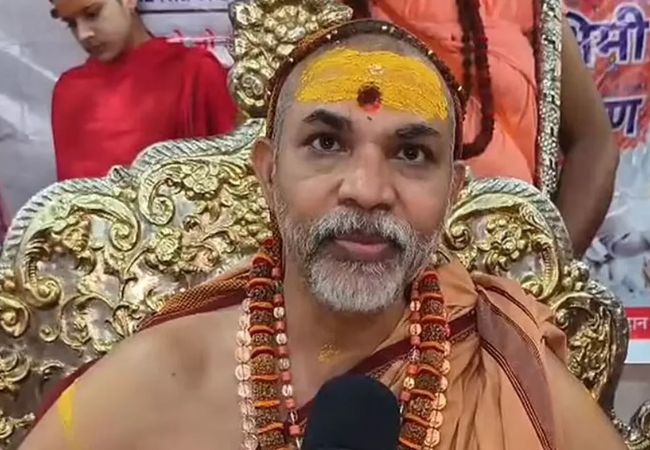
Lucknow (PTI): The Uttar Pradesh Congress on Wednesday staged a statewide protest demanding a fair and transparent inquiry into the FIR lodged against Swami Avimukteshwaranand Saraswati and those who filed the complaint against him.
In a statement issued here, the party said memorandums addressed to Prime Minister Narendra Modi were submitted through district magistrates in all districts of the state.
Uttar Pradesh Congress spokesperson Manish Hindvi told PTI that the memorandums were handed over through the district administration in all 75 districts.
In the memorandum, the party alleged that Saraswati and his disciples were "unnecessarily harassed and humiliated" by police on the occasion of Amavasya and were prevented from taking a ritual bath (at the Magh Mela). It further alleged that some disciples were manhandled and taken to a police station.
The memorandum also claimed that an FIR was later registered against Saraswati, his disciple Swami Mukundanand Brahmachari and several unidentified persons in a sexual harassment case. It termed the case a "conspiracy" aimed at tarnishing the seer's reputation.
Citing Articles 25 and 26 of the Constitution, the memorandum stated that these provisions guarantee religious freedom and the right of religious denominations to manage their own affairs.
It described the position of shankaracharya held by Saraswati as "one of the highest spiritual posts in Sanatan tradition" and alleged that the entire episode appeared to have been "orchestrated in a planned manner".
"We request that the background of the persons who got the FIR registered be investigated in a transparent manner by a retired high court judge and strict action be taken against them," the memorandum said.
It also sought a "fair and transparent probe" into the allegations levelled against Saraswati so that the truth could be established.
Earlier, Uttar Pradesh Congress president Ajay Rai had told reporters in Varanasi after meeting Saraswati that the party stood firmly with him.
The Congress said it would continue to press for an impartial inquiry into the entire episode.
On February 21, an FIR was lodged in Prayagraj against Saraswati and his disciple Mukundanand Brahmachari on charges of sexually abusing two persons, including a minor, over the past year at a gurukul and religious congregations, including the recently concluded Magh Mela.
Days after he was booked, Saraswati had said on Monday that he would not oppose his arrest and asserted that the "fabricated story" would be exposed sooner or later.
At a press conference on Wednesday, Saraswati alleged that criminals rule in Uttar Pradesh, level allegations and influence investigations, as he denied having any contact with the two persons for whose alleged sexual abuse he has been booked.
_vb_77.jpeg)
_vb_00.jpeg)