DYFI activists remove gates of Harekala-Adyar bridge, opening it to traffic
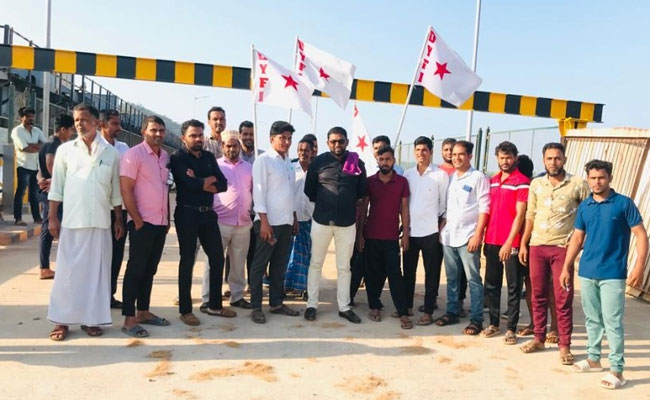
Mangaluru (PTI): Activists of CPI(M) youth wing DYFI on Tuesday removed the gates of the newly built bridge connecting Harekala and Adyar in Dakshina Kannada district, opening it for movement of light vehicles.
The bridge-cum-vented dam across the Nethravati river had not been opened for traffic though the work on it was completed four months ago. The minor irrigation department has not yet issued an order to open the bridge on account of a stay order from the court.
The officials failed to keep their earlier promise of opening the bridge to vehicular movement on April 1. Though the officials reached there on Monday, they stopped short of opening the bridge as the election code of conduct is in force.
The DYFI activists later submitted a memorandum to the Dakshina Kannada Deputy Commissioner urging him to allow traffic on the bridge. As no action was taken till Tuesday, the activists, along with local people, removed the gates blocking access to the bridge on either side to allow vehicular movement.


Let the Truth be known. If you read VB and like VB, please be a VB Supporter and Help us deliver the Truth to one and all.
NIA registers case to probe recovery of 79 crude bombs in poll-bound West Bengal
New Delhi (PTI): The National Investigation Agency (NIA) on Sunday registered a case to probe recovery of 79 crude bombs in poll-bound West Bengal, officials said.
The move came following a directive by the Union Home Ministry in this regard, they said.
In pursuance to the home ministry's order, the anti-terror agency on Sunday registered a case, which was originally filed at Uttar Kashi police station, Bhangar division, Kolkata on Saturday, and took up the investigation, an NIA spokesperson said in a late night statement.
"The case pertains to recovery of 79 crude bombs and other incriminating materials by Kolkata police, which were being stored at a spot, thereby endangering human life and property," the spokesperson said.
Earlier in the day, the Election Commission had directed the West Bengal Police to launch a special drive to arrest those involved in illegal manufacturing of crude bombs in the poll-bound state, an official said.
It asserted that all cases related to the making of any such explosive would be probed by the National Investigation Agency, the official said.
The directive came after the police recovered a large number of crude bombs from the house of a person, allegedly a TMC worker, at Bhangar in South 24 Parganas district, days ahead of the second and final phase of the assembly polls in the state.
The explosives were recovered during a search at the residence of Rafikul Islam following specific inputs, the official said.
The poll panel also issued a warning to senior police officers across the state over any lapse in maintaining law and order before the April 29 polling.
The first phase of the assembly elections in West Bengal was held on April 23, while the second phase will take place on April 29. Votes will be counted on May 4.
A record 93.19 per cent turnout has been recorded in the first round of polling. Bhangar will vote in the second phase.