Fiona Swedal murder case: 18-year old brother Samson Cutinho confesses to have killed Swedal
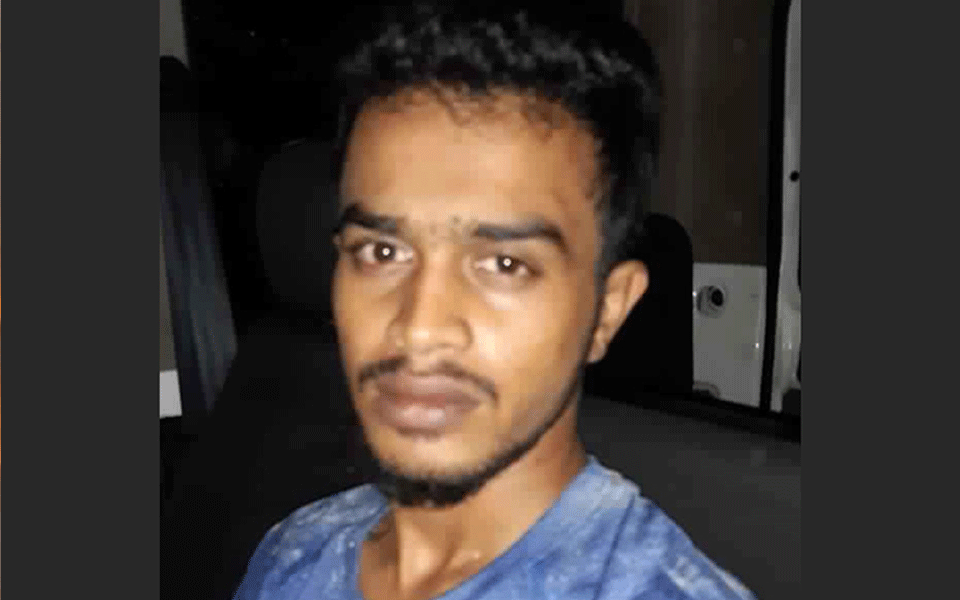
Konaje: Brother of Fiona Swedal, who was reported to be missing from several days, has confessed to have killed her before dumping her body in a forest behind their home.
Swedal (16) a student of private PU College in Mangaluru was missing from her home from last 18 days and police was trying to track her. The investigation later on Saturday had revealed that she was killed after her skeleton was found in a forest behind her house.
Upon enquiry, her brother Samson (18), confessed that he killed her by hitting her on the head with hammer repeatedly and dumped her body in the forest behind their house. The motive behind the murder is said to be rivalry between the siblings as Samson felt his sister Swedal was being given more importance by their parents.
Samson is reportedly a drug addict and had failed his engineering exam while Swedal, a bright student in her academics was studying PU in a leading college in Mangaluru.
On October 9, Francis Cutinho, father of Swedal had filed a missing complaint of his daughter adding that she had not returned home after going to Mangaluru on October 8. Local residents of Mudipu had recently submitted a memorandum to Mangaluru Police Commissioner to investigate the matter as police was unable to find any clue about Swedal even after 15 days.
Recent investigation revealed that the Swedal’s mobile phone was last active in Mudipu vicinity which led to intense questioning of family members by the police. Swedal’s brother broke during the questioning and confessed that he murdered Swedal and dumped her body in forest.
An immediate search operation to locate Swedal’s body was launched on late Saturday night wherein the cops recovered hair, teeth and few other parts of her body along with her mobile phone. Police have also recovered the weapon of murder from Samson and is further investigating the case.
Let the Truth be known. If you read VB and like VB, please be a VB Supporter and Help us deliver the Truth to one and all.
SC to hear on May 4 PIL seeking stringent guidelines for issuing Aadhaar to adolescents, adults
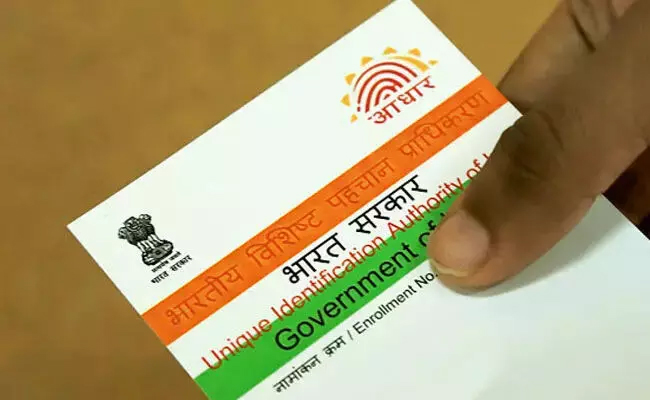
New Delhi (PTI): The Supreme Court is scheduled to hear on Monday a plea seeking a direction to the Unique Identification Authority of India to issue new Aadhaar cards only to citizens up to the age of six years, and frame stringent guidelines for its issuance to adolescents and adults to stop infiltrators from masquerading as Indian citizens.
As per the apex court's causelist of May 4, the plea would come up for hearing before a bench of Chief Justice Surya Kant and Justice Joymalya Bagchi.
The Public Interest Litigation (PIL) filed by lawyer Ashwini Upadhyay has also sought a direction to the authorities to install display boards at common service centres stating that the 12-digit unique identification number is only a "proof of identity" and not a proof of citizenship, address or date of birth.
Besides all the states and Union Territories, the plea has made the UIDAI -- which is the authority that issues Aadhaar -- and the Union ministries of home, law and justice, and electronics and information technology as parties.
The plea, filed through advocate Ashwani Dubey, said Aadhaar, originally intended as a proof of identity, has increasingly become a "foundational document" enabling individuals to obtain other identification documents, such as ration cards, domicile certificates and voter identity cards.
"The UIDAI has issued 144 crore Aadhaar and 99 percent Indians have been enrolled. Therefore, the petitioner is filing this writ petition as a PIL under Article 32, seeking a direction to UIDAI to issue new Aadhaar to children only and frame new stringent guidelines for adolescents and adults, so as to stop infiltrators from getting it and masquerading as Indian citizens," the plea said.
It said the need to file the plea arose when the petitioner came to know the manner in which infiltrators are able to procure Aadhaar through a verification process that is weak and can be easily manipulated.
"Foreigners apply for Aadhaar under the 'foreign' category. But infiltrators apply for Aadhaar under the 'Indian citizen' category and get it easily made. Thereafter, they obtain a ration card, birth and domicile certificate, driving licence, et cetera, essentially becoming indistinguishable from Indian citizens…," it said.
Besides seeking other directions, the plea has raised legal questions, including whether the Aadhaar Act 2016 has become "temporally unreasonable" for failing to keep up with the legislative intent of distinguishing foreigners from Indian citizens.
It said the alleged misuse of Aadhaar undermines targeted welfare delivery and leads to diversion of public resources.