Fishing trawlers to stay away from sea: K’taka government issues directive
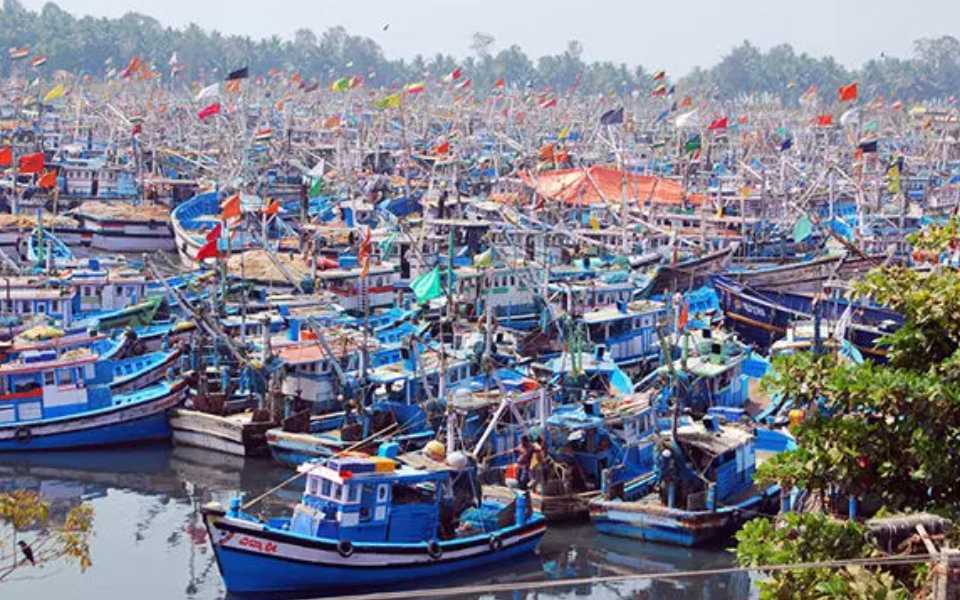
Bengaluru: In preparations for the upcoming monsoon, the Karnataka Government has imposed a ban on all types of fishing trawlers or mechanised boats and conventional boats which are equipped with inboard or outboard engines exceeding 10 horsepower (HP). This ban will be in effect from June 1 to July 31, lasting a total of 61 days along the Karnataka coast. The directive was issued on Tuesday.
During this period, only motorized boats with engines up to 10 HP and traditional/barges fitted specifically for transporting boats will be permitted to fish in the state's coastal waters.
The government has warned that fishing boats and fishermen who violate this order will face penalties as prescribed under the Karnataka Marine Fisheries Act, 1986. Additionally, violators will be disqualified from receiving state-subsidized diesel for one year.
The Joint Director of the Fisheries Department said in a release that all fishermen in the coastal region are expected to comply with the state government’s order and to cooperate with the government.
Let the Truth be known. If you read VB and like VB, please be a VB Supporter and Help us deliver the Truth to one and all.
Two arrested in K'taka for assaulting minors, uploading CSAM content

Bengaluru (PTI): Two men were arrested for allegedly sexually assaulting two minor girls, recording the acts on mobile phones and uploading the videos online as child sexual abuse material, police said on Thursday.
The accused have been identified as Kiran Kumar (29), hailing from Chitradurga district, and Aditya M K (20), hailing from Shivamogga district, they said.
A probe was initiated after information was received from the NCRP portal regarding a suspected instance of creation of Child Sexual Abuse Material (CSAM) for online dissemination, police said.
Accordingly, a case was registered at Kaggalipura Police Station under relevant sections of the IT Act on May 10, they added.
Investigation revealed that two minor girl victims were exploited and videos were created and uploaded to the internet. The child victims have subsequently recorded their statements as per procedure and further necessary legal steps have been taken, Pronab Mohanty Director General of Police, Cyber Command, said in a statement.
Based on the statements of the victims, the accused persons, who allegedly assaulted the minors, recorded the acts on mobile phones and uploaded the videos online, were arrested, he said.
Following the probe, sections 65(2) (rape) and 70 (gangrape) of the Bharatiya Nyaya Sanhita, along with relevant sections of the POCSO Act, have been added to the FIR, police said.
Officials collected relevant information and on May 12, arrested the accused persons and seized three mobile phones belonging to them, in which the videos had allegedly been recorded, he said.
The accused were later produced before the court and taken into police custody for further investigation, he added.
According to him, in CSAM cases, police usually apprehend offenders who have downloaded such content or have kept them in their possession after obtaining them from elsewhere, usually the internet.
"The present case is one of the very few instances where content creators and uploaders have been apprehended," Mohanty added.