Government transfers Dharmasthala mass burial case to SIT
Karnataka Home Department issues formal order
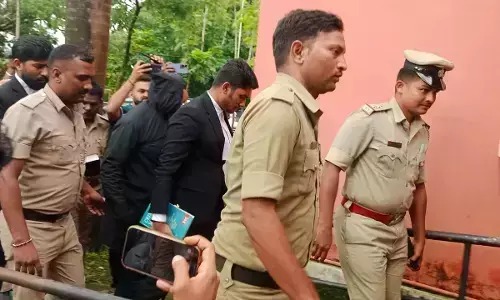
Mangaluru: The Karnataka government has officially transferred the investigation into the shocking Dharmasthala serial murder allegations to a Special Investigation Team (SIT), following explosive media reports and a formal request from the Karnataka State Women’s Commission.
In a government order dated July 19, 2025, the Home Department announced the formation of the SIT to conduct a comprehensive and impartial probe into the disturbing allegations, including mass graves, sexual violence, and the disappearance of women and students in and around Dharmasthala over the past two decades.
Dakshina Kannada Superintendent of Police Dr. Arun K. confirmed the development in a press statement, saying: "The government has officially handed over case number 39/2025 of Dharmasthala Police Station to the SIT as of July 19. The team will soon assume charge of the investigation."
The probe stems from a chilling statement submitted by a former sanitation worker in court, claiming to have buried hundreds of human bodies in the Dharmasthala region. On July 12, national media outlets, including Times Now, reported the discovery of a human skull and the testimony of a family alleging the disappearance of a female medical student.
The Karnataka State Women’s Commission took serious note of these reports and, in its letter dated July 14 (Ref: 481/2025-26/7817), urged the state government to constitute an SIT. The Commission highlighted patterns of unnatural deaths, rape, disappearances, and brutal violence spanning over two decades, predominantly involving women and girl students.
The SIT will be led by Dr. Pronab Mohanty, IPS, Director General of Police (Internal Security Division), Bangalore, who will act as the Chief of the team. Other members include:
M.N. Anucheth, IPS, Deputy Inspector General of Police (Recruitment), Bangalore
Soumya Latha, IPS, Deputy Commissioner of Police, CAR Headquarters, Bangalore City
Jitendra Kumar Dayama, IPS, Superintendent of Police, Internal Security Division, Bangalore
The SIT has been empowered to investigate not only the registered case (Crime No. 39/2025 under Section 211A of the Bharatiya Nyaya Sanhita) but also any other related criminal cases that may have been registered or could be registered in other police stations across Karnataka.
The team has been instructed to operate out of the Dakshina Kannada district police headquarters and may draw upon available local resources. It is also mandated to submit periodic updates to the Director General and Inspector General of Police, and ultimately, a final investigation report to the state government via the DGP's office.
The order, issued by S Ambika, Under Secretary, Department of Home (Crimes), was circulated to senior officials including the Chief Secretary, Home Minister’s Secretariat, and Principal Secretaries of rlevant departments.
Let the Truth be known. If you read VB and like VB, please be a VB Supporter and Help us deliver the Truth to one and all.
Power tariffs under BESCOM to rise from May 1
Bengaluru (PTI): Power bills for consumers under the Bangalore Electricity Supply Company Limited (BESCOM) will go up from May 1, following an order issued by the Karnataka Electricity Regulatory Commission (KERC) on Friday.
The hike comes after KERC allowed the BESCOM to recover a revenue deficit of Rs 2,068 crore incurred in 2024-25, from the consumers.
As a result, for every unit of electricity consumed in 2024-25, the customers will be charged an additional 56 paise, it said.
"BESCOM shall calculate, for each of the active consumers of FY2024-25 the amount to be recovered based on their actual energy consumption during FY2024-25. Such amount shall be recovered during FY 2026-27 in equal monthly instalments, to be called as 'FY25 True up Charges', commencing from the first meter reading date falling on or after 1 May 2026 and concluding with the reading date ending on 30 April 2027," the order said.
"It is further ordered that BESCOM shall maintain a separate head of account, allocated for the purpose, to record the adjustment of the said amount to ensure full recovery of the deficit," it added.
Similarly Chamundeshwari Electricity Supply Corporation Limited (CESC) has also recorded a revenue deficit of Rs 121.71 crore and can collect an additional 15 paisa per unit for consumption in 2024-25, official sources said.