Here’s what happens if you accept bribe for votes from Political parties, candidates
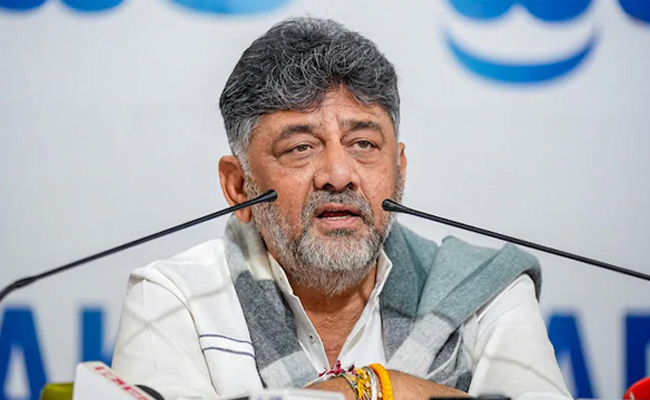
Dakshina Kannada DC SASIKANTH SENTHIL explains in video

Mangaluru: Bribing voters in exchange of their votes is a common malpractice during elections by political parties and candidates. The malpractice is seldom reported to the authorities and instead people tend to accept bribe in exchange of the votes.
Most of the voters are aware of the fact that it is illegal on the part of political parties and candidate to bribe voters for their votes. But what many don’t know is the fact that it is also illegal on part of voters to accept bribes from parties and candidates promising to cast their votes in their favour.
Yes, not just giving bribes to voters but accepting bribes for votes is a criminal offence in India and the violators are ought to be tried under criminal charges and shall punished with imprisonment which may extend to one year, or with fine, or with both.
Vartha Bharati met Election Returning Officer of Dakshina Kannada and Deputy Commissioner Sasikanth Senthil to get more information in this regard.
Speaking about the bribing of voters during election he said “Voting is a democratic right in our country and it is the duty of every citizen to use this right with utmost responsibility. Any kind of malpractice or bribery (both giving and taking) or any attempts to influence voters’ is a criminal offence and both the parties involved (in bribery) will be prosecuted under sections of Indian Penal Code (IPC) including section 171 (B)”.
“Ethical voting is very important and is a duty of every citizen of the country. Parties and candidates try to influence voters not only through bribing or giving financial bounties but also on the lines of caste, religions and communities. Hence we all should make sure that votes are casted on right lines and not under any kind of influence” Senthil added.
Here’s what you can do if you are offered bribe for votes:
Advising people to report any such offers or attempts to influence their votes to the authorities Senthil said “In any scenario, if any political party or candidate makes a bribing offer to you or try to influence your votes in any way, voters should immediately report it to the authorities. We have our toll free helpline and people can reach us by simply dialing 1905 from their phones”.
“Another way to report such activities is cVigil App of Election Commission of India. People can also report such activities using pictures through this app and action will be initiated within 100 minutes of receiving the complaint” Senthil added while urging people to join the authorities in making sure free and fair elections in the constituency.
Election Commission of India had also tweeted urging people to assist ECI by reporting cases of bribery.
Assist #ElectionCommissionofIndia in ensuring free and fair elections.
— ECI #DeshKaMahatyohar (@ECISVEEP) April 6, 2019
Report cases of bribery on #cVIGIL app#YourVoteMatters pic.twitter.com/Qi2Tn5z5Tg
Let the Truth be known. If you read VB and like VB, please be a VB Supporter and Help us deliver the Truth to one and all.
ED raids Kolkata Police deputy commissioner, businessman in PMLA probe
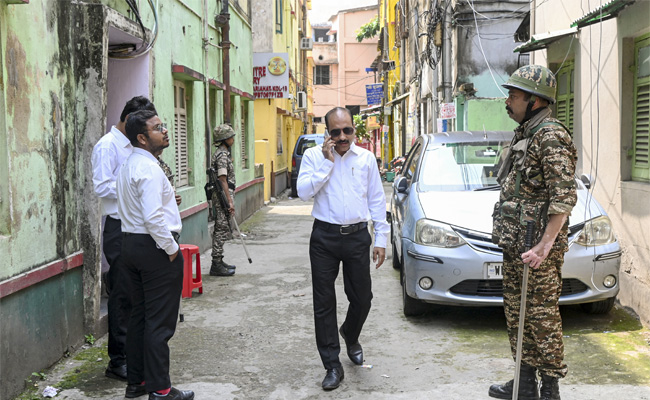
Kolkata (PTI): The Enforcement Directorate on Sunday conducted raids at the premises of Kolkata Police Deputy Commissioner Shantanu Sinha Biswas and a local businessman as part of a money laundering probe against an alleged criminal and his linked syndicate in the poll-bound state, officials said.
Two premises of Biswas, including his residence in Ballygunge area and one location of the businessman named Joy Kamdar, Managing Director of a company named Sun Enterprise, have been raided under the provisions of the Prevention of Money Laundering Act (PMLA).
Kamdar has been taken by the officials to the local ED office for questioning. Biswas, chief coordinator and nodal officer of the West Bengal and Kolkata Police welfare committee, was not present at his premises, they said.
The action is linked to a money laundering case against an alleged local criminal named Biswajit Podder alias Sona Pappu, who is booked in multiple cases on charges of attempted murder and extortion.
The federal probe agency had conducted the first round of searches in this case on April 1.
The ED had then seized cash of Rs 1.47 crore apart from gold jewellery and silver valued at Rs 67.64 lakh and a country-made revolver from some premises that were searched.
The probe stems from a Kolkata Police FIR against against Podder for his alleged involvement in rioting, attempt to murder, criminal conspiracy and Arms Act violations. The accused, including Podder, were engaged in organised criminal syndicate activities in the state of West Bengal and generated funds illegally by way of syndicate operations, the ED said in a statement on April 9.
Podder is also wanted by the police in a case of violence in Kankulia road near Golpark of Kolkata and is currently on the run.
The ED has issued summons to Podder but he has failed to join the investigation so far, according to the agency.
West Bengal will have a two phase poll on April 23 and April 29.