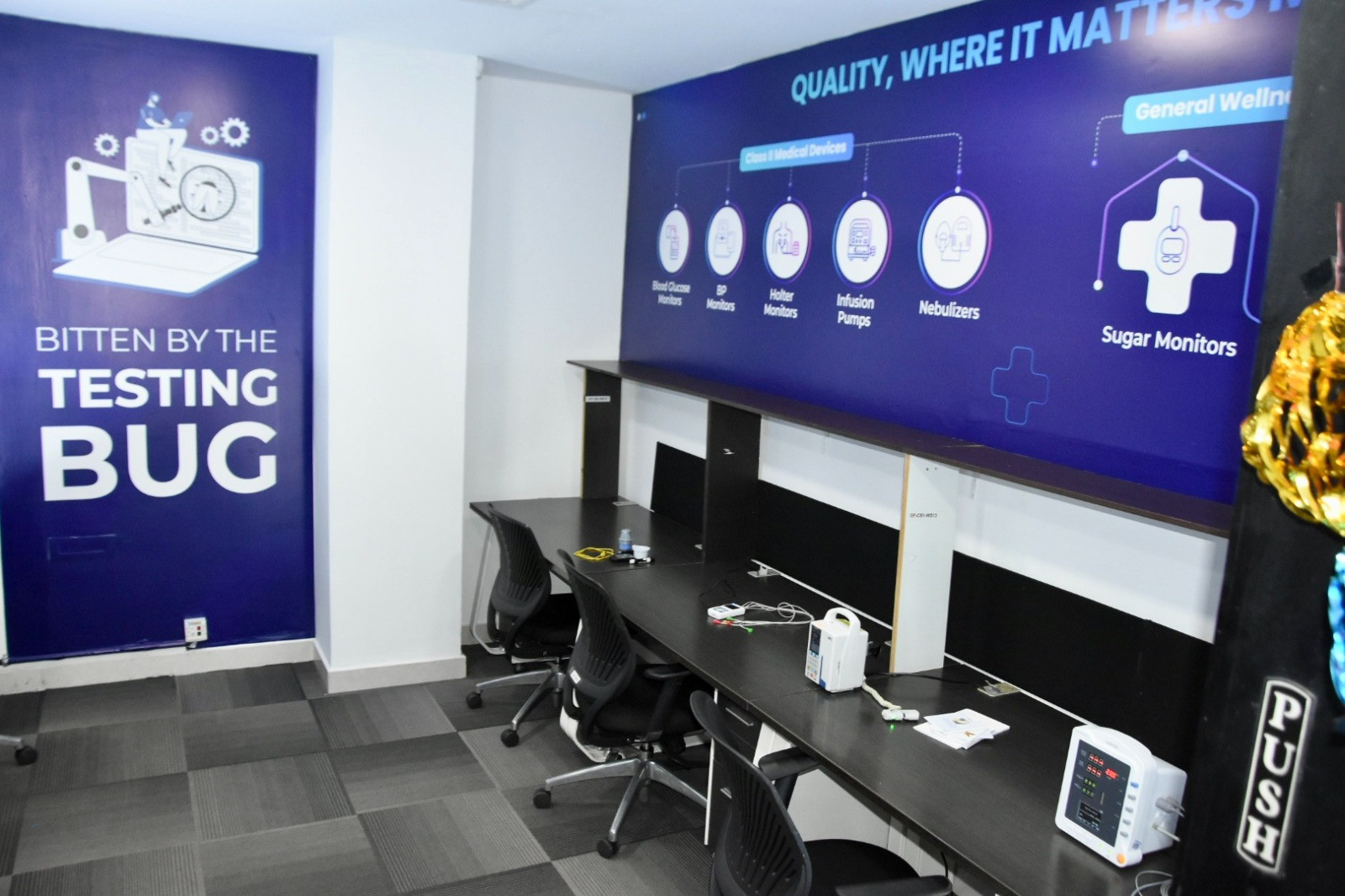
Impelsys inaugurates advanced medical devices testing lab in Mangalore
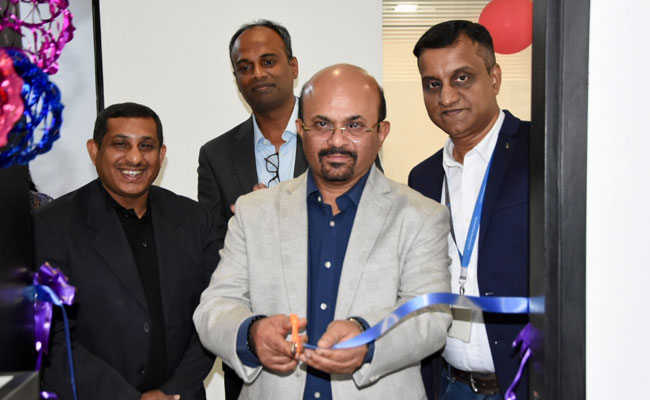
Mangalore: Impelsys, a prominent global technology company, has officially launched an advanced medical device testing lab in Mangalore. Specializing in cutting-edge technologies for the healthcare industry, this new testing facility is part of Impelsys' extensive range of solutions and services, including data and analytics, AI-powered platforms, cloud services, and learning solutions.
The inauguration ceremony was led by Shyam Shetty, Managing Director of Laerdal Bangalore LLP, who expressed confidence in the success of the new testing facility. He acknowledged Impelsys' strong presence in healthcare and extended his best wishes to the team.
Shyam said that this move will also open employment opportunities for people around the city and young engineering and hospital management graduates. He further added that Mangalore is a healthcare and medical hub in the region and has potential to grow multifolds like Bengaluru.
Vincent Emerald, Global Head & Director of QA at Impelsys, shared his vision for the facility, stating that its purpose is to accelerate transformation in healthcare. The facility aims to support hospitals and wellness centers in offering safe and secure care to patients while enabling medical devices OEMs to bring their products to market more efficiently.
Vincent, during his interaction with media reporters, emphasized that the newly launched facility represents a futuristic concept within the Indian landscape. According to him, the healthcare system in the country is poised for significant evolution in the coming years, and this testing lab serves as a pivotal stepping stone in ushering in a revolutionary era for the healthcare industry.
Elaborating further, Vincent highlighted the transformative potential of the facility, stating that it aligns with the broader vision of advancing healthcare practices through cutting-edge technologies and innovative solutions. He expressed confidence that as the healthcare landscape evolves, the lab will play a crucial role in shaping the industry's trajectory, contributing to enhanced diagnostics, patient care, and overall healthcare safety.
Impelsys has positioned itself as an organization that anticipates the needs of its clients and adapts to changing trends. Recognizing the crucial role of technology in providing quality healthcare, the medical devices testing facility is designed to enhance the safety of diagnostics and patient care, a press statement from Impelsys stated.
Impelsys offers comprehensive Quality Engineering services, leveraging the fastest automation tools for both functional and non-functional testing. The QA team collaborates with global customers to ensure the delivery of high-quality, flawless products and solutions.
About Impelsys
Impelsys is a leading provider of digital transformation solutions, empowering organizations worldwide to become digital-first, data-driven intelligent enterprises. With over two decades of expertise in innovation and technology, Impelsys is a trusted partner for organizations seeking end-to-end digital advancement.
Impelsys has maintained a long-term partnership with Laerdal, a global leader in healthcare education and resuscitation training, focused on improving healthcare quality.
.jpeg)
.jpeg)
.jpeg)
.jpeg)
.jpeg)
.jpeg)
.jpeg)
.jpeg)
.jpeg)
.jpeg)
.jpeg)
.jpeg)
.jpeg)
.jpeg)
.jpeg)
.jpeg)
Let the Truth be known. If you read VB and like VB, please be a VB Supporter and Help us deliver the Truth to one and all.
Heatwave scorches Odisha, Jharsuguda reels under 43.6 degrees C

Bhubaneswar (PTI): Heatwave conditions scorched Odisha on Tuesday, with the IMD forecasting that hot and humid conditions would continue in parts of the state.
The IMD’s Bhubaneswar centre said Balasore, Bhadrak, Jajpur, Kendrapara, Cuttack, Jagatsinghpur, Puri, Khurda, Nayagarh, Ganjam and Gajapati districts were likely to experience hot and humid conditions on April 22.
It also predicted thunderstorms accompanied by lightning and gusty surface winds in parts of Mayurbhanj, Keonjhar, Puri, Khurda, Nayagarh, Ganjam, Gajapati, Rayagada and Koraput, among others.
On Tuesday, 18 places across Odisha recorded maximum temperatures of 40 degrees Celsius or above. The industrial town of Jharsuguda was the hottest in the state at 43.6 degrees Celsius.
Sambalpur and Titlagarh recorded 42.5 degrees Celsius each, followed by Hirakud at 42.4 degrees, Bolangir at 42.2 degrees and Angul at 42.1 degrees.
The twin cities of Bhubaneswar and Cuttack recorded 37.9 degrees Celsius and 38.8 degrees Celsius, respectively, with relative humidity levels remaining above 70 per cent.
Meanwhile, the state government directed all district education officers to conduct a Summer Learning Programme for students till class 8 in government schools during the summer vacation.
Officials said students would be given practice assignments along with audio-visual learning content.
Subject-wise assignment sheets have been prepared, while related digital material will be shared through school parents' WhatsApp groups using a chatbot system, they said.