INS Kolkata arrives at New Mangalore Port with medical supplies from Qatar and Kuwait

Mangaluru, May 10: In support of the fight against Covid-19 and as part of the Indian Navy's ongoing operation 'Samudra Setu II', INS Kolkata arrived at New Mangalore Port on Monday carrying critical medical supplies including liquid medical oxygen from Qatar and Kuwait, a defence official said.
"The ship brought in 400 bottles of Oxygen and two containers of 30 MT Liquid Medical Oxygen that were embarked at Qatar and Kuwait. The ship left Port Shuwaikh, Kuwait on May 5," the official said.
The entire shipment is delivered to Indian Oil Corporation Limited for further necessary action, he added.
According to him, INS Airavat is reaching Visakhapatnam in Andhra Pradesh with a consignment of Eight 20 T cryogenic oxygen tanks (empty), 3,150 oxygen cylinders (empty), 500 Filled oxygen cylinders, seven oxygen concentrators, 10,000 Rapid Antigen Test kits and 450PPE kits from Singapore.
Further, INS Trikand will be reaching Mumbai with two 27-MT oxygen filled containers from Qatar.
The Navy had launched 'Operation Samudra Setu II to bring by sea the much-needed oxygen and associated medical supplies from friendly foreign countries.
NMPT today handled 02 medical oxygen Containers of 20 MT each, 10 pallets of 200 oxygen cylinders of 10 MT, 04 high flow oxygen concentrators of 10 ltrs each carried by INS Kolkata donated by Govt of Kuwait. @shipmin_india @Indportsassn @portwingsnews pic.twitter.com/svcg6L49db
— New Mangalore Port Trust (@NewMngPort) May 10, 2021


Let the Truth be known. If you read VB and like VB, please be a VB Supporter and Help us deliver the Truth to one and all.
Lebanon appoints new representative for talks with Israel, rejects linkage to Iran
Beirut: Lebanon’s has moved to underline its independent position in ongoing regional developments, amid attempts to link the country to the broader conflict involving Iran, the United States and Israel.
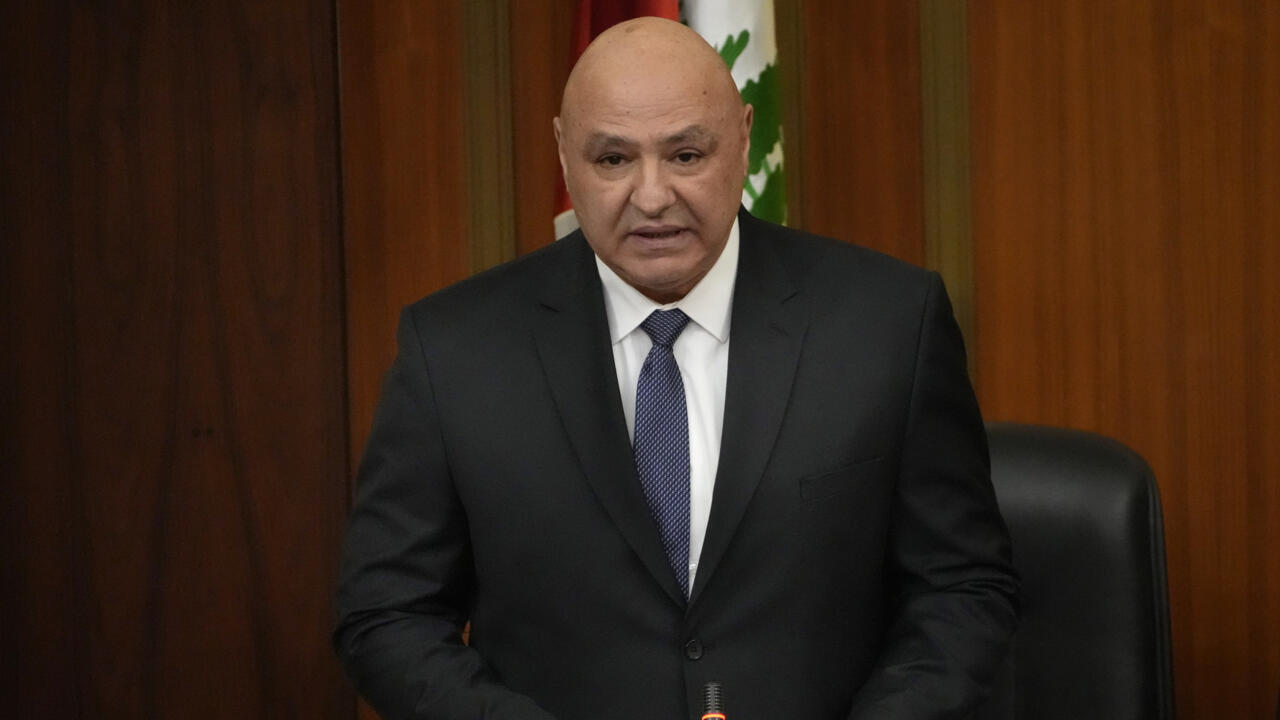
President Joseph Aoun, while announcing the appointment of former US ambassador Simon Karam as Lebanon’s representative in talks with Israel, made it clear that Karam would be the sole representative for Lebanon and that there would be no substitute.
The move comes in response to what the Lebanese officials see as efforts by Iran to tie Lebanon’s situation to the wider regional conflict. Iran had indicated that there would be no ceasefire involving the US, Israel and Iran unless it also included a ceasefire in Lebanon.
Some groups, including Hezbollah and its supporters, had expressed support for linking the situations, citing concerns that the Lebanese government has limited leverage in negotiations with Israel. Lebanon is not formally a party to the conflict, and its army is considered weak.
However, others, including Prime Minister Nawaf Salam, have opposed this approach. They view Iran’s stance as an attempt to influence Lebanon’s internal affairs and see it as undermining the country’s sovereignty.
Officials backing the government’s position say the move is aimed at reaffirming Lebanon’s sovereignty and ensuring that decisions about peace and ceasefire within the country are not dictated externally.
They also see it as a safeguard, so that any breakdown in talks between the US, Israel and Iran does not automatically lead to renewed conflict in Lebanon.