Iqra Arabic School to celebrate 25 years with Annual Day, Hifz Valedictory function on May 3
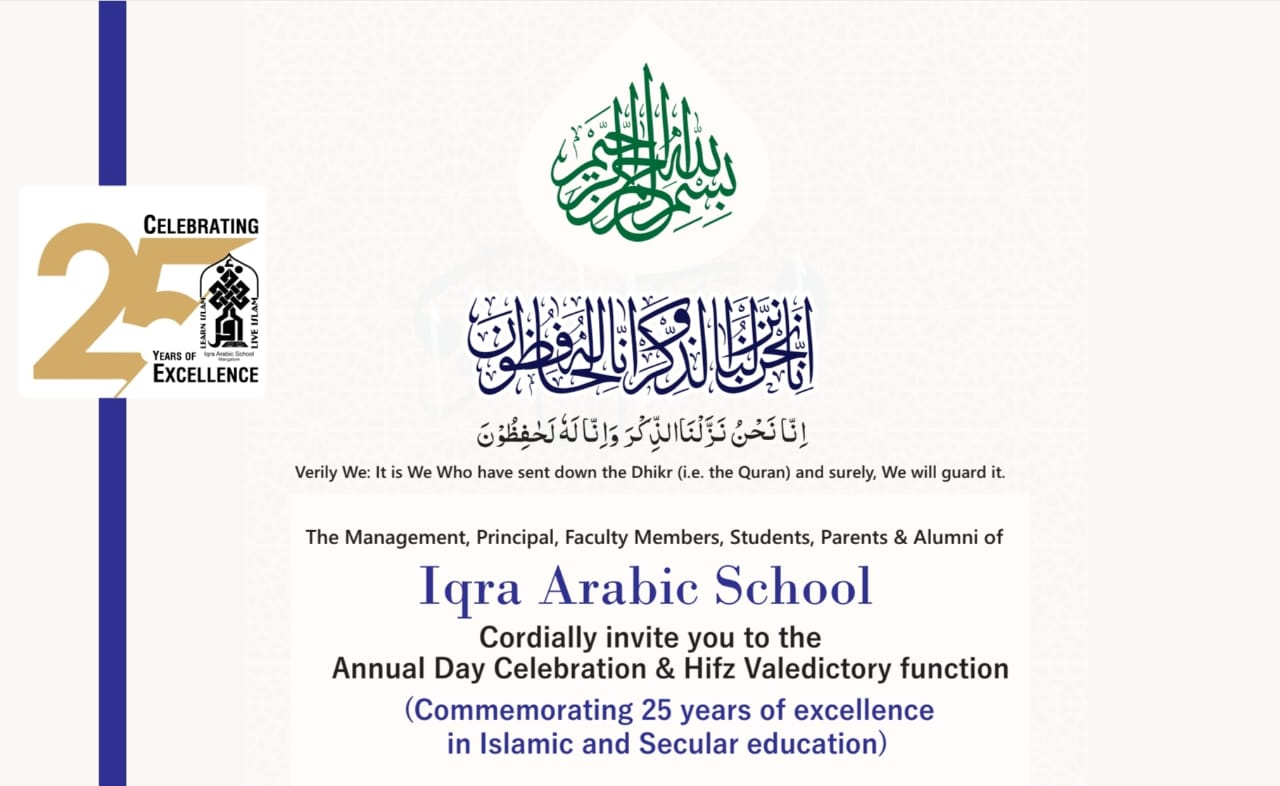
Mangaluru: Iqra Arabic School, which has been providing both Islamic and secular education in Mangaluru for the past 25 years, will be holding its Annual Day and Hifz Valedictory Function on Saturday, May 3, 2025, at Town Hall in the city. The event is scheduled from 3 PM to 9 PM and will mark the institution’s silver jubilee.
As part of the programme, the school will felicitate students who have completed the memorisation of the Holy Quran, along with those graduating as Hafizath and Ulama. The event is expected to see the presence of students, parents, alumni, and community members.
The function will be held in the presence of various dignitaries. The Chief Guest for the evening will be Moulana Syed Bilal Abdul Hai Hasani Nadvi, Rector of Nadwathul Ulama in Lucknow and Secretary of the All India Muslim Personal Law Board. Other invited guests include Dr. A. Razzaque Ahmed from Tufts University, USA; Dr. Shantaram Shetty, Pro-Chancellor of Nitte University; and Dr. Javed Jamil of Yenepoya University.
The programme will be presided over by Syed Mohamed Beary, Chairman of the Hazrath Moulana Abul Hassan Ali Nadvi Education & Charitable Trust, which manages Iqra Arabic School.
In a press statement, Salim Khalifa Nadwi, the Principal of the school and trustee Haji Mohammed Haneef, invited the public to attend the event and be part of the celebration.
Let the Truth be known. If you read VB and like VB, please be a VB Supporter and Help us deliver the Truth to one and all.
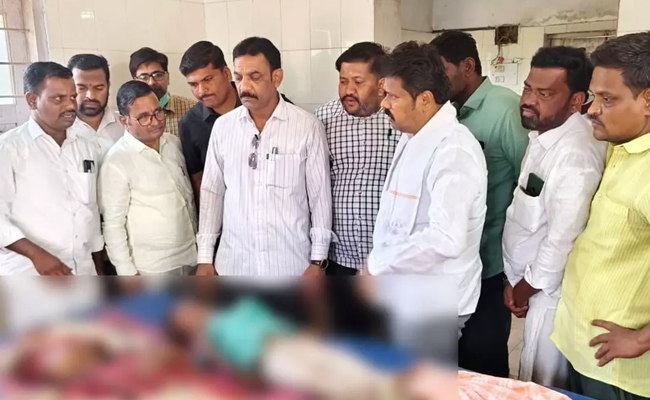
Belagavi youth’s murder case projected as road accident, cracked in Uttara Kannada; Three arrested

Karwar: Uttara Kannada police have cracked a murder case in which a Belagavi youth was killed and his body burnt inside a car to make it appear like a road accident.
Addressing a press meet in the city, Superintendent of Police Deepan M.N. said three accused from Old Hubballi have been arrested in connection with the case. The crime was a pre-planned act driven by personal enmity, he said.
The case came to light on April 8 morning when a car (KA-04/MJ-8996) was found completely burnt in a roadside ditch near Talekumbri bus stand in Yellapur. Only charred human remains were found inside the vehicle. Initially, it was suspected to be an accident caused by overspeeding, and a case was registered at Yellapur police station based on a complaint filed by the deceased’s father, Jagannath Dhapale.
However, the father later expressed suspicion that his son’s death was not accidental, prompting a detailed investigation.
Taking the matter seriously, two special teams were formed under the leadership of Yellapur Inspector Ramesh Hanapur. On analysing technical evidence and CCTV footage, police found that it was a planned murder.
The accused have been identified as Abdul Raheem Basheer Ahmed Mujawar (32), Maulasab Bavahan Wada (36) and Dadapeer alias Aftab Mehboob Saab Balasangi (22), all chicken traders from Old Hubballi.
Police have seized the car used in the crime along with two scooters. The accused have been remanded to judicial custody.
Investigations revealed that the accused killed Nitesh Dhapale due to personal enmity and later set the car on fire along with the body to project it as an accident.
SP Deepan M.N. appreciated the efforts of Inspector Ramesh Hanapur, PSIs Rajashekhar Vandali and Siddappa Gudi, and the entire team for solving the complex case.