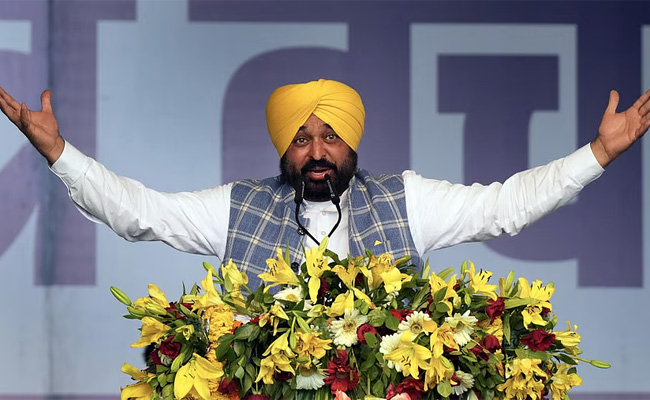
Karnataka Speaker Khader rejects graft charges as 'baseless', 'politically motivated'
_vb_70.jpeg)
Mangaluru (PTI): Karnataka Legislative Assembly Speaker UT Khader on Wednesday rejected corruption allegations against him, during the last 2.5 years, as "baseless" and "politically motivated."
He asked the BJP leaders to submit their claims in writing.
BJP MP Vishweshwar Hegde Kageri had on Tuesday demanded a judicial probe by a sitting judge into allegations of corruption against Khader and called for bringing the office of the Speaker under the ambit of the Right to Information (RTI) Act, to ensure transparency.
Leader of Opposition in the Legislative Council Chalavadi Narayanaswamy and Mangalore City North BJP MLA Y Bharath Shetty too had made similar allegations and demands.
Speaking to reporters, Khader said, "The former Speaker's allegations are baseless, politically motivated, and ill intentioned. I reject them. They are all senior public representatives, whatever doubts they have, they can give me in writing, I will look into it. As far as I'm concerned development is part of my political career and development is my duty."
He further said, "As an MLA I'm working for the development of my constituency, as a Minister in the past -- I have received national awards, and at that time also allegations were there. Now as a Speaker, I'm the guardian of the public representatives. It is my duty to improve the system, the legislature, within my limits, and give various benefits to MLAs. I will do it in the future too."
Accusing Speaker Khader of "corruption" in administrative reforms, Kageri, who is MP from Uttara Kannada on Tuesday said, projects that were rejected by the Finance Department, were taken up by obtaining 4 (g) exemptions under the Karnataka Transparency in Public Procurement Act.
Alleging corruption in installation of smart lockers to rooms at legislators' home and other equipment, organising book fair, lighting (to Vidhana Soudha), procuring massage chairs for legislators, food arrangements, AI monitored TV , carpets, among others, he said, "there are allegations that contracts are being awarded to people from Mangaluru (from where Khader hails)."
Section 4(g) of KTPP Act provides for contracts to be awarded without floating tenders - via government orders.
Khader said he would be available at the Vidhana Soudha on Thursday morning, inviting anyone with doubts or allegations to meet him or submit them in writing.
"My intention is -- we have to be good, their intentions also may be the same. But, criticising each other is not a remedy. Let us sit together, let them give in writing, once they give in writing, point to point I will react," he said.
On the demand for a judicial probe, Khader said let them submit the allegations in writing, it will be looked into point by point, and if investigation is warranted, "why not?"
"Let them give in writing, they are public representatives, educated people, they know the legal procedure and the Constitution. Without giving in writing, if they talk about something, how can I react? They are speaking politically. Can I react in the same way sitting in a constitutional post?" he asked.
Welcoming the demand to bring the Speaker's office under the ambit of the RTI, Khader said, let the BJP leaders approach the Lok Sabha Speaker for a decision in this regard at national level.
"What was there during their (BJP) period, it has continued now...." he said.
Let the Truth be known. If you read VB and like VB, please be a VB Supporter and Help us deliver the Truth to one and all.
Man dragged into river by crocodile in Vadodara; search ops underway
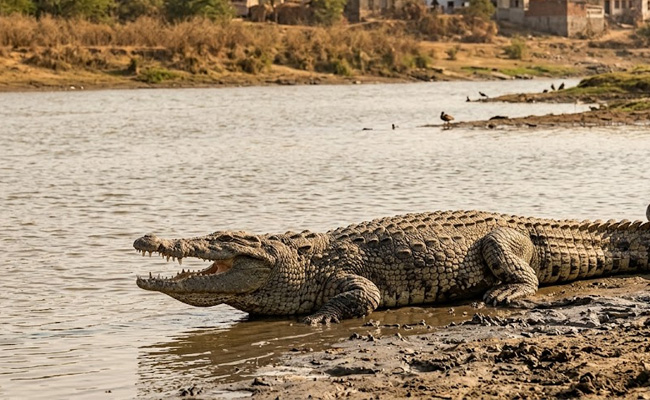
Vadodara (PTI): A 22-year-old man was dragged into a river by a crocodile in Gujarat's Vadodara district on Thursday and search operations are currently underway to locate him, a police official said.
The incident took place at 1:30pm when Mithun Vasava, a resident of Kagdipara village, had gone to take a dip in Dev river amid the stifling heat, the official told PTI.
"The crocodile suddenly attacked the man and dragged him into the river. Search operations are currently underway to locate Vasava," the official added.