Kota double murder case: Two including Reddy brother arrested
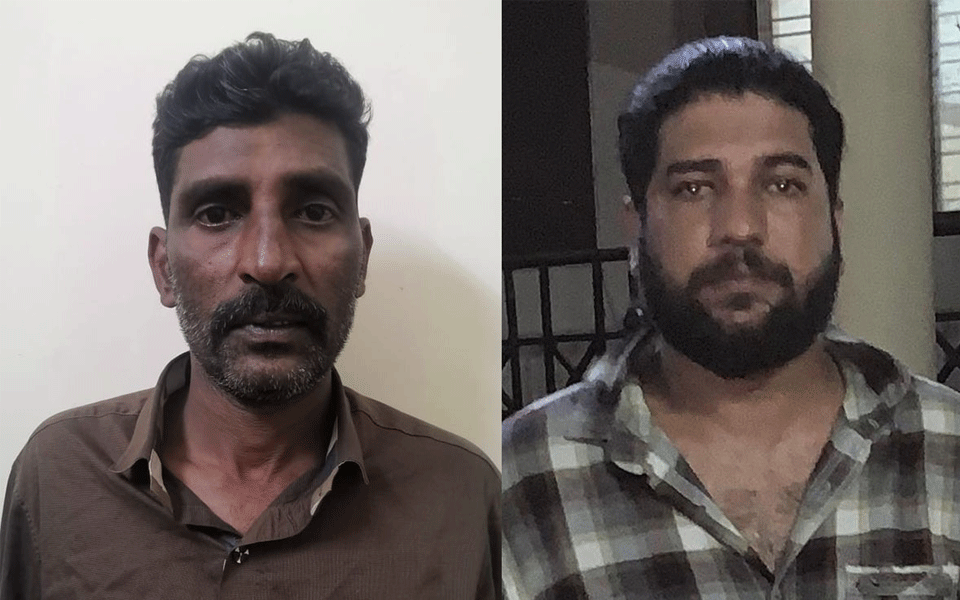
Udupi, Feb 14: With the arrest of two more accused including main accused Chandrashekar Reddy (48), the total number of accused arrested in the double murder case of Chikkanakere of Kota Manur village has increased to 15.
Police arrested Chandrashekar Reddy of Manur Chikkanakere who was the main accused in the case, on February 14 and another accused Rathish M Karkera (34) of Brahmagiri was arrested on February 12 near Udupi City hospital, said SP Laxman Nimbargi.
Chandrashekar Reddy was working as a driver and he is the elder brother among Reddy brothers. Already, other main accused and his brothers Rajashekar Reddy (44) and Harish Reddy (40) were arrested. Rathish Karkera who helped the main accused to abscond after the murder. Police have already produced him before the court which handed him over to the judicial custody, he said.
Police have so far arrested Rajashekar Reddy, Medical Ravi, ZP BJP Member Raghavendra Kanchan, Harish Reddy, Mahesh Ganiga, Ravichandra Poojary, police staff Pavan Amin and Veerendra Acharya, Abhishek Palan, Santosh Kunder, Rotti Nagaraj, Student Pranav Rao and Shankar Mogaveera in related to double murder case of Bharat Kumar and Yathish in a toilet pit dispute at Chikkanakere in Manur village on January 26. The police have registered case under IPC column 143, 147, 148, 447, 120 (b), 323, 307, 302, 112, 201, 212 and 149.
All accused to produced to court tomorrow
All arrested accused in the case would be produced before the Kundapura Additional JMFC Court with tight police security on February 15.
As the police custody of Rajashekar Reddy, Medical Ravi, Raghavendra Kanchan, Harish Reddy, Mahesh Ganiga, Ravichandra Poojary, and judicial custody of Pavan Amin, Veerendra Acharya, Abhishek Palan, Santosh Kunder, Rotti Nagaraj, Pranav Rao and Shankar Mogaveera and Rathish Karkera would end on February 15, the police would produce all of them before the court. Sources said that the court may hand over them to the judicial custody.
Chandrashekar Reddy who was arrested today would also be produced before the court tomorrow. Police sources said that whether to take Chandrashekar Reddy to police custody or hand over to judicial custody has to be decided.
Let the Truth be known. If you read VB and like VB, please be a VB Supporter and Help us deliver the Truth to one and all.
Ordinance issued to increase number of Supreme Court judges from 34 to 38
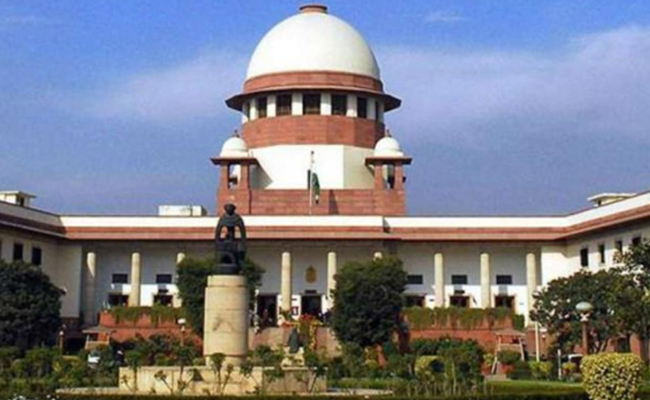
New Delhi (PTI): The government has promulgated an ordinance to increase the strength of the Supreme Court from the present 34 judges to 38, including the Chief Justice of India.
The law ministry notified the ordinance on Saturday, which amended the Supreme Court (Number of Judges) Act, 1956, to increase the sanctioned strength of the top court.
So far, the sanctioned strength of the top court was 34, including the Chief Justice of India (CJI). Now, the number of judges has been increased by four, taking the sanctioned strength to 38.
The top court will now have 37 judges, other than the CJI.
With the apex court having two vacancies at present, and the ordinance coming into force immediately, the Supreme Court Collegium will now have to recommend six names for appointment as judges in the top court.
A bill will be brought in the Monsoon Session of Parliament to convert the ordinance – an executive order – into a law passed by Parliament.
The Union Cabinet had cleared a draft bill on May 5 to increase the number of apex court judges.
The strength of the Supreme Court was last increased from 30 to 33 (excluding the CJI) in 2019.
The Supreme Court (Number of Judges) Act, as originally enacted in 1956, put the maximum number of judges (excluding the CJI) at 10.
This number was increased to 13 by the Supreme Court (Number of Judges), Amendment Act, 1960, and to 17 by another amendment to the law.
The Supreme Court (Number of Judges) Amendment Act, 1986, augmented the strength of judges from 17 to 25, excluding the CJI.
A fresh amendment in 2009 further increased the strength from 25 to 30.
Article 124(3) of the Constitution lists the qualifications required to become a Supreme Court judge.
An Indian citizen who has either served as a high court judge for at least five years, or as an advocate for 10 years, or is a distinguished jurist, can be appointed to the top court.
The strength of the Supreme Court is increased based on the recommendations of the CJI, who writes to the Union law minister. After consulting the finance ministry, the Department of Justice under the law ministry moves the Cabinet with a draft bill.