KP Hamza Musliyar Chithari passes away
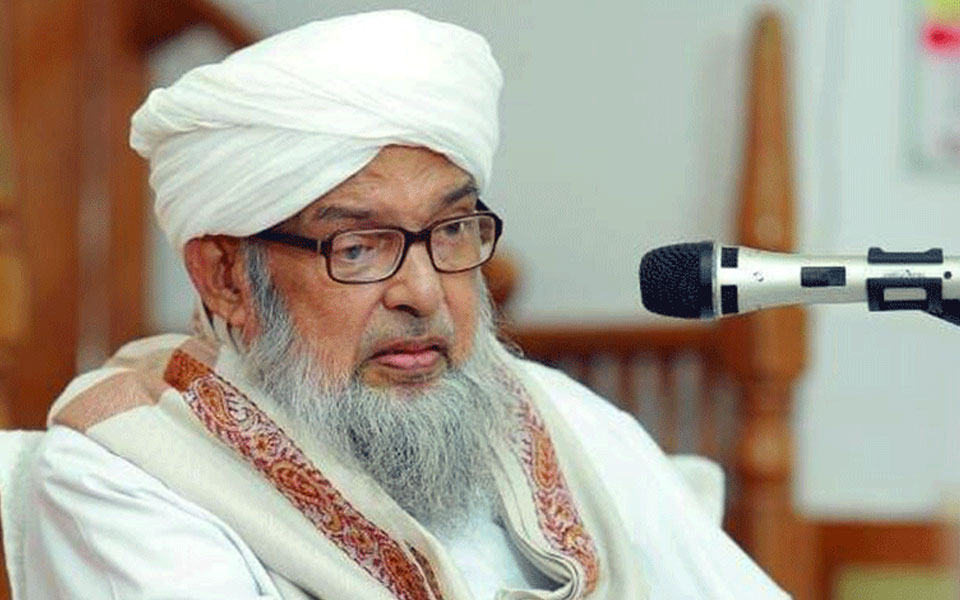
Mangaluru: Prominent scholar and office bearer of All Kerala Jamiat ul Ulama Kanzul Ulama KP Hamza Musliyar Chittari (79), breathed his last today morning at his residence in Kannur district of Kerala.
Born in 1939 at Pattuvam in Kannur district, Hamza Musliyar ran Dars centers at many places. He served as a professor at Jamia Sa Adiya Arabic College from 1982 to 1988 and then built Al Maqar institute in Taliparamba in 1989.
He is survived by wife, five sons, and six daughters. According to sources, the funeral will be held at around 4 pm on the premises of Al-Maqar Campus in Taliparamba.
Udupi Khazi Bekal Usthad, Mani Usthad, Abbas Usthad Manjanadi, Bava Usthad Ullal, Athur Saad Musliyar, Krishnapur Khazi Madani, Zaini Kamil Saqafi, GM Kamil Saqafi, KKM Kamil Saqafi, Jappumadani, RK Madani Ammembala and others turned up to pay their last respects.
Let the Truth be known. If you read VB and like VB, please be a VB Supporter and Help us deliver the Truth to one and all.
Andhra leaders mourn tragic demise of film producer R B Choudary

Amaravati (PTI): Andhra Pradesh Chief Minister N Chandrababu Naidu, his deputy Pawan Kalyan and YSRCP chief Y S Jagan Mohan Reddy on Wednesday expressed shock and grief over the passing of prominent film producer R B Choudary.
Choudary died in a road accident in Rajasthan on Tuesday.
Chief Minister Nara Chandrababu Naidu expressed anguish over the death of Super Good Films head R B Choudary, said an official press release late on Tuesday.
The CM said Choudary had provided opportunities to several actors in over 90 films made in Telugu, Tamil, Malayalam and Hindi languages.
Conveying his sympathies to the family members of the deceased producer, the CM termed his death an "irreparable loss" to the film industry.
Jana Sena chief Pawan Kalyan remarked that the news of the tragic accident left him stunned.
"I cannot believe the news that Choudary met with a fatal road accident in Rajasthan. I pray to God that his soul attains peace," he said.
Former Chief Minister and YSRCP leader Jagan Mohan Reddy expressed grief over the untimely demise of Choudary.
He recalled that Choudary had earned a distinguished place in both the Telugu and Tamil film industries through his contributions as a producer.
Reddy prayed for the departed soul to rest in peace and conveyed his heartfelt condolences to the bereaved family.