‘Kulur Ustad’ arrested for cheating, sexually harassing woman under guise of removing black magic
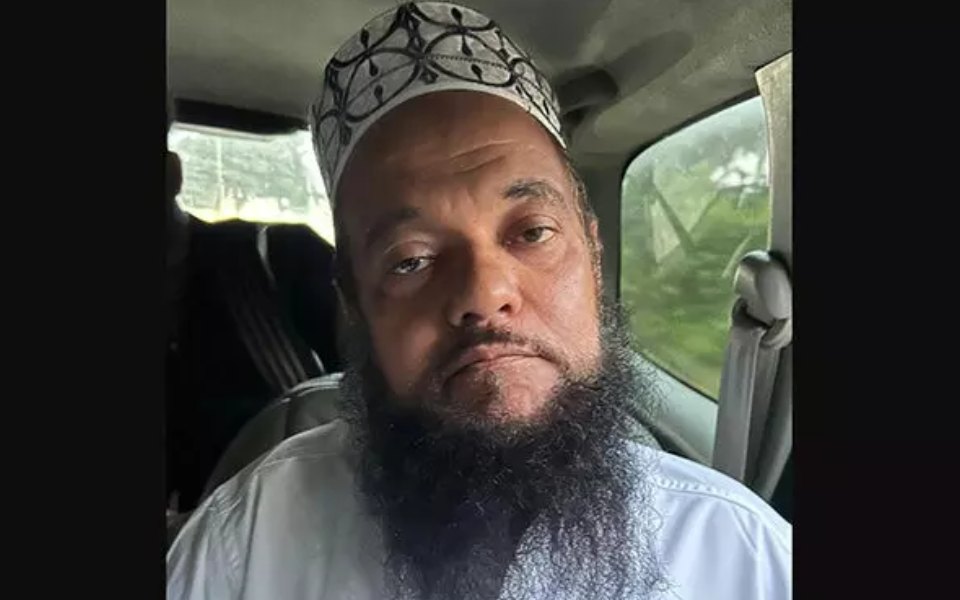
Mangaluru: The Mangaluru Women's Police Station has arrested a man from Hejamady on charges of cheating a woman suffering from depression by sexually harassing her and deceiving her of Rs. 1 lakh under the pretext of treating her for black magic and spiritual afflictions.
The arrested accused has been identified as G. Abdul Karim alias Kulur Ustad, a resident of Guruvayankare.
According to police sources, in 2022, the victim was suffering from depression and, on the advice of her sister's husband, had gone to the house of Ustad Abdul Karim, who was then residing in Hejamady. It is said that there, Abdul Karim, also known as Kulur Ustad, saw the woman and told her that someone had cast a spell on her, and that she needed to undergo a ritual to get rid of it.
Abdul Karim had allegedly asked the woman to visit frequently, promising to cure her of black magic. The woman visited him several times, often accompanied by her elder sister. She informed the police that he had recited verses from the Quran to her during these visits.
However, on February 10, 2022, she went alone as her elder sister had other commitments. During that visit, the Ustad recited the Quran to her but then allegedly molested her under the pretext of treatment and took ₹55,000 from her, according to the complaint she filed with the police.
The victim also alleged in her complaint to the police that Ustad deceived her by claiming that the cost of her treatment would increase each time she visited Hejamady. As a result, she was allegedly cheated out of approximately ₹1 lakh.
It has been learnt that there are multiple complaints against the man, alleging that he cheated and harassed several others in a similar manner, posing as a Ustad who could remove black magic. Reports suggest that he misled people into believing that they needed to follow his instructions to protect their families from black magic, and under this pretext, he also physically harassed them.
Balakrishna Nayak, Inspector of the Mangaluru Women's Police Station, has registered a case in connection with the incident and is currently leading the investigation.
Let the Truth be known. If you read VB and like VB, please be a VB Supporter and Help us deliver the Truth to one and all.
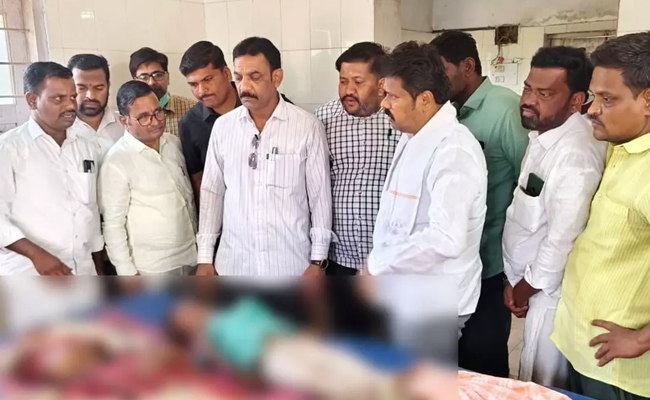
Belagavi youth’s murder case projected as road accident, cracked in Uttara Kannada; Three arrested

Karwar: Uttara Kannada police have cracked a murder case in which a Belagavi youth was killed and his body burnt inside a car to make it appear like a road accident.
Addressing a press meet in the city, Superintendent of Police Deepan M.N. said three accused from Old Hubballi have been arrested in connection with the case. The crime was a pre-planned act driven by personal enmity, he said.
The case came to light on April 8 morning when a car (KA-04/MJ-8996) was found completely burnt in a roadside ditch near Talekumbri bus stand in Yellapur. Only charred human remains were found inside the vehicle. Initially, it was suspected to be an accident caused by overspeeding, and a case was registered at Yellapur police station based on a complaint filed by the deceased’s father, Jagannath Dhapale.
However, the father later expressed suspicion that his son’s death was not accidental, prompting a detailed investigation.
Taking the matter seriously, two special teams were formed under the leadership of Yellapur Inspector Ramesh Hanapur. On analysing technical evidence and CCTV footage, police found that it was a planned murder.
The accused have been identified as Abdul Raheem Basheer Ahmed Mujawar (32), Maulasab Bavahan Wada (36) and Dadapeer alias Aftab Mehboob Saab Balasangi (22), all chicken traders from Old Hubballi.
Police have seized the car used in the crime along with two scooters. The accused have been remanded to judicial custody.
Investigations revealed that the accused killed Nitesh Dhapale due to personal enmity and later set the car on fire along with the body to project it as an accident.
SP Deepan M.N. appreciated the efforts of Inspector Ramesh Hanapur, PSIs Rajashekhar Vandali and Siddappa Gudi, and the entire team for solving the complex case.