Kundapur: Man arrested for posting offensive comment on Vartha Bharati Facebook page
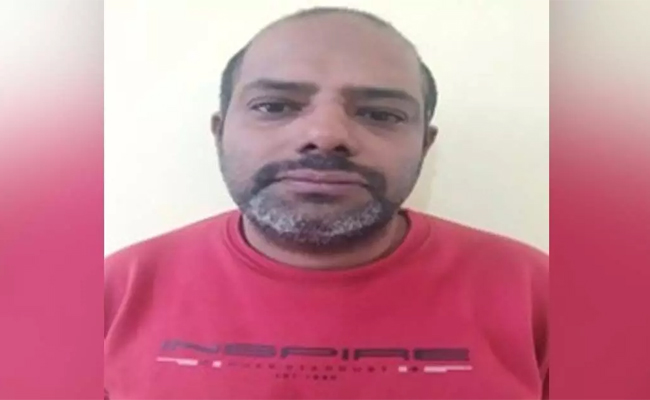
Kundapur: The Kundapur police have arrested a man from Bengaluru for allegedly posting an indecent and abusive comment on the Vartha Bharati Facebook page.
The accused has been identified as Prakash S (45), a resident of Mathikere, Bengaluru.
According to the police, on March 4, 2025, around 4.30 pm, an offensive comment was posted on a Facebook story titled “Today’s Hero of the Ramadan Story: Muhammad of Mangalore”. The post was related to an interview with Muhammad, who runs a vegetable business at the Central Market in Mangaluru.
Based on the incident, a suo motu case was registered at the Kundapur Police Station under Section 353(2) of the Indian Penal Code (IPC) and Section 66(C) of the Information Technology Act, under Crime No. 31/2025.
The investigation was carried out under the guidance of Kundapur Sub-Division Deputy Superintendent of Police H.D. Kulkarni and led by Police Station Inspector Jayaram D. Gowda.
The operation team included PSI Nanjanaik N. (Law and Order), PSI Smt. Pushpa (Investigation), and staff members Santhosh, Mohan, Santhosh Devadiga, Ghanshyama, Annappa, Mahabala Shettigara, Nagashri and Gautama.
Police said the accused was arrested and produced before the court.
Let the Truth be known. If you read VB and like VB, please be a VB Supporter and Help us deliver the Truth to one and all.
Meghalaya: Interstate ATM theft racket busted, 6 arrested

Shillong (PTI): An interstate racket involved in ATM thefts across several states has been busted, with the arrest of six persons in connection with a break-in at an electronic banking outlet in Meghalaya's Ri-Bhoi district, police said on Wednesday.
The accused were allegedly involved in breaking into an ATM of the Meghalaya Cooperative Apex Bank on April 5, 2024, they said.
Three of the accused were arrested from Barpeta in Assam, while the remaining were apprehended from Haryana, police said.
Ri-Bhoi SP Giri Prasad M said a special police team was constituted to investigate the case.
"With coordinated efforts and assistance from Assam and Haryana Police, we were able to apprehend the accused involved in the ATM break-in," he told PTI.
The case was registered at Umiam police station under sections of the Bharatiya Nyaya Sanhita (BNS).
According to police, the gang used gas cutters to break open the ATM safe and fled with the cash within minutes.
"The group is part of a larger network involved in similar ATM thefts across different states. Further investigation is underway to dismantle the entire network," the SP added.