Lifecare Hospital hosts first CME in Bhatkal for healthcare professionals
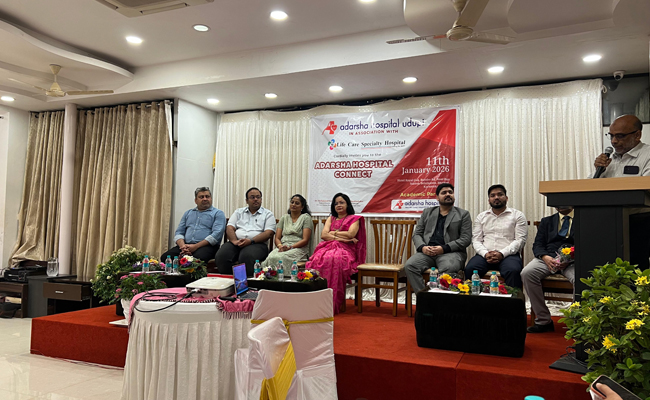
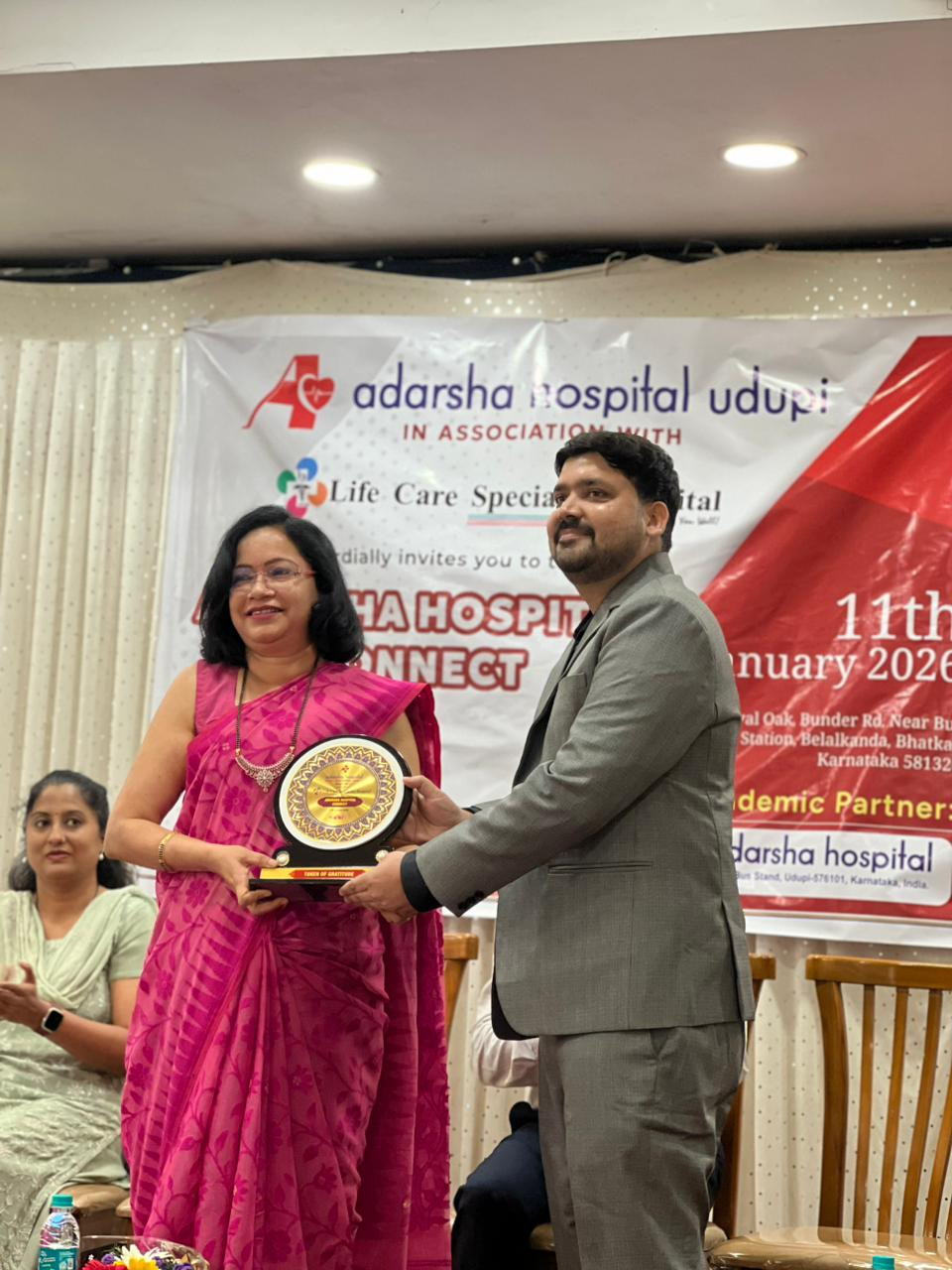
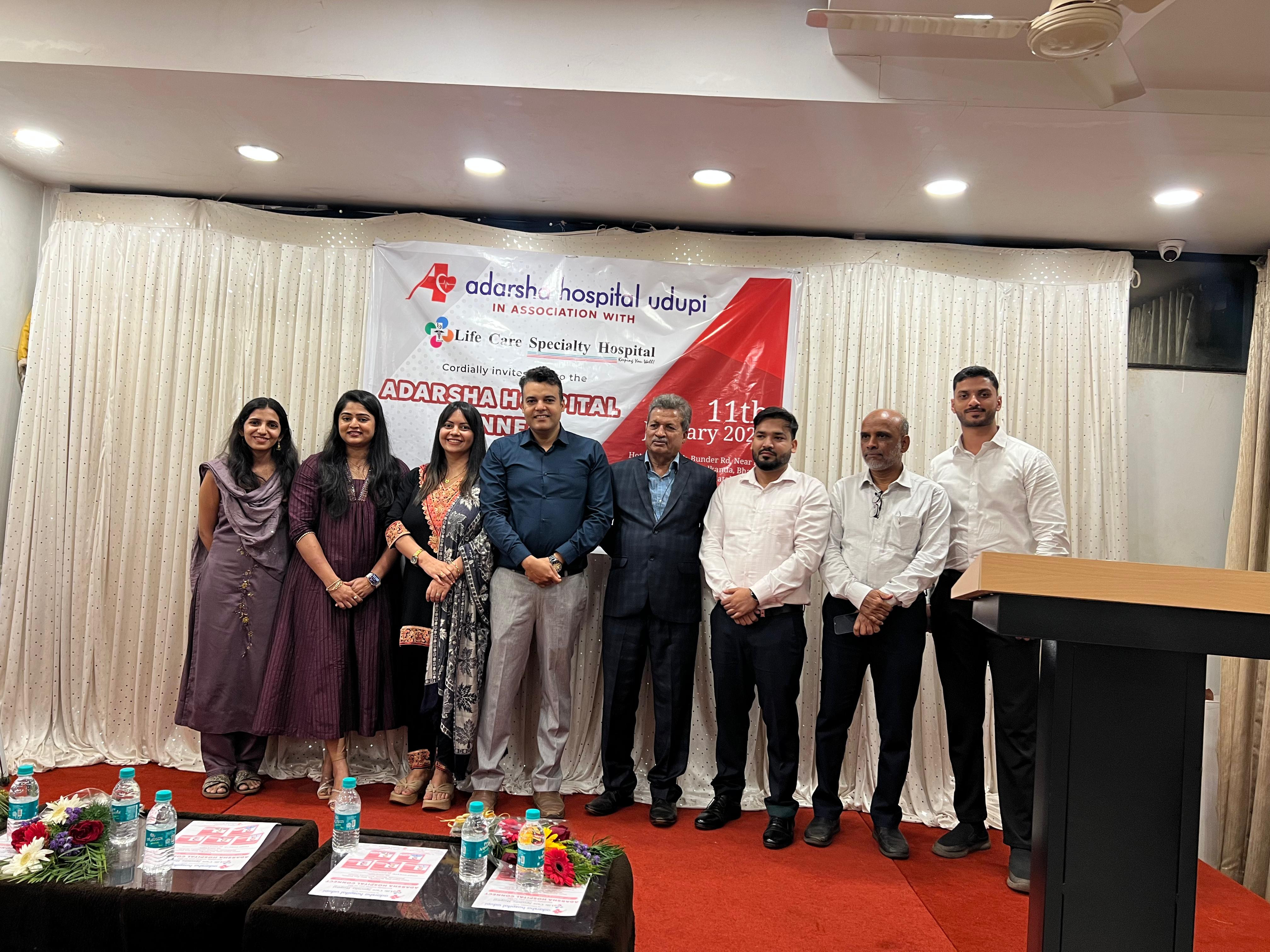
Bhatkal: Adarsha Hospital, Udupi, in association with Life Care Specialty Hospital, organised the Adarsha Hospital Connect programme at Hotel Royal Oak, Bhatkal, on Sunday evening. The event served as a professional interaction platform for doctors, focusing on emergency care, early diagnosis and coordinated treatment.
The programme was attended by medical practitioners from Bhatkal and surrounding regions. Senior anaesthesiologist Savita Kamath was present as a guest.
Cardiologist Suhas GC spoke on ECG-related emergencies, stressing that quick identification of abnormal ECG patterns and prompt clinical response are critical during cardiac emergencies. He noted that delays in recognising warning signs often lead to avoidable complications.
Nephrologist Megha Pai spoke on glomerular diseases, briefly explaining how kidney filtration works and how damage to these filters can progress silently if not detected early. She highlighted the importance of routine evaluation in at-risk patients.
Neurosurgeon Rajesh Nair addressed traumatic brain injuries, outlining general principles of assessment and management. He emphasised that early intervention plays a key role in improving outcomes for head injury patients.
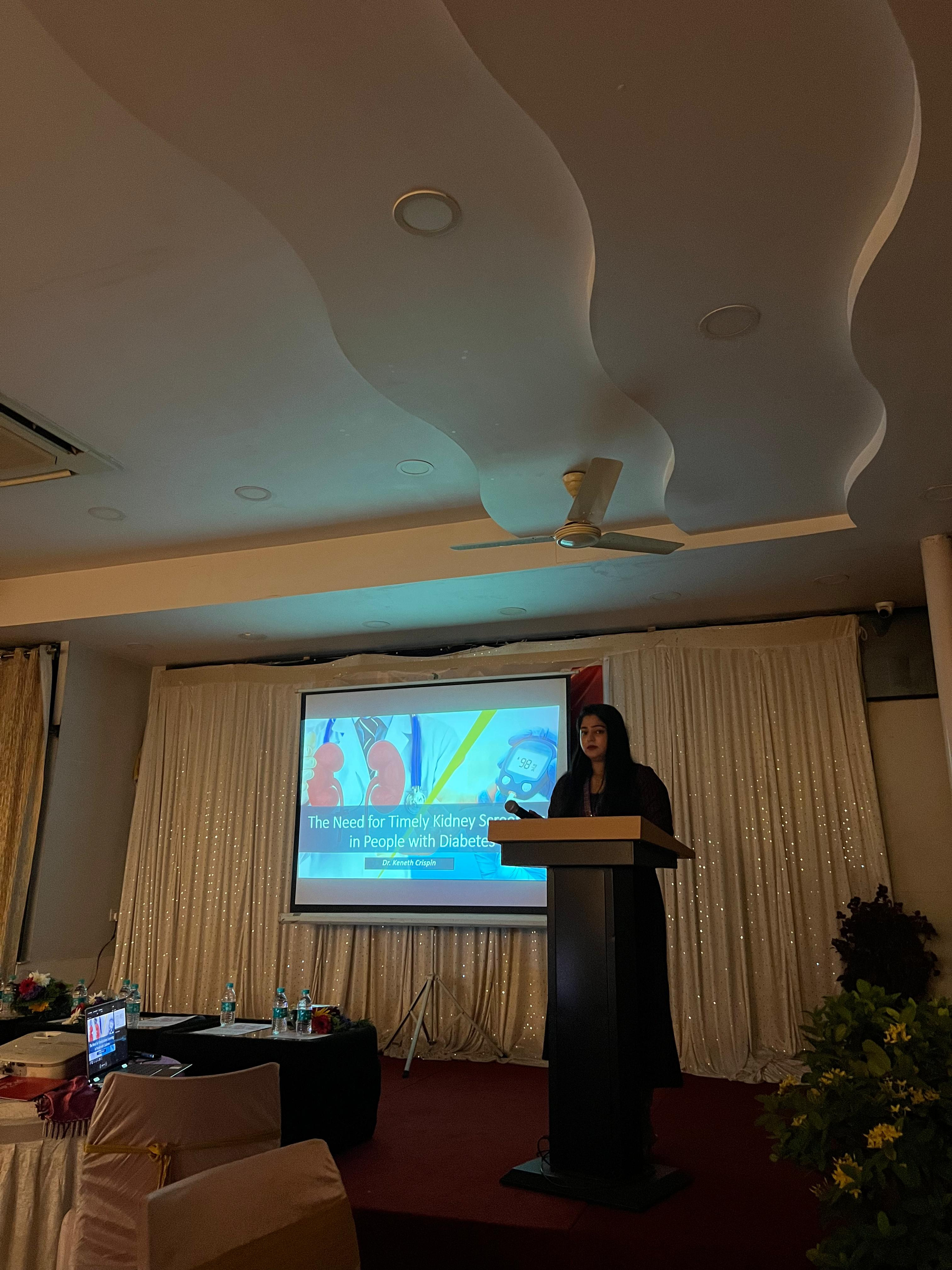
Physician Kenneth Crispin from Life Care Specialty Hospital spoke on the need for timely kidney screening in diabetic patients, pointing out that diabetes-related kidney damage often remains unnoticed until advanced stages.
Radiologist MD Naushad discussed the imaging approach to acute stroke, underlining how early and appropriate imaging helps doctors differentiate stroke types and initiate correct treatment without delay.
Medical Director of Life Care Hospital, Bhatkal, Mohammed Nawab, and Medical Director of Adarsha Hospital, Udupi, G S Chandrashekar, were also present and interacted with participants on strengthening collaborative healthcare practices.
The programme was attended by Dr. Zubair Kola, Managing Director of Life Care Hospital, Salman Jubapu, social worker Nazeer Kashimji, senior doctors and healthcare professionals from the region.
Let the Truth be known. If you read VB and like VB, please be a VB Supporter and Help us deliver the Truth to one and all.
Representative of Iran's Supreme Leader in India calls current situation 'no war, no peace'
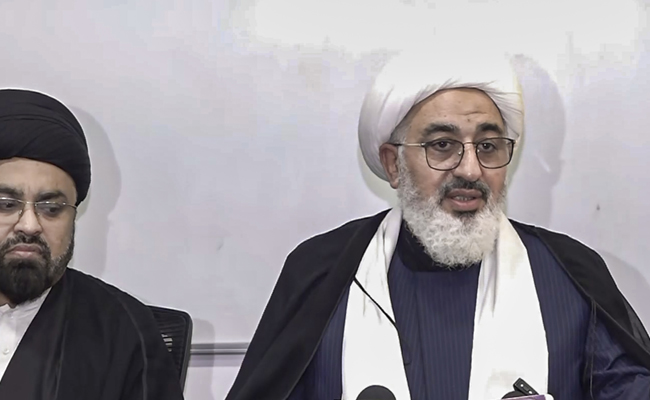
Bengaluru (PTI): Representative of Iran's Supreme Leader in India, Abdul Majeed Hakeem Ilahi on Saturday characterised the ongoing tensions between his country and the Israel-US alliance as a state of “no war, no peace”.
Calling for an immediate halt to the conflict, he said the global stability hinges on those who initiated the war.
He questioned why countries affected by the war and suffering from the energy crisis are not pressuring the US and Israel to stop the aggression.
Addressing a press conference here, Ilahi said Iran did not want the conflict, but was compelled to respond amid continued attacks, even as negotiations were expected to continue.
"Iran didn't want this war, but Iran was forced by the war and several times Iran tried to avoid this war... I don't know what is the condition of these people and these countries (US-Israel)... they want to impose on other countries what they want, and who gave them this authority?" he questioned.
Recalling the negotiations Iran held in Oman, he said talks later moved to Geneva and made progress before being disrupted by sudden attacks.
Ilahi claimed that airstrikes and missile attacks led to the deaths of Iran’s supreme leader Ayatollah Ali Khamenei, ministers, commanders and civilians.
"They killed a lot of civilians… They attacked a primary school, and they killed 175 innocent girls," he said, claiming over 4,000 deaths, more than 40,000 injuries, and widespread damage to houses, hospitals, universities and public infrastructure.
Despite these losses, he said Iran resisted calls for “unconditional surrender” and stood firm and defended itself.
"They wanted unconditional surrender. Which no one—no one can accept it. Iran said, 'Okay, we are ready to be sacrificed,' but we are not ready to submit ourselves," he added.
He argued that they (US-Israel) proposed the current ceasefire only after realising that they could not achieve any of their objectives after 40 days of conflict.
The envoy further claimed that the ceasefire is not an actual ceasefire, but a “no war, no peace” situation.
Explaining the current situation in Iran, he said conditions remain stable and people are going about their daily lives.
"They are working ....(leading) their ordinary life. They are working—they're going farming and they do everything....and they aren't scared of anything. And they are ready to defend themselves," he added.
Addressing the crisis in the Strait of Hormuz, he said the situation was stable before February 28 and all countries benefited from it.
"(For) 10,000 years, the Strait of Hormuz was open...and Iran daily yearly spent a lot for providing security in the Strait of Hormuz... so no one even complained anything about the Strait of Hormuz. Everyone was free...and even our enemies their warship was passing through the Strait of Hormuz," he said.
However, he linked the current maritime instability to the actions of the US and Israel.
"So Iran cannot do anything. Those people who initiated, created and started this war, they have to stop it. And everything will go back to normal," he said.
Criticising the mentality of the "great powerful country", Ilahi said, "they think they have the right to do whatever they want. It should change."
He sought to know why the countries affected by the conflict are not exerting pressure on the US and the "Zionist" regime to halt the war.
"Why are they not asking them? This crisis and problem by which a lot of countries are affected was created by them. A lot of factories are closed and even working days in some countries reduced... A lot of restaurants are closed," he said.
Seeking fairness and justice, Ilahi said instead of asking Iran, all those nations should ask those who initiated this war to stop it, by telling them, "we are suffering."
To a query on international mediation, Ilahi, referring to the US, asked, "Is it acceptable and reasonable that one country orders all countries -- you should not deal with this country, You should not purchase from this country. You should not have business with this country. You should not buy from this country."
Ilahi also highlighted Iran's long-standing ties with India and said, "It is a great country and we respect India and Indians."
"We have 5,000 years relationship and friendship. We are connected to India by education, by philosophy, by culture, by civilisation and by the economy," he said.
According to him, the bilateral cooperation remains strong, citing diplomatic engagement.
"At the moment also, our relationship, collaboration, cooperation with India is very good," he said, adding Iran allowing Indian ships to pass through Strait of Hormuz reflects the ties.
"Iran allowed Indian ships to pass through the Strait of Hormuz. Why? A lot of countries couldn't get this permission?... The relationship between Iran and India is very good," he added.
He expressed confidence that in future too, the ties between Iran and India will be strong.