Malabar Gold & Diamonds relaunches its Udupi showroom
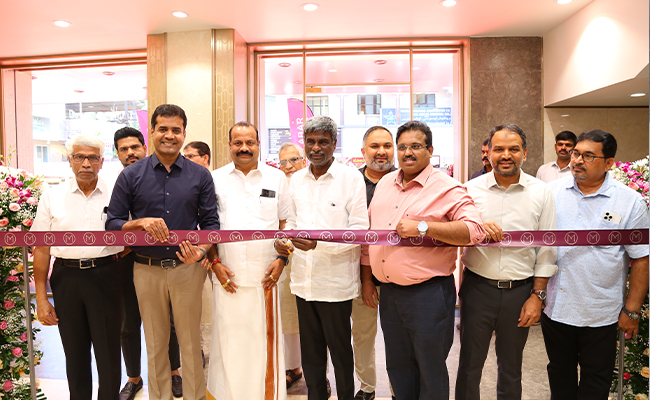
Udupi (Press Release): Malabar Gold & Diamonds, the Responsible Jeweller relaunched its showroom in Udupi, following an extensive renovation. Sri Kota Srinivas Poojary inaugurated the showroom in the presence of Filsor Babu, Regional Head – Karnataka and management team members, staff, customers and other dignitaries. Located at Udupi the showroom has been transformed into a luxurious space designed to offer an exceptional jewellery shopping experience. With expanded floorspace and a rich array of collections, the Udupi showroom is set to become the ultimate destination for jewellery lovers in the region, offering exquisite designs at competitive prices and fair making charges.
As part of the relaunch, customers will have the unique opportunity to enjoy up to 25% off on the value of Diamonds and receive 100% exchange value on old Mine Diamond jewellery. Avail Free Silver Coin with Every Purchase. Offer Valid till 05th January 2025.
The showroom showcases an extensive range of Malabar’s popular exclusive brands, including Mine Diamonds, Era Uncut Diamonds, Divine Heritage Jewellery, Ethnix Handcrafted Designs, Precia Gemstone Collections, and Viraaz Polki Jewellery. Whether it’s traditional designs, contemporary pieces, or lightweight, everyday jewellery, the Udupi showroom caters to every taste and occasion. In addition, the showroom’s exclusive bridal collections feature intricately crafted jewellery that is sure to make weddings a memorable celebration. The showroom is also running ‘Artistry Show’, the biggest showcase and sale of exquisite jewellery pieces from the exclusive brands of Malabar from 28th December 2024 to 05th January 2025.
M.P. Ahammed, Chairman, Malabar Group, expressed his excitement about the relaunch, said, “We are immensely proud to open our doors to Udupi with a renovated showroom that reflects our commitment to offering not just jewellery, but a superior shopping experience. This relaunch is a reaffirmation of our bond with the people of Udupi, and we are truly grateful for the trust and loyalty our customers have shown us. With this revitalized space, we aim to continue serving the community with unmatched craftsmanship, transparency, and customer-centric service."
Malabar Gold & Diamonds is renowned for its commitment to transparency and fairness in pricing. Furthermore, the brand offers the One India One Gold Rate scheme, ensuring uniform pricing for gold across all its showrooms in the country. Strengthening the brand's commitment to its customers, Malabar Gold & Diamonds offers Malabar Promises. The promises include a transparent price tag indicating stone weight, net weight, and stone charge of the jewellery; assured lifetime free maintenance for the jewellery; 100% exchange value for gold and diamonds; 100% HUID-compliant gold; IGI and GIA-certified diamonds ensuring a 28-point quality check of global standards, buyback guarantee; complimentary jewellery insurance, responsible sourcing; and fair labour practices.
As a Responsible Jeweller, Malabar Gold & Diamonds is committed to ethical sourcing and sustainable practices. All gold is sourced through authorised channels, with a firm stance against gold smuggling, child labour, and tax evasion. The brand adheres to strict import tax and royalty policies, ensuring fair wages for artisans. Malabar guarantees 100% HUID-hallmarked gold, IGI-GIA-certified diamonds, and gold bars from trusted institutions like LBMA and DGDB.
About Malabar Gold & Diamonds:
Malabar Gold & Diamonds was established in 1993 and is the flagship company of Malabar Group, a leading diversified Indian business conglomerate. With an annual turnover of $6.2 billion, the company is currently the 6th largest jewellery retailer globally and the 19th ranked brand in Deloitte’s Luxury Goods World Ranking.
They have a strong retail network of over 375 showrooms spread across 13 countries in addition to multiple offices, design centres, wholesale units, and factories spread across India, the Middle East, the Far East, the USA, the UK, Canada & Australia. Malabar Gold & Diamonds also features an online showroom www.malabargoldanddiamonds.com providing customers the opportunity to purchase their favourite jewellery at any time and on any day from the comfort of their homes.
ESG (Environmental, Social & Governance) and CSR have been the primary commitments of the group since its inception. The key focus areas of the Malabar Group are Health, Housing, Hunger Free World, Education, Environment and Women empowerment, integrating the principles of responsibility and sustainability into its core business.
Let the Truth be known. If you read VB and like VB, please be a VB Supporter and Help us deliver the Truth to one and all.
Two people killed as poultry vehicle rams into parked truck in Belagavi

Belagavi (Karnataka) (PTI): Two people were killed, and another was severely injured after a goods vehicle transporting poultry birds allegedly rammed into a stationary truck on a national highway in Belagavi in the early hours of Tuesday, police said.
The deceased have been identified as Wasim (28) and Mubarak (22), both natives of Shivamogga district, they said.
The driver of the vehicle, Basavaraj Eerappa Hanchinamani (37), suffered critical injuries and has been admitted to a hospital, police said.
According to police, the accident occurred when the driver reportedly lost control of the vehicle, allegedly due to drowsiness, and crashed into a truck parked along the highway.
The goods vehicle was en route from Kolhapur to Sorab in Shivamogga district, carrying poultry. Several chickens were also killed in the impact, a senior police officer said.
Police personnel from the Hirebagewadi Police Station visited the spot and conducted an inspection.
Injured people and the bodies of the deceased were shifted to a hospital, police added.