Mangaluru: Bajpe police arrests young man for alleged derogatory posts against police
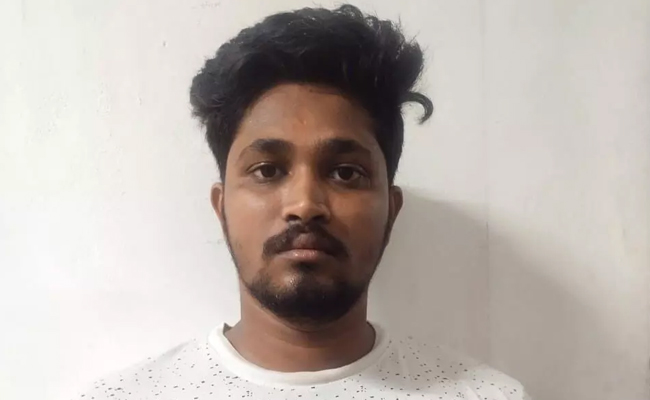
Bajpe: Police have arrested a youth for allegedly posting derogatory and defamatory content against the Bajpe police on social media.
The arrested accused has been identified as Abhishek M. (23), a resident of Katipalla, Surathkal.
According to the police, Abhishek posted a photograph of Bajpe Nisarga Hotel on his Instagram account mr_a_titude_22, alleging that accused persons in a murder case under the jurisdiction of the Bajpe police station were being treated “like royalty” by the police and were being served beef meals from the hotel every day. In his post, he further accused the police of colluding with criminals and misusing their authority, stating that public trust in the police was being betrayed.
Following which, the Bajpe police registered a case and arrested the accused.
Police records reveal that Abhishek is already facing multiple criminal cases. A case of murder, attempt to murder, assault and robbery has been registered against him at the Surathkal police station. At the same time, a robbery case has also been registered at the Kaup police station.
After his arrest, Abhishek was handed over to the custody of the CEN police for further investigation. He was later produced before a court, police said.
Let the Truth be known. If you read VB and like VB, please be a VB Supporter and Help us deliver the Truth to one and all.
Maharashtra sets up state vaccination task force to strengthen immunisation programme

Mumbai (PTI): The Maharashtra government has set up a State Vaccination Task Force to strengthen the regular immunisation programme and review the progress of related campaigns, a health department official said on Monday.
The State Vaccination Task Force will comprise at least 29 members and will be headed by the administrative head of the health department, he informed.
The government has also constituted separate district-level and municipal vaccination task forces to improve implementation and address challenges at the grassroots level, he said.
Municipal task forces, chaired by respective civic commissioners, have been constituted in view of the vast urban population in Maharashtra and the role of civic bodies in implementing different health programmes.
The district-level task forces will function under the chairmanship of collectors.
"Complete immunisation of children at the appropriate age is an extremely simple, cost-effective and highly effective measure to reduce child mortality and the prevalence of diseases among kids. Immunisation is a powerful tool for reducing illness in children," maintained the official.
To ensure full vaccination of all children, the state government implements various campaigns from time to time as per the central government guidelines, he pointed out.
"Active participation and cooperation of other relevant government departments are essential (in making these campaigns successful)," according to the official.
The state-level body will review the regular immunisation programme, associated campaigns and vaccine-preventable diseases in detail. It will also conduct focused assessments of high-risk districts and municipal corporations, including vacancies at district, municipal and sub-district levels, availability of cold chain equipment, resource gaps and training requirements, he noted.
The state task force will review allocation and utilisation of funds for immunisation and ensure timely action by officers concerned based on reports from district and municipal task forces and state-level monitoring mechanisms, the official said.
It will also ensure active coordination and participation of other government departments in immunisation drives, while district and municipal task forces will carry out similar functions at their respective levels, the official added.