Mangaluru; College student abduction and rape case: Rapist gets 7 years rigorous imprisonment

Mangaluru, June 20: The 6th additional principal and district sessions court on Wednesday sentenced a person to seven years rigorous imprisonment on charges of introducing himself to a college student through WhatsApp, abducted and raped her.
The convicted is identified as Irshad (27) of Kuminadka in Bantwal taluk.
Though the rape allegation was confirmed on Tuesday, the judge reserved the verdict for Wednesday. Under IPC Section 366 (abduction), Irshad has to undergo three years rigorous imprisonment and pay Rs 5000 penalty. If he failed to pay penalty, he has to undergo two months additional imprisonment. In rape charges under Section 376, he has to undergo seven years rigorous imprisonment and pay a penalty of Rs 10,000 and if failed to pay the penalty, he should undergo three months additional imprisonment. In the illegal detention charges under Section 342, and threatening under Section 506, he should undergo additional three months and four months imprisonment respectively, the judge said.
About the incident
An 18-year-old girl studying in a college was included into a WhatsApp group by her friend. In the same group, she was introduced to another student called Rafa. Though the student left the WhatsApp group, Rafa used to message her and she used to respond to those messages. After some days, Rafa wished her for her birthday and informed her to accept a flower bouquet sent through one of the Rafa’s relative. Following this, Irshad had visited the college and gave her the flower bouquet and wished her. After a few days, she shared her problem with Rafa that she was late to classes as she could not reach the college on time from her village. Responding to this, Rafa said she would take her to her village as she will have to go to Mangaluru. The student believed Rafa’s words.
On June 20, 2015 at 7.30 am, a car would come to the place where the student was waiting and Irshad was driving the car. After seeing Irshad, she asked about Rafa. But Irshad said she would get into the car after some time. Believing his words, the student got into the car. Later, Irshad threatened her and took her to Dharwad. When the student did not turn up to the home even after evening, her family members lodged a complaint at Bantwal police station. During the same time, Irshad family members also filed a missing complaint.
After taking her to Dharwad, he got a room at a lodge and raped her in the room. Next day, he took her to Gadag and Hubballi and raped her, it was alleged in the complaint.
Truth uncovered
But in Hubballi, Irshad disclosed the truth before the student. He admitted that he was sending the WhatsApp messages in the name of Rafa. The student came to know that she was cheated. While investigating the missing case, the police managed to take both of them into custody on June 25. When the student was brought to Mangaluru and tested in a hospital, it was confirmed that she was raped.
When she was at the hospital, she came to know that Irshad was married. This has shocked her. She had lodged a case against Irshad in Bantwal police station. Then inspector Belliyappa filed the charge sheet against Irshad to the court under abduction (366), rape (376), illegal detention (342) and threat (506). In the case, total 22 witnesses including lodge records, statements from the staff and doctors report were considered. Judith O M Crasta argued in favour of the government.
Let the Truth be known. If you read VB and like VB, please be a VB Supporter and Help us deliver the Truth to one and all.
ED searches: Karnataka CM Siddaramaiah accuses Centre of targeting Cong leaders
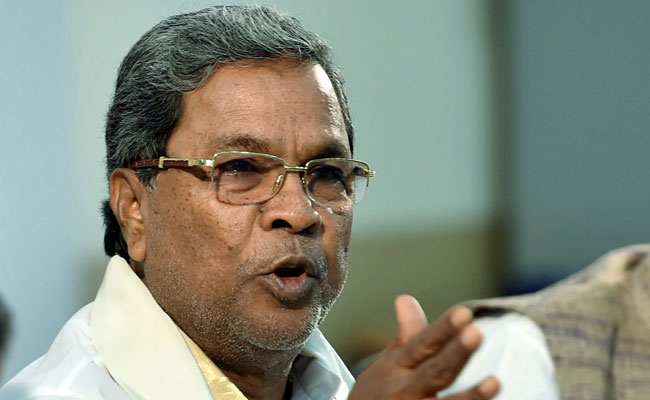
Chamarajanagara (Karnataka) (PTI): Karnataka Chief Minister Siddaramaiah on Tuesday accused the central government and its agencies of consistently targeting Congress members by using searches on their properties, and questioned why similar action is not taken against BJP leaders.
He was reacting to searches conducted by the Enforcement Directorate on Monday on several individuals, among them the sons of Karnataka Congress MLA N A Haris and the grandson of former Union Cabinet minister K Rahman Khan, in connection with a cryptocurrency-linked money laundering case.
"The central government always targets Congress leaders. Will they raid the houses of BJP leaders?" Siddaramaiah said in response to a question. More than a dozen premises in the city were searched as part of the operation carried out by the ED under the provisions of the Prevention of Money Laundering Act (PMLA).
The premises searched comprised those of Mohammed Haris Nalapad and Omar Farook Nalapad, the sons of the MLA; Aqeeb Khan, the grandson of veteran Congress leader K Rahman Khan; and an alleged crypto hacker, Srikrishna Ramesh, alias Sriki, officials said.
The money laundering case stems from Karnataka Police FIRs and charge sheets filed in a 2017 case involving the hacking of national and international websites, theft of bitcoins, and the sale of these stolen virtual digital assets (VDAs) through crypto platforms by the alleged hacker Sriki and his associates.
Mohammed Haris Nalapad, Omar Farook Nalapad, and Aqeeb Khan are alleged to be beneficiaries of the proceeds of crime generated through this crypto-linked activity, officials added.