Mangaluru: Deputy Commissioner reassures DK residents on Dengue, Nipah virus concerns
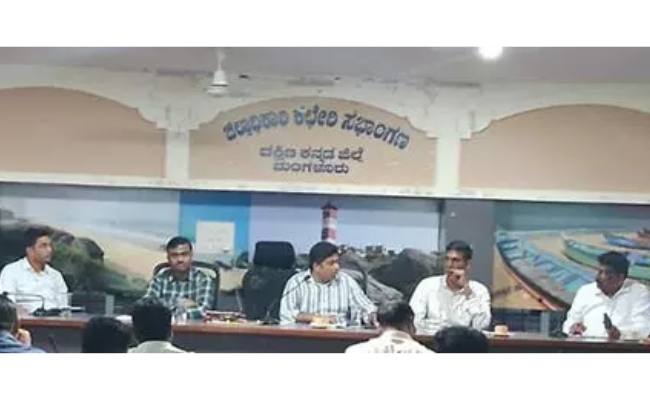
Mangaluru: Dakshina Kannada (DK) district Deputy Commissioner Mullai Muhilan on Friday reassured the public that there is no cause for concern regarding infectious diseases such as dengue and Nipah virus in the region. In an effort to educate the public about these diseases, their symptoms, transmission, prevention, and treatment, he has directed health officials and local organizations to take proactive measures.
Chairing a meeting at the DC's office to address the control of infectious diseases, Deputy Commissioner Mullai Muhilan provided valuable insights. He emphasized that there is no need to fear the Nipah virus, provided necessary precautions are taken. He advised people to exercise caution if bats are present near their homes and to avoid consuming fruits that may have been exposed to bites from birds. Properly washing fruits before consumption is essential, and individuals experiencing fever should seek medical attention without delay, he added.
Muhilan urged the health department staff and Asha workers to acquire comprehensive knowledge about Nipah virus symptoms from medical officers and to disseminate this information to the public. He also suggested close coordination with the forest department to identify areas with fruit bats.
The Deputy Commissioner highlighted the significance of active participation from District Wenlock Hospital, Medical Colleges, and primary health centers in combating infectious diseases. Special emphasis was placed on dengue control, which is of paramount importance, especially during the rainy season when stagnant water can become breeding grounds for mosquitoes.
To mitigate dengue risks, Muhilan recommended identifying mosquito breeding sites and taking immediate remedial measures. Awareness campaigns for dengue control were proposed at both the district and local organization levels, utilizing communication channels like WhatsApp groups. An action plan for larvicidal spraying will be developed, targeting areas with known mosquito breeding concerns. Additionally, fogging, larvicidal spraying, and larval surveys will be conducted promptly upon the discovery of dengue cases, he stated.
Let the Truth be known. If you read VB and like VB, please be a VB Supporter and Help us deliver the Truth to one and all.
Trump tells Fox News he's no longer sending Witkoff, Kushner to Pakistan for Iran talks
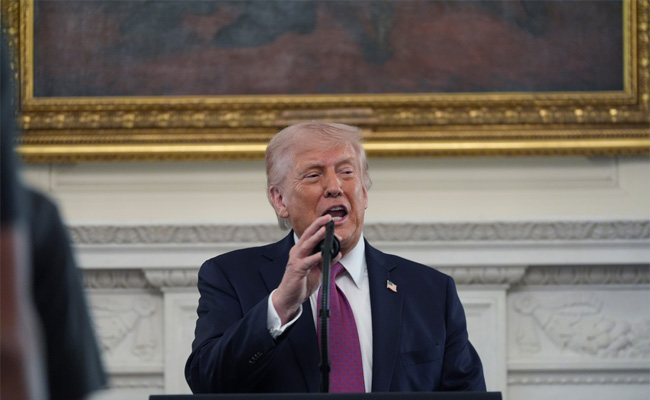
Islamabad (AP): President Donald Trump says he told top US envoys not to travel to Pakistan to negotiate with Iran, telling Fox News that "they can call us anytime they want.”
In a brief phone interview Saturday, Trump told Fox News that he told US negotiators Steve Witkoff and Jared Kushner “you're not going to be making any more 18 hour flights to sit around talking about nothing.”
Trump also said of the US side “we have all the cards.”
His comments came after the White House said Friday that Witkoff and Kushner would be heading to Pakistan for another round of negotiations with Iran.