Mangaluru flagged ‘India’s next major data-centre hub’ in feasibility study submitted to K’taka govt
Mangaluru: Karnataka’s digital-economy ambitions received a strong push this week after a detailed feasibility study identified Mangaluru as one of the country’s most promising emerging locations for large-scale data-centre development.
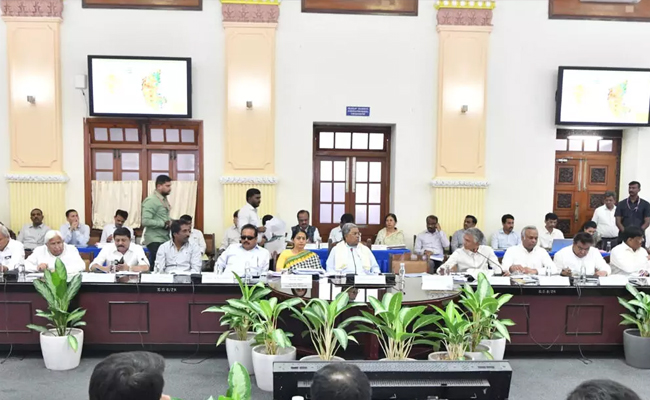
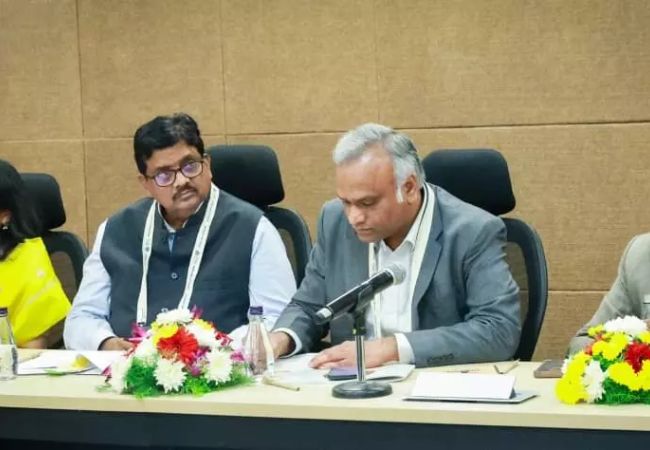
The report, titled Mangalore Today: India’s Next Potential Data Center Hub – A Feasibility Assessment, has been prepared jointly by the Karnataka Digital Economy Mission (KDEM), the Silicon Beach Programme (SBP) and Deloitte. It was formally presented to IT Minister Priyank Kharge and Electronics, IT/BT and S&T Department Secretary Dr N. Manjula during a data-centre session at the Bengaluru Tech Summit.
According to the report, the coastal belt is well positioned to support India’s expanding data-centre ecosystem. It highlights competitive land and power costs, a strengthening GCC presence, rising AI adoption, the potential for an undersea cable landing station and the scope for developing a future-ready 1-GW-plus data-centre cluster powered by green energy.
The national data-centre market is projected to reach USD 21.8 billion by 2030, and the study outlines how Karnataka can anchor this growth through a twin-hub strategy with Bengaluru as the primary hyperscale hub, supported by Mangaluru and Hubballi as regional nodes for edge infrastructure, low-latency computing and AI-driven capabilities. Within this framework, the report positions Mangaluru as one of the strongest upcoming destinations in India for the next phase of data-centre expansion.
The study notes that Mangaluru offers lower land and electricity costs compared with Mumbai and Chennai, a supportive coastal industrial ecosystem, a fast-growing digital talent base, a rising GCC footprint and increasing industry interest along the coastal corridor.
KDEM chairperson B.V. Naidu said the global shift towards AI, data dominance and cloud adoption demands robust and future-proof digital infrastructure. He pointed out that Mangaluru has the right mix of coastal advantage, competitive environment and a growing pool of talent and industry to play a leading role.
Silicon Beach Programme founding member Rohith Bhat described Mangaluru as standing at a turning point. As global digital systems move towards AI, hyperscale computing and high-performance connectivity, he said regions that combine talent with cost efficiency will shape the next decade of digital growth. The study, he added, shows a clear pathway for Mangaluru to evolve into a major data-centre zone with coordinated effort and timely support.
The report concludes that with sustained planning and execution, Mangaluru could emerge as India’s globally competitive “Silicon Beach” and generate thousands of jobs in the digital-economy sector.
Let the Truth be known. If you read VB and like VB, please be a VB Supporter and Help us deliver the Truth to one and all.
Had a very good conversation with friend Modi: Trump
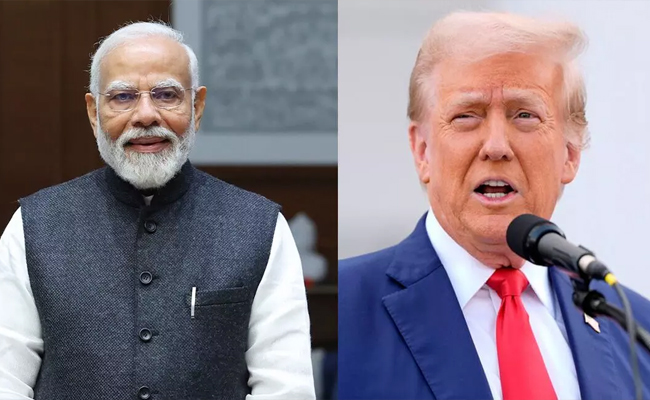
Washington (PTI): US President Donald Trump on Friday said he had a "very good conversation" with his "friend" Prime Minister Narendra Modi.
He was referring to the talks the two leaders had on Tuesday.
"I had a very good talk with him, and he's a friend of mine from India, and he's doing great. We had a very good conversation," Trump told reporters here as he headed to Las Vegas to address a roundtable on tax cuts.
Trump had called Modi on Tuesday to discuss the bilateral relationship and share perspectives on the situation in West Asia, where the US and Israel have launched a war on Iran.
The US and Iran declared a two-week ceasefire on April 7. They engaged in peace talks with Washington, insisting that Tehran give up its pursuit of nuclear weapons and uranium enrichment.
The war with Iran has sent gas prices soaring as Tehran blocked the sea lanes in the Strait of Hormuz, the narrow gateway for a fifth of global oil supplies.
During the Trump-Modi phone call on Tuesday, the two leaders stressed the importance of keeping the Strait of Hormuz open and secure.
According to the US Ambassador to India Sergei Gor, the 40-minute conversation ended with Trump telling Modi, "we all love you".
Tuesday's phone call was the second between the two leaders since the US-Israel war with Iran began on February 28.