Mangaluru man released early from Saudi jail under National Day Amnesty

Mangaluru: A 66-year-old man from Mangaluru, Karnataka, who was serving a three-year jail sentence in Saudi Arabia, has been granted early release under the Kingdom’s National Day amnesty program. The man, identified as Ahmed Imran (name changed), worked as a driver in Jeddah before his arrest in September 2023.
Ahmed’s troubles began during a routine day at work when a neighborhood boy repeatedly harassed him while he was washing his employer’s car. Despite having previously complained to the boy's father about his behavior, no action was taken. Frustrated by the continued disturbances, Ahmed pushed the boy away. However, the boy reported the incident to his father, allegedly exaggerating the events.
The boy’s father lodged a police complaint, which led to Ahmed’s arrest. Following court proceedings, Ahmed was sentenced to three years in jail. Lacking the financial means to hire a defense lawyer, Ahmed was unable to appeal the judgment.
After his sentencing, Ahmed’s family and local leaders from Karnataka reached out for assistance. Dr. & Adv. P.A. Hameed Padubidri, a Riyadh-based pro bono lawyer and social worker originally from Udupi, took up the case. Dr. Hameed and his Saudi legal team worked to resolve the matter, including attempts to negotiate with the complainant. However, these efforts were unsuccessful.
As a final step, Dr. Hameed advised Ahmed’s family to submit a mercy petition to the authorities. Following consistent follow-ups, Ahmed’s case was included in Saudi Arabia's National Day amnesty program, which facilitates the early release of eligible inmates.
Ahmed was released within a year of his sentence, bringing relief to his family in India. Upon his return, he expressed gratitude to his employer in Jeddah and the individuals who assisted him during his ordeal, including Dr. Hameed, K.S. Nasir Asaigoli, a social worker from Mangaluru, and Azhar from Jeddah.
The National Day amnesty program, a regular initiative by Saudi Arabia, offers relief to many individuals, reflecting the Kingdom’s efforts to uphold principles of justice and clemency. Ahmed’s release highlights the importance of community support and legal intervention for expatriates facing challenges abroad.
Let the Truth be known. If you read VB and like VB, please be a VB Supporter and Help us deliver the Truth to one and all.
Telangana survey flags 89,000 child labourers, highlights caste disparities in employment
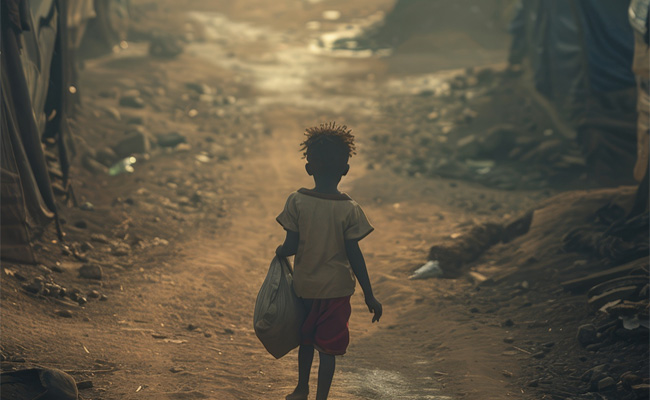
Hyderabad: A caste-based survey conducted by the Telangana government for 2024–25 has identified around 89,000 children engaged in labour across the state, with a large share belonging to Scheduled Caste (SC) and Scheduled Tribe (ST) communities.
The findings are part of the Socio, Economic, Educational, Employment, Political and Caste (SEEEPC) Survey, which covered about 3.5 crore people across 242 caste groups. According to the report, nearly one per cent of individuals below 18 years are involved in daily wage work. While the percentage appears small, officials noted that the absolute number reflects a serious concern.
The survey found that 11 per cent of identified child labourers belong to the ST Lambadi community, while 14 per cent are from the SC Madiga community. The highest incidence was reported among the ST Kolam group, where 7.2 per cent of minors are engaged in daily wage labour.
The data also revealed wider socio-economic disparities. Nearly half of the Scheduled Caste population is dependent on daily wage work, while only around 5 per cent are employed in the private sector, compared to about 30 per cent among General Castes.
State Welfare Minister Ponnam Prabhakar said the findings show that SC and ST communities remain three times more backward than General Castes, while Backward Classes are about 2.7 times more disadvantaged.
The report further noted that, on average, 31.3 per cent of people in the 25–65 age group depend on daily wage work. Among communities, the BC-A Odde group recorded the highest share at 55 per cent. In contrast, only 2.6 per cent of OC Brahmins rely on such work.
Several SC and ST communities, including Kolam, Beda, Madiga, Koya, Gond, Yerukulas and Mala Sale, were found to have among the highest proportions of daily wage earners. On the other hand, most General Caste communities and some Backward Class groups such as Goldsmiths and BC-C Christians showed lower dependence on daily wage employment.
The survey also pointed to inequalities in access to formal employment. Communities such as OC Rajus, OC Brahmins and Kapus were found to have a higher presence in private sector jobs, with up to 27 per cent of their population employed in such roles.