Mangaluru: Muslim community stand in solidarity with Christians during Sunday prayers at Church
The campaign was organised in the wake of Sri Lanka terror attacks
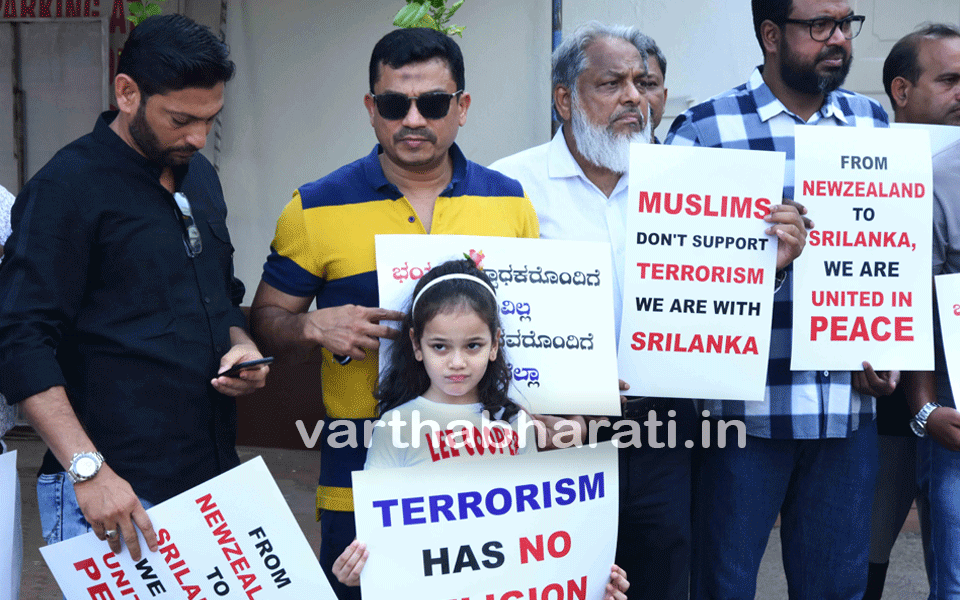
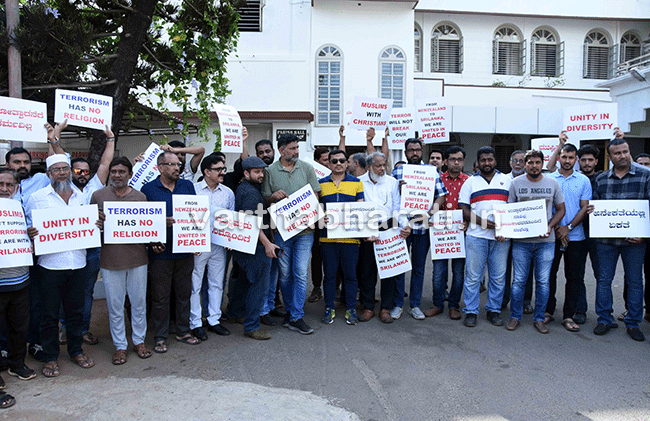
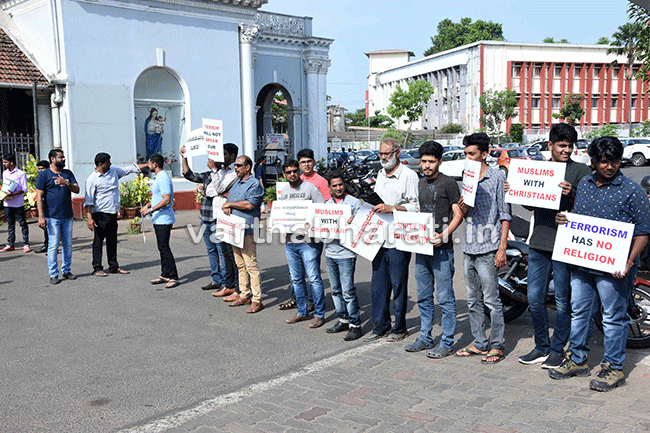
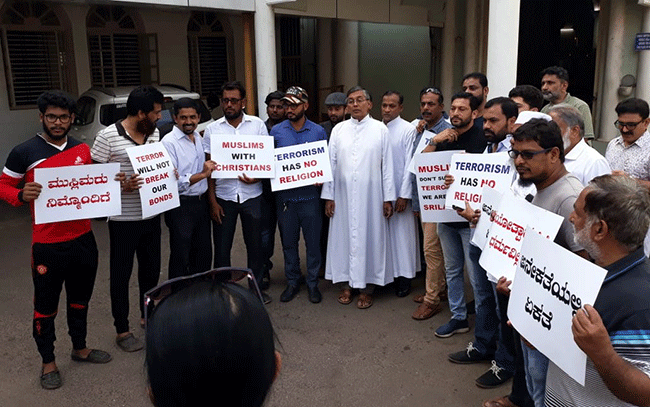
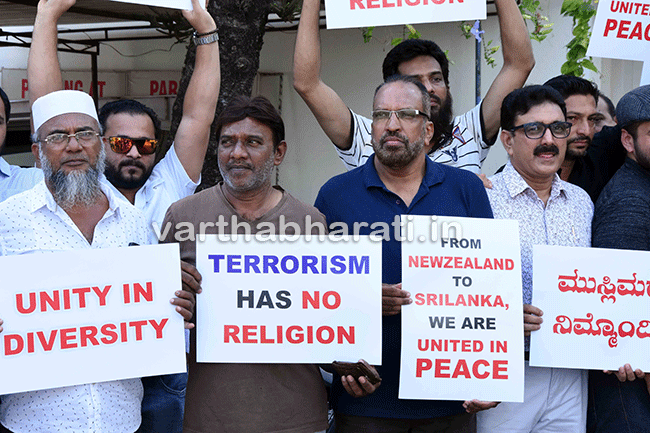
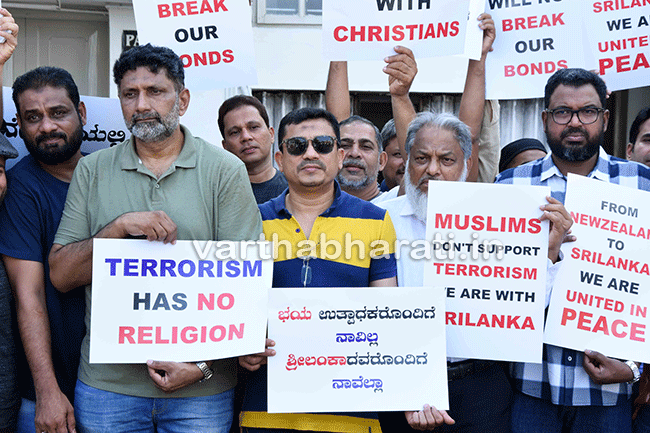
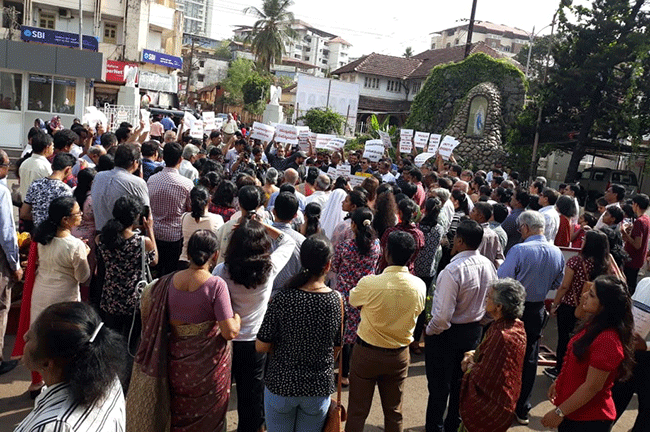
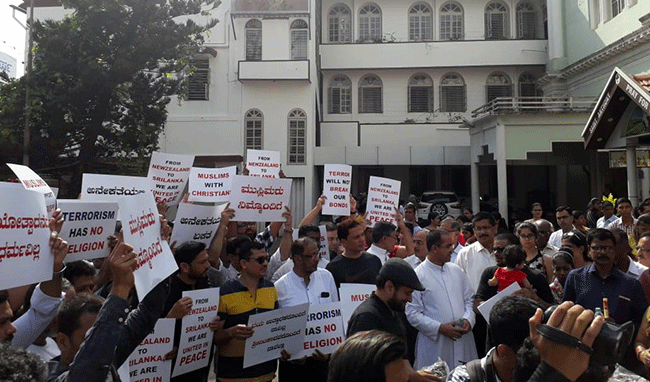
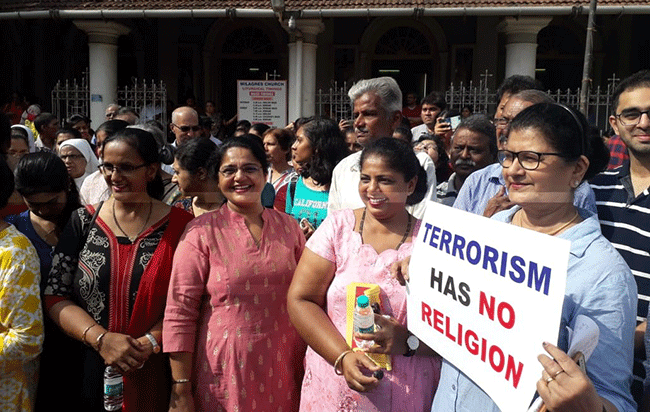
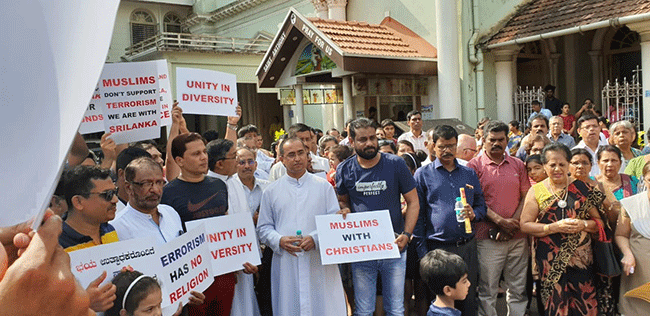
Mangaluru: Hundreds of Muslims of Mangaluru on Sunday morning gathered at the Milagres Church during the Sunday prayers here to express their solidarity with the Christian community in the wake of Sri Lanka terror attacks that rocked the Churches and hotels in the Island nation on Easter Sunday, earlier last month.
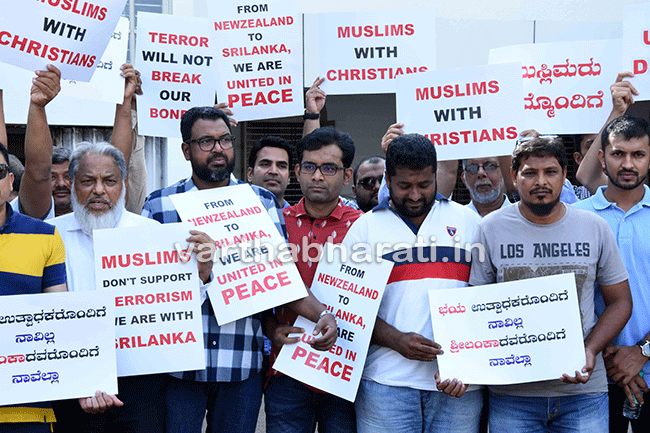
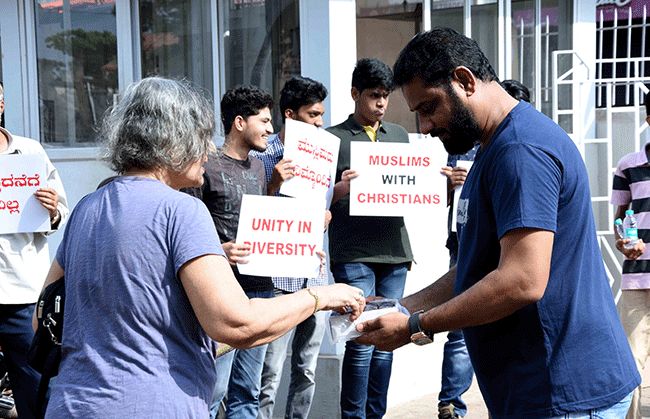
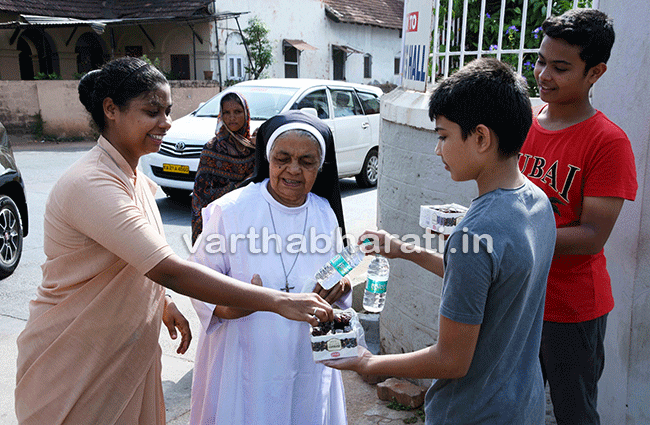
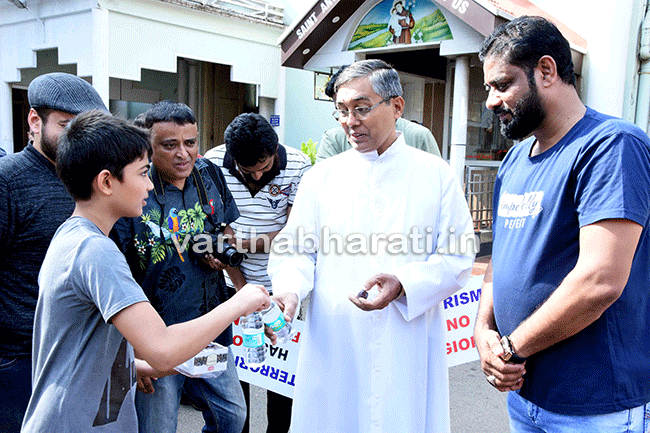
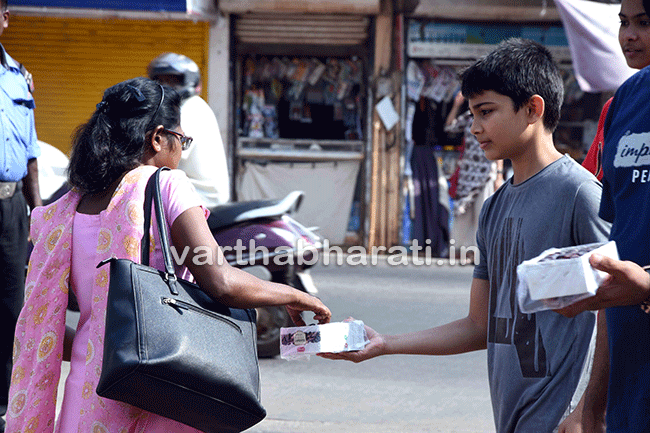
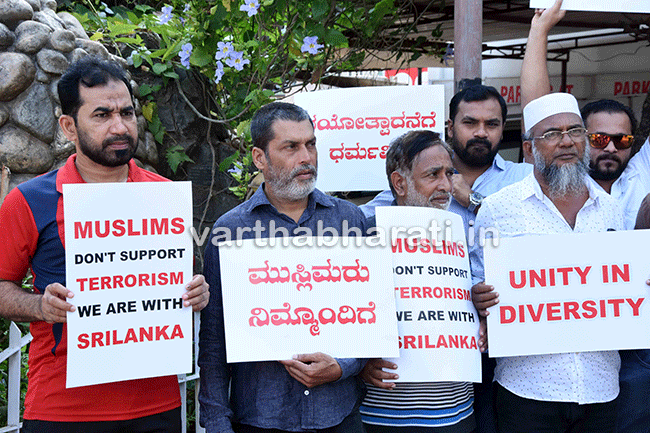
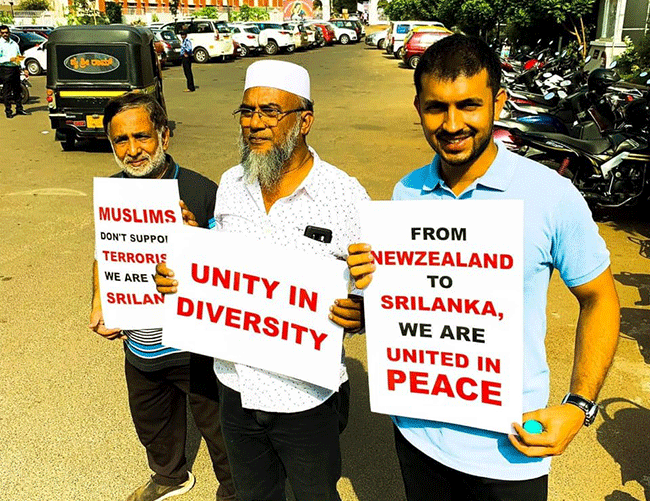
Muslim volunteers held placards expressing their solidarity and their stand against terrorism, while also distributing sweets and drinking water after the prayers at the Church ended.
Fr. Valerian D’ Souza, Parish Priest of Milagres Church, lauded the efforts of Muslims in joining in solidarity against terrorism and thanked the organisers for calling for a such 'a wonderful gesture' in the wake of recent terror attacks in Sri Lanka.
Speaking to Vartha Bharati, Fr. Vareian D’ Souza said “We all know what happened on the Easter day and we all as a family of the victims condemn such acts. We are really happy to have our Muslim brothers standing in Solidarity with us here at Milagres Church today. With this, they have proved that we all stand united against such acts. I am grateful for all the organisers of this campaign who have come up with this idea of expressing solidarity”.
“Though we did not had any speeches here today, but the message was really powerful that we all stand for peace. We should together now work for building peace and love in the society to make it a society of love and society of peace” he added.
The campaign also drew good response from the devotees who were present at the Church. They lauded the efforts of the Muslim community in joining together in solidarity.
A lady present at the Church added “No religion teaches terrorism, so it is baseless to associate such acts to one particular religion or community. We don’t support it and we are glad that our Muslim brothers have also joined us against it”.
Asif Deals, Saif Sultan and others were present during the campaign at the Church.
“The event was not organised by any particular organisation or any particular banner. It was organised by the whole Muslim community of Mangaluru” Asif said after the event.


Let the Truth be known. If you read VB and like VB, please be a VB Supporter and Help us deliver the Truth to one and all.
Women’s Reservation Bill: K'taka CM accuses PM Modi of adopting 'double standard'
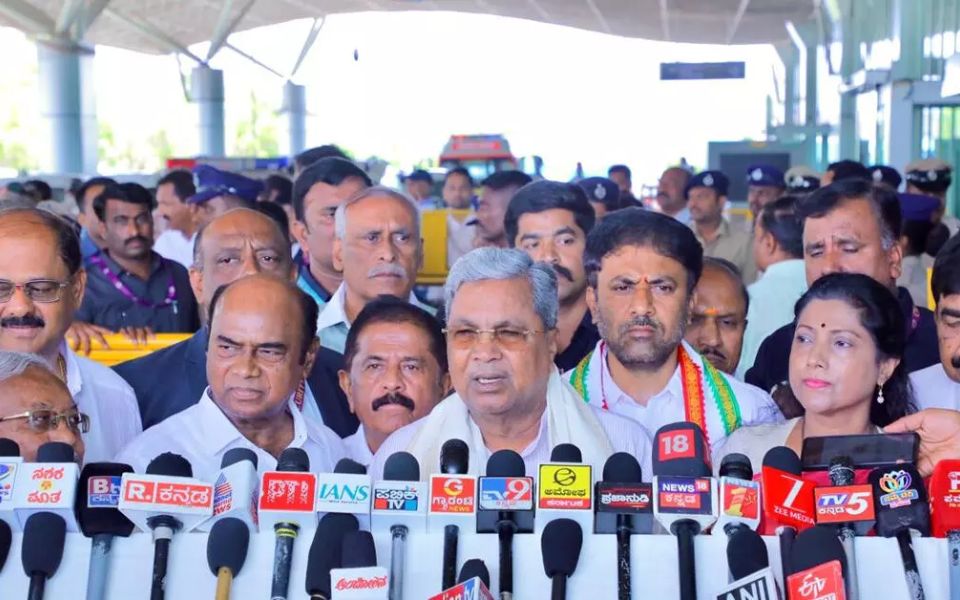
Mysuru (Karnataka) (PTI): Karnataka Chief Minister Siddaramaiah on Monday accused Prime Minister Narendra Modi of adopting a “double standard” on women’s reservation, alleging that the Centre had delayed implementation despite having the opportunity to act earlier.
Addressing reporters here, Siddaramaiah said the BJP and Modi had earlier opposed welfare guarantees and were now replicating them, while also questioning the timing and intent behind the women’s reservation move.
“That’s what I call double standards. Narendra Modi is not for social justice. If he was, this would have been done long ago. How many years has he been in power? It’s been 12 years. Why hasn’t it been done so far?” he asked.
The Chief Minister reiterated that the Congress had consistently supported women’s reservation and accused the Centre of "politicising" the issue.
“We spoke about women’s reservation. The Prime Minister asked me what our stand was. I said we are in favour of women’s reservation,” he said, referring to recent discussions with the PM.
He maintained that delimitation should only be carried out after a fresh Census to ensure equitable representation among states.
“In my view, delimitation should be done after a new census. That is why we opposed it. We have not opposed women’s reservation. We have always supported it,” he said.
Highlighting Congress’ past role, he said, “Who brought the 73rd and 74th amendments? Rajiv Gandhi and the Congress party. Those amendments ensured 50 per cent reservation for women in local bodies. Why would we oppose it?”
Siddaramaiah further questioned the union government’s delay in implementation. “Narendra Modi indulged in politics and got it passed in 2023. Why didn’t he implement it immediately? Then why did he wait so long? He could have implemented it immediately. If he is committed to women’s reservation, he should have implemented it,” he said.
On the linkage between delimitation and reservation, he asked, “Why did the Centre link it with delimitation? Why did it go for a constitutional amendment?” adding that such a move could disadvantage southern states that have successfully controlled population growth.
“Southern states have controlled population well, but northern states haven’t. Naturally, it benefits them and disadvantages us,” he said.
Responding to BJP’s criticism that women would “teach Congress a lesson,” Siddaramaiah said, “They are doing politics. If Modi had brought this earlier, who would have opposed women’s reservation?”
On electoral prospects elsewhere, he said he had no direct information on Tamil Nadu but was optimistic about ruling DMK's victory.
"According to the information I have, DMK and its alliance are likely to win,” while asserting that Kerala would also be won by the opposition.
In a major setback to the BJP-led Central government, a Constitution Amendment Bill to implement 33 per cent reservation for women in legislatures in 2029 and increase the number of Lok Sabha seats to 816 was defeated on Friday, with the ruling dispensation asserting that the struggle to give the rights to women will continue.
While 298 members voted in support of the bill in Lok Sabha, 230 MPs voted against it. Out of 528 members who voted, the bill required 352 votes for a two-third majority.
According to the Constitution (131st Amendment) Bill, Lok Sabha seats were to be increased to 816 from the current 543 to "operationalise" the women's reservation law before the 2029 parliamentary polls, following a delimitation exercise based on the 2011 Census.
Seats were also to be increased in state and Union territory assemblies to accommodate 33 per cent reservation for women.