'Panch sau ka josh' third edition poster released at Vikas PU College
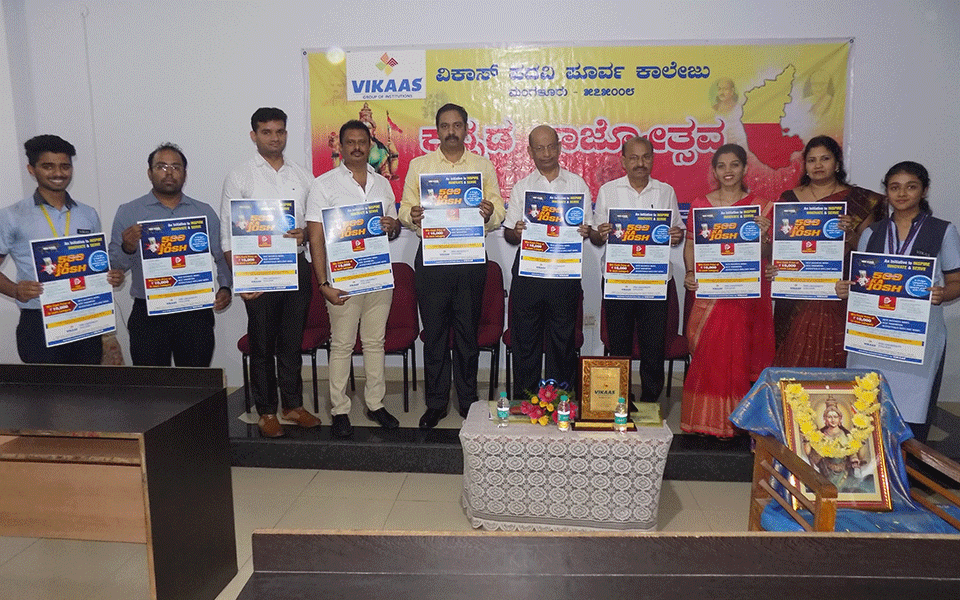
Mangaluru: Poster releasing ceremony of "Paanch Sau ka Josh" an event aimed at developing economy of the nation through industrial revolution was held at Vikas PU College in Mangaluru on Saturday, November 1.
Chief Guest of the event Dr. Ismail, Rtd. Principal of Badriya PU College released the poster.
"Make in India, a type of swadeshi movement covering many sectors of Indian Economy was launched by the Government of India on 25th September 2014 under the leadership of our Prime minister Narendra Modi to encourage production and usage of indigenous products of India.
This programme is aimed at development of Economy of the nation through Industrial revolution by means of latest sophisticated technology" a press release from the organisers added.
In this regard Paanch sau ka josh was held previously in the form of model making competition for the students of various high schools of Karnataka.
Third edition of the programme will be held at Udupi and Dakshina Kannada District levels on 21st and 23rd November respectively.
Model making competition will be conducted for 9th and 10th standard students of high schools in Science, Commerce and Arts categories.
“A Seed fund of Rs 500 will be given to each team and each school can have a maximum of five teams. Each team consists of three members. All these teams are expected to develop innovative, aesthetically brilliant and creative models by only using this seed fund which will benefit society and nurture the students’ potential. The programme will give hands on experience to the students to help them select the right course on completion of their class 10." the organisers added.
J Korgappa and Suraj Kumar Kallya, trustees, Vikaas Education Trust, Parthasarathy Palemar, Coordinator, Vikaas Group of Institutions, Dr. Suneel. B.M, Principal, Vikaas Pre- University College, Ayshwarya .K, principal Vikaas First Grade College, Shobha P., HOD, Department of Kannada were present on the occasion.
Mr. Ajith Rai, Lecturer in Kannada hosted the program.
Students who are interested to participate in the competition are requested to register their names with the coordinators the programme on contact numbers:
9731289934,9483366770,9900865792 (Dakshina Kannada )
9900751013,9483366770,9611667787(Udupi)
Let the Truth be known. If you read VB and like VB, please be a VB Supporter and Help us deliver the Truth to one and all.
BJP using women's quota bill as front to pass Delimitation Bill that will break India: Mamata
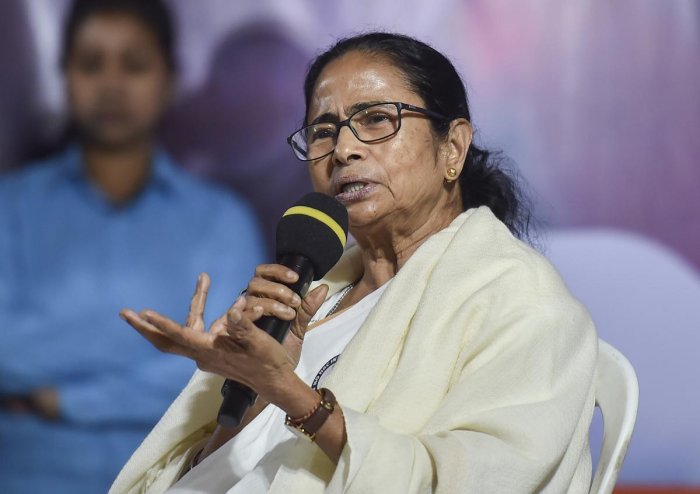
Cooch Behar (WB) (PTI): Chief Minister Mamata Banerjee on Friday alleged the BJP-led NDA government at the Centre was using the proposed amendment to the women's quota law in Parliament as a front for the Delimitation Bill that would "break the country into pieces".
The TMC will fight this Central government's move at every step, she asserted at her party's poll rally here.
The Constitution (131st Amendment) Bill to tweak the women's quota law, along with the Delimitation Bill and the Union Territories Laws (Amendment) Bill, to implement the proposed amended women's quota law, in the Union territories of Delhi, Puducherry and Jammu and Kashmir, were introduced in the Lok Sabha on Thursday.
According to the Constitution amendment bill, Lok Sabha seats will be increased to a maximum of 850 from the current 543 to "operationalise" the women's reservation law before the 2029 parliamentary polls, following a delimitation exercise based on the 2011 Census.
Seats will also be increased in state and Union territory assemblies to accommodate 33 per cent reservation for women.
Opposing the Centre's move, Banerjee alleged that "the BJP brought the Delimitation Bill while keeping the women's reservation bill at the front".
"The BJP is trying to increase the number of seats in the Lok Sabha to nearly 850 through the Delimitation Bill. It will break the country into pieces," the TMC supremo said.
She also alleged that Prime Minister Narendra Modi was not speaking the truth about the development of north Bengal at a BJP rally last week.
"The prime minister said nothing was done for the development of north Bengal. But we spent Rs 1.72 lakh crore on the development of the region," Banerjee said and asked Modi to cross-check data before making such remarks.