Mangaluru police bust multi-state scam targeting e-commerce giant; two arrested
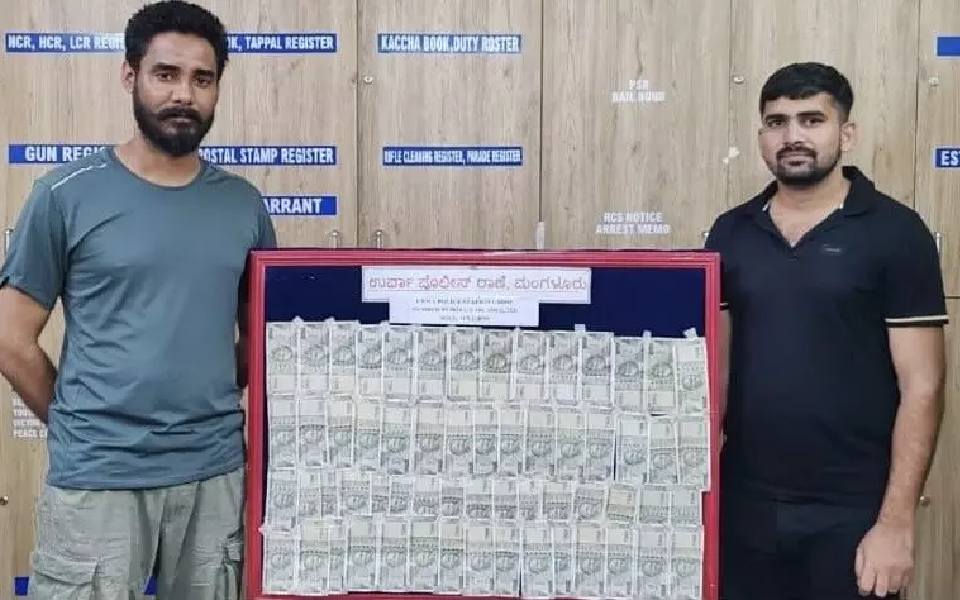
Mangaluru (Karnataka), Nov 2: The Mangaluru police have uncovered a multi-state, multi-crore scam with the arrest of two men accused of defrauding an e-commerce giant across India, officials said on Saturday.
The suspects, Raj Kumar Meena (23) and Subhash Gurjar (27) from Rajasthan, are alleged to be part of a large-scale fraud spanning over 10 states, including Tamil Nadu, Kerala, Assam, Karnataka, Delhi, Uttar Pradesh, and Bihar.
Mangaluru City Police Commissioner Anupam Agarwal described the arrests as a significant breakthrough.
A case has been registered at Urwa police station in Mangaluru.
ALSO READ: Hydro weed cannabis seized in Mangaluru, one held
The scam, reportedly, involved orders worth Rs 11.45 lakh placed under a false identity. The accused used the name Amith, to place orders, for two high-value cameras and other items, providing a fictitious address near the KSRTC bus stand in Mangaluru.
Upon delivery, Meena collected the items and provided the OTP while Gurjar distracted the delivery personnel. They, then, swapped the original stickers on the Sony camera boxes, with those of other items in the order, delaying delivery confirmation by using an incorrect OTP and arranging to collect the cameras the next day.
Suspicion arose when the accused later canceled the camera order, prompting the private logistics, the e-commerce platform's delivery partner, to inspect the boxes and uncover the sticker swapping. Investigation confirmed that the accused had taken the cameras, leaving behind tampered boxes, police said.
The Urwa Police initiated an investigation, seizing Rs 11.45 lakh obtained from the sale of fraudulently acquired goods.
Meena was first detained by Salem Police in Tamil Nadu before being taken into Urwa Police custody on October 18. Gurjar was subsequently apprehended in Mangaluru on October 28 following Meena's interrogation.
Meena had previously been arrested on October 4 in a similar case involving the e-commerce giant. Both suspects face charges across multiple states, including Assam, Odisha, Maharashtra, and Rajasthan. The investigation continues with authorities coordinating with police in states where additional cases are pending.
Let the Truth be known. If you read VB and like VB, please be a VB Supporter and Help us deliver the Truth to one and all.
8 children between ages of 1 and 14 dead after mass shooting in Louisiana, police say
Shreveport(US) (AP): A gunman in Louisiana killed eight children in shootings at two different homes early Sunday in the nation's deadliest mass shooting in more than two years, police in Shreveport said.
The victims ranged in age from one to about 14 years old, said Shreveport police spokesperson Chris Bordelon. A total of 10 were shot and some of the children were related to the suspect, Bordelon said.
The gunman later died after a chase with officers who fired at the suspect, Bordelon said. The suspect stole a car while leaving the scene of the shootings and was followed by police, according to Bordelon.
Police did not release the name of the suspect but did say he was an adult male. The shootings were the result of a “domestic disturbance,” Bordelon said.
Officials said they were still gathering details at the crime scenes south of downtown Shreveport — the two homes and a third location.
“This is an extensive scene unlike anything most of us have ever seen,” he said.
It was the deadliest mass shooting in the US since eight people were killed in a Chicago suburb in January 2024, according to a database maintained by The Associated Press and USA Today in partnership with Northeastern University.
At a news conference outside the residence where one of the shootings occurred, officials appeared stunned, requesting patience and prayers from the community as they sorted through multiple crime scenes.
“I just don't know what to say, my heart is just taken aback,” Shreveport Police Chief Wayne Smith said. “I cannot begin to imagine how such an event could occur.”
“This is a tragic situation — maybe the worst tragic situation we've ever had,” said Tom Arceneaux, mayor of the city in northwestern Louisiana with about 180,000 residents. “It's a terrible morning.”
Louisiana State Police say their detectives have been asked by Shreveport police to investigate. In a statement, state police say no officers were harmed in the shooting that involved an officer after a police pursuit into Bossier City on Sunday morning.
State police are asking anyone with pictures, video or information to share it with state police detectives.
Louisiana Gov Jeff Landry said in a statement that he and his wife were heartbroken. “We're deeply grateful to the law enforcement officers and first responders working tirelessly on the scene,” he added.