Mangaluru: Rescued three Kerala fishermen handed over to authorities
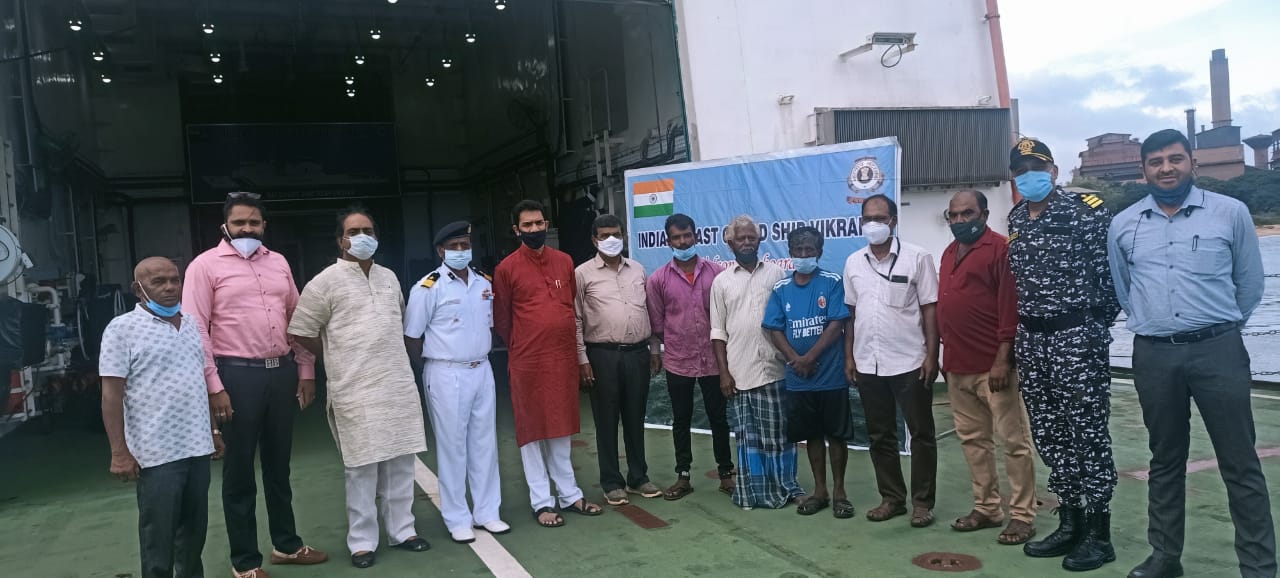
Mangaluru, May 19: The three stranded fishermen from Kerala, who were rescued by Indian Coast Guard vessel Vikram off Kannur coast on May 14, were handed over to Kerala government authorities at the New Mangalore port here on Wednesday.
The rescued fishermen have been identified as Arun (36), Francis (58) and Suriender (64), Coast Guard (Karnataka) commander DIG S B Venkatesh said in a release here.
The fishing boat IFB Bhadriya was stranded 10 nautical miles off Kannur coast and it faced an engine failure in face of impending inclement weather due to cyclone Tauktae.
The rescue operation was undertaken during midnight on May 14 braving rough seas.
The ship was later diverted to proceed off Lakshadweep coast for search and rescue of other fishing boats registered in Tamil Nadu and Kerala.
The ICG ship from Karnataka carried out extensive search by offshore patrol vessel and aerial search by Coast Guard Dornier aircraft, but no traces of fishing boats with crew were sighted.
The vessel entered New Mangalore Port on Wednesday after nine days of sailing in the rough seas.
The three fishermen from Kerala are in good health and handed over to representatives of the Kerala government in the presence of Dakshina Kannada MP Nalin Kumar Kateel, the Coast Guard release said.
ಕರ್ನಾಟಕದ ದಕ್ಷಿಣ ಕರಾವಳಿಯಲ್ಲಿ ಅಪಾಯಕ್ಕೆ ಸಿಲುಕಿದ ಕೇರಳದ ಕಣ್ಣೂರಿನ 3 ಮೀನುಗಾರರನ್ನು @IndiaCoastGuard
— Nalinkumar Kateel (@nalinkateel) May 19, 2021
ಯವರು ರಕ್ಷಿಸಿ, ಸುರಕ್ಷಿತವಾಗಿ ಕೇರಳದ ಅಧಿಕಾರಿಗಳಿಗೆ ಒಪ್ಪಿಸಿದ್ದಾರೆ.
ಕಾರ್ಯಾಚರಣೆಯಲ್ಲಿ ಪಾಲ್ಗೊಂಡ ಕರಾವಳಿ ಪಡೆಯ ಡಿಐಜಿ @sbabuvenkatesh ರವರು ಮತ್ತು Comdt ಉಮೇದ್ ಸಿಂಗ್ ಅವರಿಗೆ ಧನ್ಯವಾದಗಳು. pic.twitter.com/7aW4yb5W4u
Let the Truth be known. If you read VB and like VB, please be a VB Supporter and Help us deliver the Truth to one and all.
Lebanon appoints new representative for talks with Israel, rejects linkage to Iran
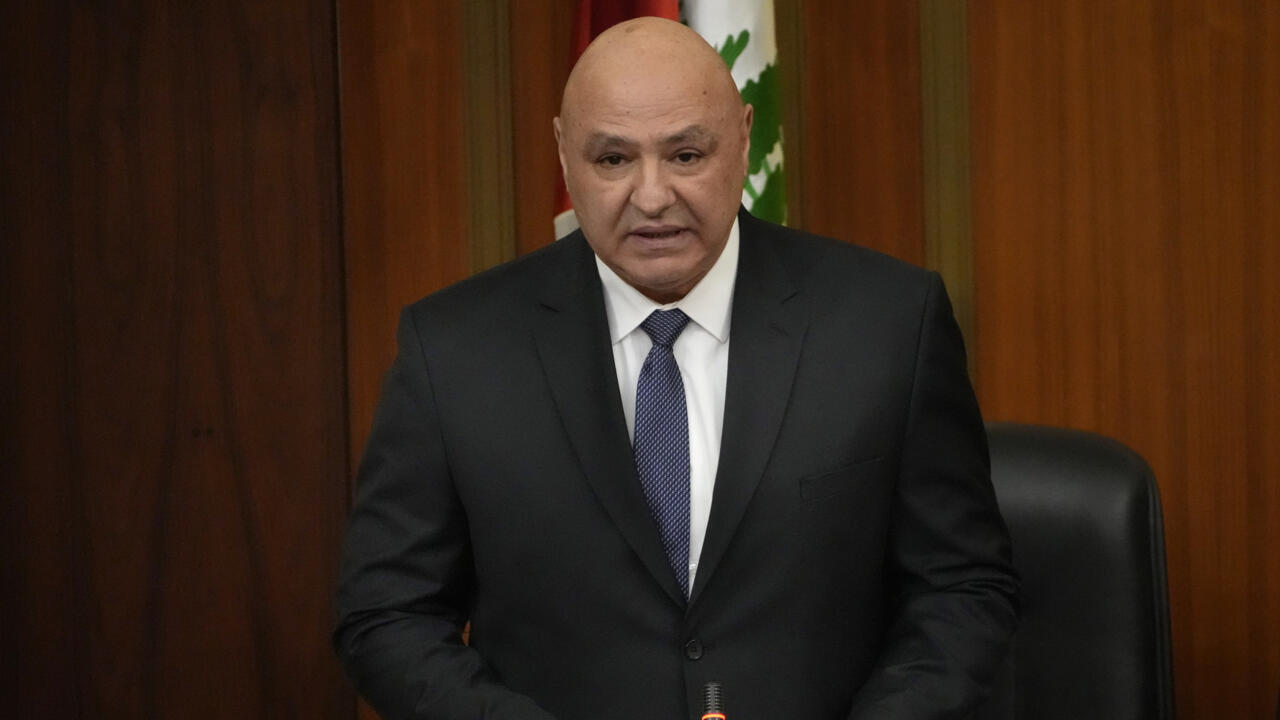
Beirut: Lebanon’s has moved to underline its independent position in ongoing regional developments, amid attempts to link the country to the broader conflict involving Iran, the United States and Israel.
President Joseph Aoun, while announcing the appointment of former US ambassador Simon Karam as Lebanon’s representative in talks with Israel, made it clear that Karam would be the sole representative for Lebanon and that there would be no substitute.
The move comes in response to what the Lebanese officials see as efforts by Iran to tie Lebanon’s situation to the wider regional conflict. Iran had indicated that there would be no ceasefire involving the US, Israel and Iran unless it also included a ceasefire in Lebanon.
Some groups, including Hezbollah and its supporters, had expressed support for linking the situations, citing concerns that the Lebanese government has limited leverage in negotiations with Israel. Lebanon is not formally a party to the conflict, and its army is considered weak.
However, others, including Prime Minister Nawaf Salam, have opposed this approach. They view Iran’s stance as an attempt to influence Lebanon’s internal affairs and see it as undermining the country’s sovereignty.
Officials backing the government’s position say the move is aimed at reaffirming Lebanon’s sovereignty and ensuring that decisions about peace and ceasefire within the country are not dictated externally.
They also see it as a safeguard, so that any breakdown in talks between the US, Israel and Iran does not automatically lead to renewed conflict in Lebanon.