Mangaluru skies filled with artistic kites at 8th International Kite festival
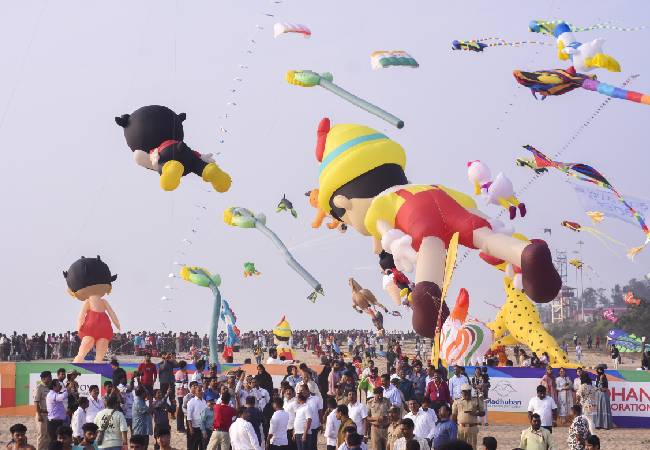
Mangaluru: Kites inspired by Indian art forms such as Kathakali and Yakshagana, alongside designs like Pushpaka Vimana and Gajaraja Garuda as well as cartoon characters flooded skies of Mangaluru marking the 8th International Kite Festival.
The festival held at Tannirbhavi Beach on Saturday was inaugurated by Karnataka Health Minister Dinesh Gundu Rao.
Speaking at the event, Minister Rao highlighted the festival’s growing international appeal, citing the participation of a kite-flying world champion from Greece.
“With such global interest, the festival has immense scope to attract even larger audiences. Let us aim to host a grander, more competitive event next year,” he said.
Team Mangaluru, an amateur kite-flying group, organised the event in collaboration with ONGC MRPL and the district administration as part of the Karavali Utsav. This year’s theme was “One Sky, One Earth, One Family”.
They also flew elaborate kites inspired by Indian art forms such as Kathakali and Yakshagana, alongside designs like Pushpaka Vimana and Gajaraja Garuda. These have already represented India at international kite festivals in France, Italy, Canada, amd and South Korea.
This year’s festival witnessed enthusiastic participation from thousands of visitors and kite enthusiasts. International teams from countries such as England, Germany, Italy, the Netherlands, Slovenia, Sweden, Indonesia, and Portugal joined Indian participants from states including Odisha, Rajasthan, Maharashtra, Telangana, Kerala, and Gujarat.
Let the Truth be known. If you read VB and like VB, please be a VB Supporter and Help us deliver the Truth to one and all.
ED raids Kolkata Police deputy commissioner, businessman in PMLA probe
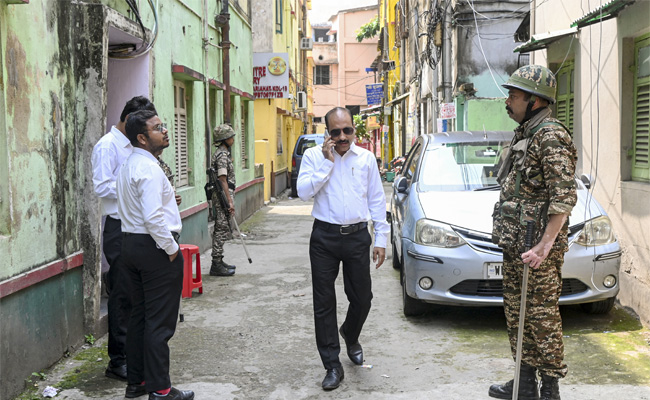
Kolkata (PTI): The Enforcement Directorate on Sunday conducted raids at the premises of Kolkata Police Deputy Commissioner Shantanu Sinha Biswas and a local businessman as part of a money laundering probe against an alleged criminal and his linked syndicate in the poll-bound state, officials said.
Two premises of Biswas, including his residence in Ballygunge area and one location of the businessman named Joy Kamdar, Managing Director of a company named Sun Enterprise, have been raided under the provisions of the Prevention of Money Laundering Act (PMLA).
Kamdar has been taken by the officials to the local ED office for questioning. Biswas, chief coordinator and nodal officer of the West Bengal and Kolkata Police welfare committee, was not present at his premises, they said.
The action is linked to a money laundering case against an alleged local criminal named Biswajit Podder alias Sona Pappu, who is booked in multiple cases on charges of attempted murder and extortion.
The federal probe agency had conducted the first round of searches in this case on April 1.
The ED had then seized cash of Rs 1.47 crore apart from gold jewellery and silver valued at Rs 67.64 lakh and a country-made revolver from some premises that were searched.
The probe stems from a Kolkata Police FIR against against Podder for his alleged involvement in rioting, attempt to murder, criminal conspiracy and Arms Act violations. The accused, including Podder, were engaged in organised criminal syndicate activities in the state of West Bengal and generated funds illegally by way of syndicate operations, the ED said in a statement on April 9.
Podder is also wanted by the police in a case of violence in Kankulia road near Golpark of Kolkata and is currently on the run.
The ED has issued summons to Podder but he has failed to join the investigation so far, according to the agency.
West Bengal will have a two phase poll on April 23 and April 29.