Mangaluru social worker Yogesh Kalasadka wins "Person of the Year Award 2022"

The Ecolink Institute of Well-being on Thursday conferred the “Person of the Year” award 2022 to Yogesh Kalasadka, a popular social worker and a manager at the Mangalore Special Economic Zone for his services in the rehabilitation of people affected by the land acquisition.
Ecolink Institute of Well-being is an international training provider. It conferred the award in collaboration with the Linking Friends Club. The award recognizes people with outstanding achievements in human rights, education, and social work fields at the end of every year.
The award was conferred at a ceremony in Madanthyar on Wednesday by Vivek Vincent Pais, the Director of Dharmasthala Social Service Projects. Vivek Vincent Pais had won the Person of the Year Award in 2021.
Previously working in Link Center, he has proved his efficiency and leadership in developing community-based de-addiction camps and prevention programs. He has efficiently provided leadership for around 40 community-based De-addiction camps in various parts of Karnataka, including Gulbarga.
Known as a community organizer and social entrepreneur, Yogesha also manages a number of grass-root levels voluntary projects, especially targeting the education of school children, youth, temple renovation, agriculture, health, and rural development. He is also a certified addiction professional from Ecolink Institute & Colombo Plan.
Handing over the award, Vivek Vincent Pais appreciated him for his number of community initiatives for supporting the education of poor children, supporting the salary of teachers in rural schools, and giving leadership in community projects.
Dr. Thomas Scaria, the Director of the Ecolink Institute said Yogesh is an Icon of youth who has played significant roles in rehabilitation services, both among farmers and those addicted to alcohol and drug use disorder.
Let the Truth be known. If you read VB and like VB, please be a VB Supporter and Help us deliver the Truth to one and all.
ED raids in case against former Punjab Police DIG Bhullar, linked entities
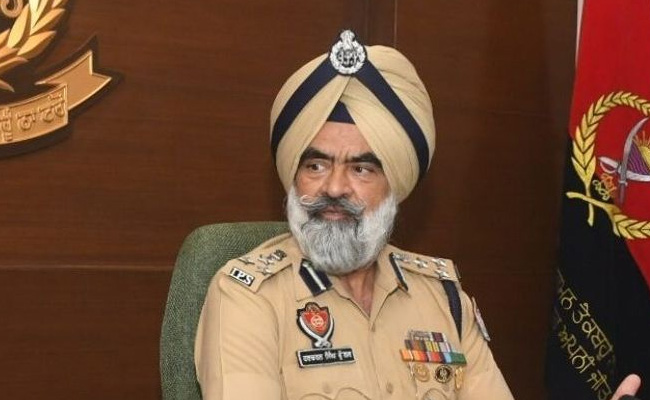
Chandigarh (PTI): The Enforcement Directorate on Monday conducted searches at multiple locations in Punjab as part of a money laundering probe against former state police DIG Harcharan Singh Bhullar and entities linked to him, officials said.
They said about 11 premises in Chandigarh, Ludhiana, Patiala, Nabha and Jalandhar linked to the accused, his associates and suspected benamidars (the owner in whose name a benami property is held) are being covered under the Prevention of Money Laundering Act (PMLA).
The Enforcement Directorate (ED) probe stems from a Central Bureau of Investigation (CBI) case registered against Bhullar on allegations that he sought illegal gratification through a middleman for settlement of a criminal case, along with detection of assets disproportionate to known sources of income.
The searches aim to trace further proceeds of the alleged crime, identify benami assets and gather evidence related to money laundering, ED officials said.
Bhullar, who was serving as the deputy inspector general (DIG) of police (Ropar Range), was arrested by the CBI in October 2025 after a scrap dealer alleged that bribe was demanded from him through an intermediary to settle a case.