Mangaluru: We the People, Mangaluru Police, Roshni Nilaya jointly organize International Youth Day

Mangaluru: A large-scale awareness campaign aimed at combating drug abuse and promoting cyber safety was organized in Mangaluru to mark the United Nations International Youth Day. The event was a collaborative effort by We the People Trust, a newly established organization in the city, in partnership with the Mangaluru City Police, Mangalore City Corporation, and Roshni Nilaya School of Social Work.
We the People Trust was founded under the aegis of the ‘Yes We Can’ youth organization from Andhra Pradesh and the Alumni of King's College London in Hyderabad. The trust, which consists of academicians, senior officials, policy makers, retired officers, lawyers, and students, aims to serve the youth and women communities in South West India.
The event drew participation from about 100 students, police officers, and city municipal officials, who joined forces to raise awareness under the themes #SayNoToDrugs and #SayYesToCyberSafety. These themes were prominently showcased during a Walkathon and street demonstration held at Kankanady Junction, where participants formed a human circle and displayed placards to engage and educate the public.
"This is not the first time we have organized a project event of this scale," said Stephen Anurag P., the founder of We the People Trust. "Programs like these empower youth to take part in the Global Agenda 2030 and advocate for sustainable development, bringing together all stakeholders in society to fight against antisocial elements. We have a series of such projects planned across the state and neighboring regions."
A significant highlight of the event was the unveiling of a "Wall of Signatures" at Valencia Park, where participants and guests signed their names as a gesture of support for the cause.
Addressing the gathering, Assistant Commissioner of Police Geetha Kulkarni emphasized the importance of tackling modern challenges such as cybersecurity and drug control. "These issues affect not just students and youth but also employees and daily wage workers. With the support of organizations like We the People India, authorities can better address these challenges," she stated.
Other notable attendees included Dr. Manoj Babu, President of the Trust, Municipal Commissioner CL Anand, representatives from Roshni Nilaya School of Social Work, and several members of We the People Trust, including Sahil A. Khader, Amith Rohan D'Souza, Mohd Sufaid, Rosline Marry, Akhinesh A., and Siraj P.


Let the Truth be known. If you read VB and like VB, please be a VB Supporter and Help us deliver the Truth to one and all.
Rahul Gandhi to go on two-day Raebareli visit from May 19
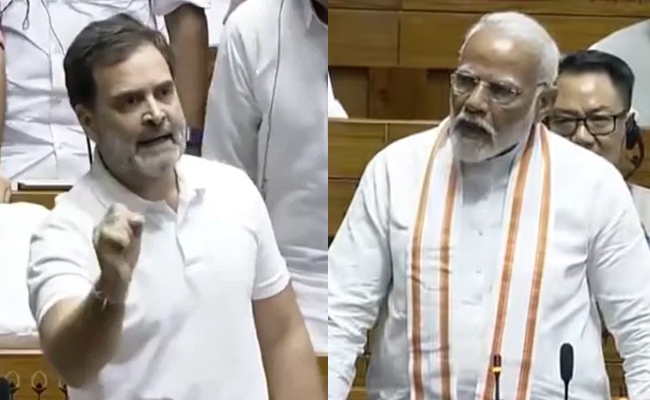
Raebareli (UP) (PTI): Leader of the Opposition in the Lok Sabha and Congress MP from Raebareli Rahul Gandhi will arrive here on May 19 on a two-day visit, a Congress office-bearer said on Monday.
Congress district president of Raebareli Pankaj Tiwari said that on the first day, Gandhi will inaugurate a marriage hall at Thakurain Kheda in Bachhrawan. Subsequently, he will address a public meeting in Khiron. In Lalganj, he will participate in a 'mahila samvaad' programme.
He further said that on May 20, he will meet the public during a 'Janata Darshan' programme at the Bhuyemau Guest House. Following this, he will participate in the unveiling of a statue of Veera Pasi and attend a public meeting in Lodhwari.
He will then depart for Amethi.
In Amethi, Gandhi will hold meetings with party functionaries, workers and senior leaders at the party's district headquarters, Congress district unit chief Pradeep Singhal said on Sunday.
According to political observers, this meeting would form a part of the strategic preparations for the 2027 Uttar Pradesh Assembly elections, alongside an organisational review.
Discussions during the meeting are likely to focus on strengthening the party organisation down to the booth level, increasing participation of youth and women workers, and accelerating public outreach campaigns across villages.
According to sources, a large number of party workers -- from Gram Sabha to the district level -- have been invited to attend the meeting.
Gandhi is expected to interact directly with workers.
During the one-day visit, the Congress leader will also travel to Poore Ramdeen Pandit -- the native village of late Congress district president Yogendra Mishra -- to meet his family members.
Mishra, considered a close associate of the Gandhi family, passed away on March 1 following a prolonged illness.
Political activities in the district have intensified ahead of Gandhi's visit, and party workers have already started making arrangements for his reception.
Kishori Lal Sharma, the Congress MP from Amethi, is also holding regular meetings with local leaders and functionaries to review the preparations.