Mangaluru: Week-long lockdown to cap COVID-19 spread begins in Dakshina Kannada
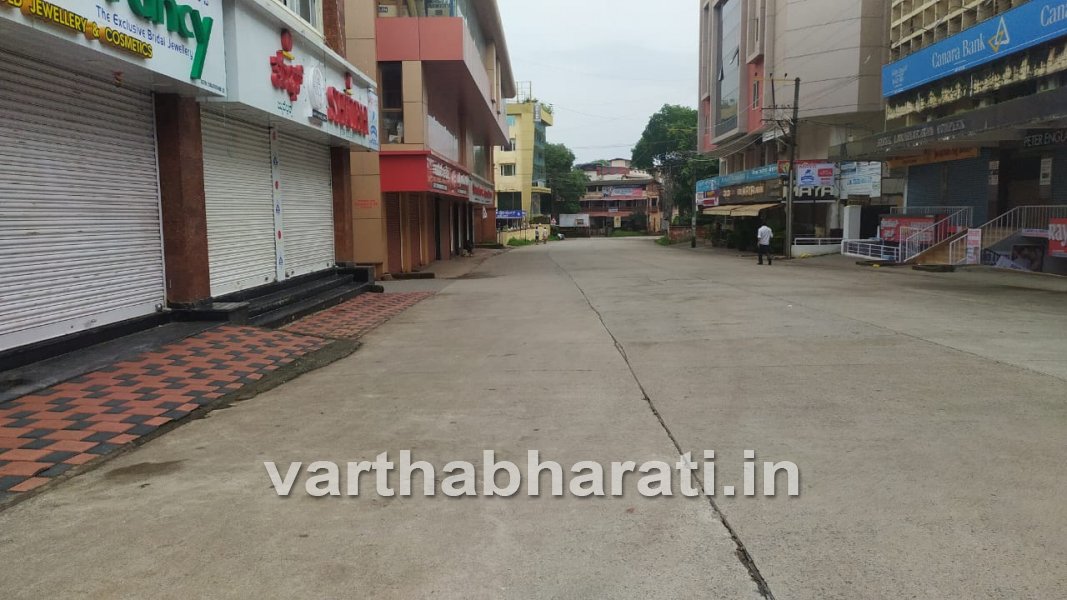
Mangaluru: The week-long lockdown to stop the spread of Coronavirus in Dakshina Kannada, imposed by the District Administration began on Wednesday evening at 8 pm as per the orders issued by the administration earlier.
Since there are restrictions on bus transport, private buses will also remain off the road for a week from Thursday, said Dakshina Kannada District Bus Owners' Association president Dilraj Alva.
Both government and private vehicles may be used only in cases of emergency or by the essential service sectors.
Deputy Commissioner Sindhu B Rupesh said that ration and grocery shops and stalls selling food items, grains, fruits, vegetables, and meat will be open from 8 am to 11 am every day.
Containment areas will be sealed down for the period. Commercial and private institutions, liquor shops, bars, and malls will be closed for a week. People will not be given entry into gymnasiums, sports complexes, stadiums, swimming pools, entertainment parks, stages, auditoriums, and meeting halls.
Organizing social, political, sports, entertainment, cultural as well as religious functions and gatherings at all religious places and places of worship is also not permitted.
The guidelines given for the lockdown to prevent the spread of Covid-19 should be strictly followed, the deputy commissioner said.
Let the Truth be known. If you read VB and like VB, please be a VB Supporter and Help us deliver the Truth to one and all.
Telangana survey flags 89,000 child labourers, highlights caste disparities in employment
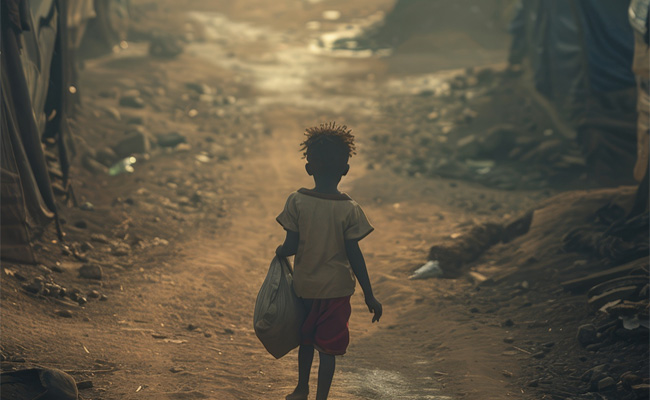
Hyderabad: A caste-based survey conducted by the Telangana government for 2024–25 has identified around 89,000 children engaged in labour across the state, with a large share belonging to Scheduled Caste (SC) and Scheduled Tribe (ST) communities.
The findings are part of the Socio, Economic, Educational, Employment, Political and Caste (SEEEPC) Survey, which covered about 3.5 crore people across 242 caste groups. According to the report, nearly one per cent of individuals below 18 years are involved in daily wage work. While the percentage appears small, officials noted that the absolute number reflects a serious concern.
The survey found that 11 per cent of identified child labourers belong to the ST Lambadi community, while 14 per cent are from the SC Madiga community. The highest incidence was reported among the ST Kolam group, where 7.2 per cent of minors are engaged in daily wage labour.
The data also revealed wider socio-economic disparities. Nearly half of the Scheduled Caste population is dependent on daily wage work, while only around 5 per cent are employed in the private sector, compared to about 30 per cent among General Castes.
State Welfare Minister Ponnam Prabhakar said the findings show that SC and ST communities remain three times more backward than General Castes, while Backward Classes are about 2.7 times more disadvantaged.
The report further noted that, on average, 31.3 per cent of people in the 25–65 age group depend on daily wage work. Among communities, the BC-A Odde group recorded the highest share at 55 per cent. In contrast, only 2.6 per cent of OC Brahmins rely on such work.
Several SC and ST communities, including Kolam, Beda, Madiga, Koya, Gond, Yerukulas and Mala Sale, were found to have among the highest proportions of daily wage earners. On the other hand, most General Caste communities and some Backward Class groups such as Goldsmiths and BC-C Christians showed lower dependence on daily wage employment.
The survey also pointed to inequalities in access to formal employment. Communities such as OC Rajus, OC Brahmins and Kapus were found to have a higher presence in private sector jobs, with up to 27 per cent of their population employed in such roles.