Mangaluru: Woman accuses hospital of negligence over infant’s eye condition
Mangaluru: A woman who delivered her baby at Lady Goschen Government Hospital in Mangaluru has accused the hospital staff of negligence after they informed her that her newborn did not have a right eye, two days after birth. The woman, Bhavya, a teacher from Panemangaluru, has filed a complaint with the Deputy Commissioner (DC) and the police, demanding an investigation into the matter.
Bhavya went to the Bantwal government hospital for her second delivery on August 17. Due to the absence of female doctors, she was transferred to Lady Goschen Government Hospital in Mangaluru at 2 a.m. on August 18. She delivered a baby girl at around 9:50 a.m. the same day. Initially, the doctors told her that the baby was healthy but needed to be placed in the neonatal ICU due to a breathing problem.
However, on the evening of August 20, two days later, Bhavya was informed by the doctors that her baby did not have a right eye. Devastated by the news, she expressed suspicion and concern, alleging that the hospital staff had withheld information and refused to provide medical reports. Bhavya claims she noticed a physical difference in her baby after the delivery, raising further concerns. She also stated that she was prevented from breastfeeding the baby for three days, despite having a normal delivery.
The Tulunada Rakshana Vedike, a local organization, has come forward in support of Bhavya, demanding a thorough investigation into the incident.
In response to the allegations, Dr. Durga Prasad M R, Superintendent of Lady Goschen Government Hospital, denied any wrongdoing. He explained that the baby was placed on a SiPap machine in the neonatal ICU due to breathing difficulties, as determined by the pediatrician. The baby's condition was closely monitored, and on the night of August 19, the pediatrician noticed that the right eyeball was recessed. Since he did not have the authority to make a diagnosis, an eye specialist was consulted.
On the morning of August 20, the hospital informed the parents about the situation. An ultrasound scan conducted by the eye specialist the following day confirmed that the baby was born without a right eyeball. Dr. Durga Prasad emphasized that the hospital has all the necessary documents, including photos, case sheets, and CCTV footage, to prove that there was no negligence on their part.
He also noted that typically, photos of the mother and child are taken immediately after birth if there are no complications, which was not the case here.
Let the Truth be known. If you read VB and like VB, please be a VB Supporter and Help us deliver the Truth to one and all.
8 children between ages of 1 and 14 dead after mass shooting in Louisiana, police say
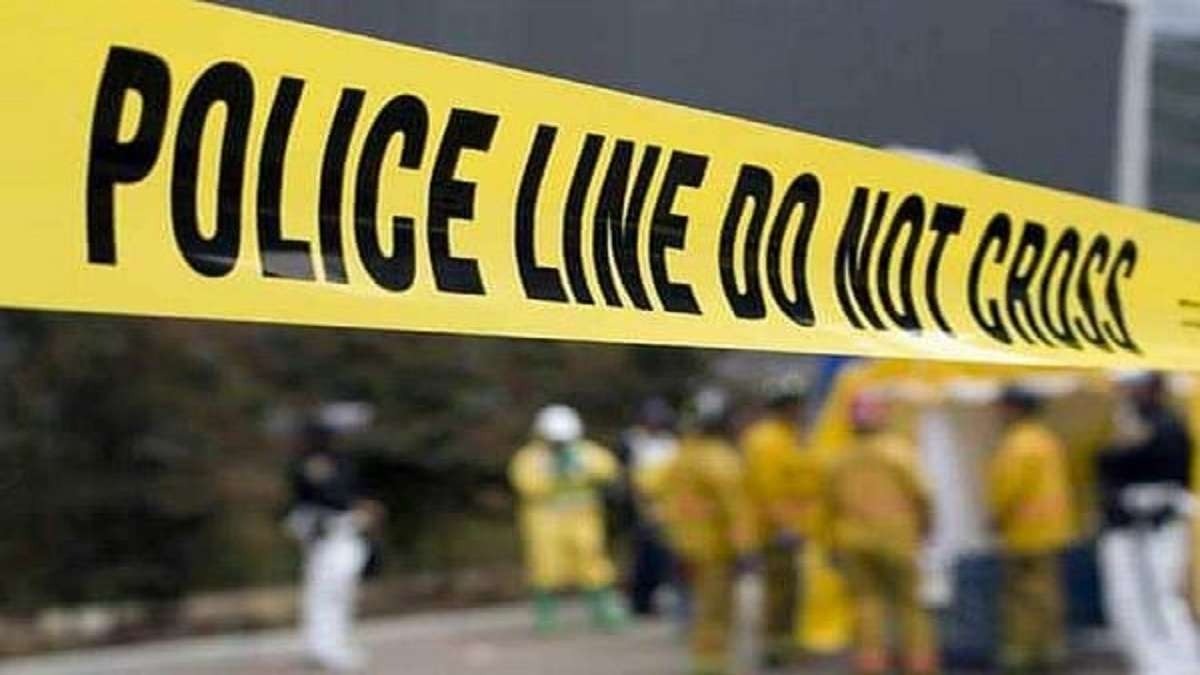
Shreveport(US) (AP): A gunman in Louisiana killed eight children in shootings at two different homes early Sunday in the nation's deadliest mass shooting in more than two years, police in Shreveport said.
The victims ranged in age from one to about 14 years old, said Shreveport police spokesperson Chris Bordelon. A total of 10 were shot and some of the children were related to the suspect, Bordelon said.
The gunman later died after a chase with officers who fired at the suspect, Bordelon said. The suspect stole a car while leaving the scene of the shootings and was followed by police, according to Bordelon.
Police did not release the name of the suspect but did say he was an adult male. The shootings were the result of a “domestic disturbance,” Bordelon said.
Officials said they were still gathering details at the crime scenes south of downtown Shreveport — the two homes and a third location.
“This is an extensive scene unlike anything most of us have ever seen,” he said.
It was the deadliest mass shooting in the US since eight people were killed in a Chicago suburb in January 2024, according to a database maintained by The Associated Press and USA Today in partnership with Northeastern University.
At a news conference outside the residence where one of the shootings occurred, officials appeared stunned, requesting patience and prayers from the community as they sorted through multiple crime scenes.
“I just don't know what to say, my heart is just taken aback,” Shreveport Police Chief Wayne Smith said. “I cannot begin to imagine how such an event could occur.”
“This is a tragic situation — maybe the worst tragic situation we've ever had,” said Tom Arceneaux, mayor of the city in northwestern Louisiana with about 180,000 residents. “It's a terrible morning.”
Louisiana State Police say their detectives have been asked by Shreveport police to investigate. In a statement, state police say no officers were harmed in the shooting that involved an officer after a police pursuit into Bossier City on Sunday morning.
State police are asking anyone with pictures, video or information to share it with state police detectives.
Louisiana Gov Jeff Landry said in a statement that he and his wife were heartbroken. “We're deeply grateful to the law enforcement officers and first responders working tirelessly on the scene,” he added.