Microplastics major threat to oceans: Expert at Mangaluru Lit Fest
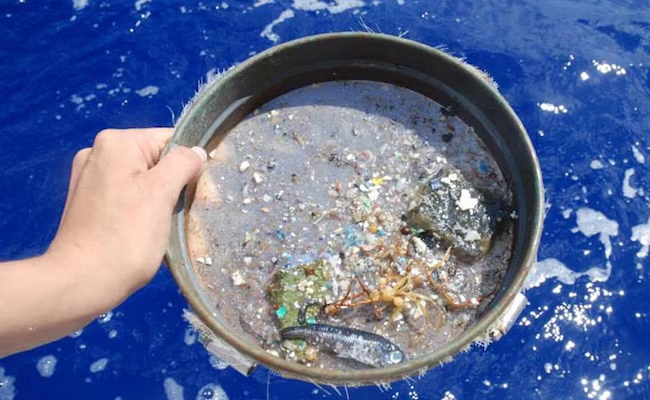
Mangaluru (Karnataka)(PTI): Marine pollution is rising at an alarming rate, with microplastics emerging as one of the most serious threats to ocean health, environmental expert Raghu Murtugudde said at the Mangaluru Lit Fest on Saturday.
Speaking during a session titled 'Netravathi-Nile: Local Rivers, Global Stakes', Murtugudde said large quantities of waste were being dumped into the seas by ships, significantly worsening marine pollution.
"The impact on marine life is severe. Microplastics, in particular, are creating multiple ecological problems and are gradually entering the human food chain through fish," he said.
While efforts are being made globally to reduce plastic waste, Murtugudde stressed that microplastics require specific regulatory attention.
"Plastic use is being addressed to an extent, but there is an urgent need for stricter measures to curb microplastics," he added.
Highlighting the historical interconnectedness of riverine and maritime civilisations, environment writer Udayaraj drew parallels between India’s Netravathi River and Egypt’s Nile.
"Centuries ago, trade flourished between India and Egypt. Indian muslin cloth was exported to Egypt, showing how waterways connected civilisations long before modern transport," he said.
The speakers underlined that environmental challenges today are not confined by borders and that local ecological damage can have global consequences.
The session was moderated by Prashanth Vaidyaraj, with C J Giridhar Kamath also participating.
The discussion was part of a series of thematic conversations at the ongoing fest, which brings together scholars, environmentalists, and public intellectuals.
The eighth edition of the two-day Mangaluru Lit Fest, organised by the Bharat Foundation, began on January 10 at the TMA Pai International Convention Centre.
Let the Truth be known. If you read VB and like VB, please be a VB Supporter and Help us deliver the Truth to one and all.
Centre spent Rs 76.13 lakh on print media ads for RSS centenary, reveals RTI

New Delhi: The Union Ministry of Culture allegedly spent Rs 76.13 lakh on print advertisements marking the 100-year celebrations of the Rashtriya Swayamsevak Sangh (RSS), according to a Right to Information (RTI) reply.
The information was sought by RTI activist Ajay Basudev Bose, who filed an application seeking details on expenditure incurred by the ministry for advertisements commemorating the RSS centenary.
Bose shared a picture of the reply from the ministry on his official ‘X’ handle.
“It is informed that an amount of Rs 76,13,129 has been spent on advertisement given in various print media by the Ministry of Culture on the occasion of the completion of 100 years of RSS,” the government’s reply stated.
RTI reply shows Min of Culture Govt of India spent a Whopping Rs 76L,13K,129 on Advertisement in Print Media on occasion of 100 yrs of #RSS
— AJAY Basudev Bose (@AjayBos93388306) April 16, 2026
When Everyone knows RSS is Not Registered & Does not Pay any Tax is it justified to spend Tax Payers Money on such Private event??@RSSorg… pic.twitter.com/dW4IUtdNCg
Bose questioned the expenditure in the post X, “when Everyone knows RSS is Not Registered & Does not Pay any Tax is it justified to spend Tax Payers Money on such Private event??”
Reacting to the development, Karnataka’s IT-BT and Panchayat Raj Minister Priyank Kharge also criticised the spending.
In a post on X, he asked why public money was being used for what he described as a “private ideological project.”
"Modi Sarkar spent Rs 76,13,129 of public money on newspaper advertisements to celebrate 100 years of the RSS. Why is Government spending taxpayers money on an unregistered, non-tax-paying organisation to celebrate their centenary?," he added.
Why is public money being used to serve a private ideological project?
— Priyank Kharge / ಪ್ರಿಯಾಂಕ್ ಖರ್ಗೆ (@PriyankKharge) April 16, 2026
Modi Sarkar spent ₹76,13,129 of public money on newspaper advertisements to celebrate 100 years of the RSS.
Why is Government spending taxpayers money on an unregistered, non-tax-paying organisation to… pic.twitter.com/EoZ6Pim3IM
According to reports, the RSS describes itself as a volunteer-based organisation and has stated that it functions as a body of individuals rather than a registered entity.
Founded by Keshav Baliram Hedgewar in 1925, the organisation is marking its centenary year beginning from Vijaydashami in 2025, with the milestone observed on October 2.