Nasir murder case: Mangaluru court sentences four convicts to life imprisonment

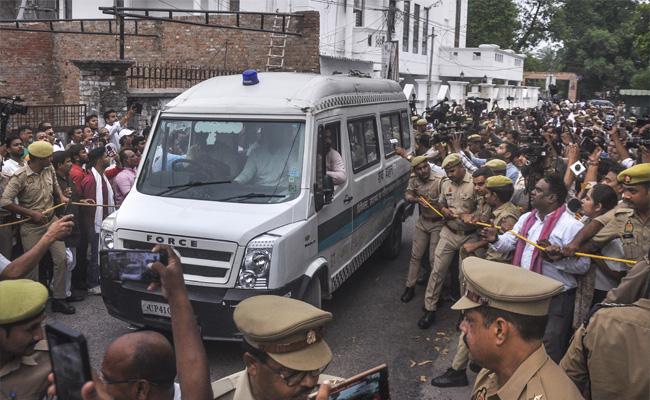
Mangaluru (PTI): A court here has sentenced four persons to life imprisonment in a 2015 murder case.
The additional district and sessions court convicted Vijeth Kumar (22), Kiran Poojary (24), Aneesh (23), and Abhijith (24) on April 8 for the murder of Mohammed Nasir.
Pronouncing the sentence on Tuesday, the first Additional District and Sessions Judge, H S Mallikarjuna Swamy, also imposed a fine of ₹25,000 each on the four convicts.
On August 6, 2015, the accused attacked Mohammed Nasir and Mohammed Mustafa, an auto-rickshaw driver, with swords while Nasir was travelling in Mustafa's vehicle. Nasir was killed in the assault, while Mustafa survived.
According to the prosecution, the motive behind the murder was retaliation for an attack on Vijeth Kumar and Abhijith the previous night by some Muslim youths in Bantwal.
The four accused followed the Nasir's auto-rickshaw from Melkar to Mudipu on motorcycles. Upon confirming the identities of the occupants as Muslims, they carried out the fatal attack, the prosecution said.
While delivering the sentence, the judge directed that the fine amount be paid to the victim's wife, Rahamath, along with compensation from the State Legal Services Authority. Additionally, the complainant, Mustafa, is entitled to compensation from the same authority, the court said.
Let the Truth be known. If you read VB and like VB, please be a VB Supporter and Help us deliver the Truth to one and all.
Congress using hijab issue to pacify minority anger, alleges Karnataka LoP R Ashoka
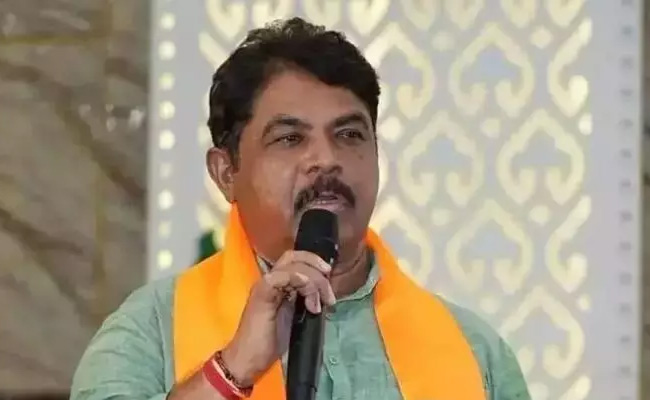
Bengaluru: Leader of Opposition in the Assembly R. Ashoka has accused the Congress government of using the hijab issue to placate what he described as discontent among minority voters after the Davanagere by-election.
In a post on X on Wednesday, Ashoka alleged that the state government, instead of addressing issues such as price rise, corruption, farmers’ distress and law and order, was attempting to retain its minority vote base by reviving the hijab issue.
Referring to the 2022 dress code introduced by the BJP government, which prohibited hijab in schools and colleges, Ashoka said the Karnataka High Court had upheld the policy and emphasised the importance of discipline in educational institutions.
He questioned the Congress government’s move to revisit the issue and asked whether setting aside the court-backed policy to benefit one community could be described as secularism.
Ashoka further alleged that while the government was willing to permit hijab, it continued to prohibit saffron shawls.
He accused the government of dividing students on religious lines rather than treating schools and colleges as spaces of equality.
Drawing a comparison with Mamata Banerjee’s government in West Bengal, Ashoka claimed that excessive appeasement politics had harmed the state and warned that the Congress in Karnataka could face a similar political response.
He said voters in Karnataka would teach the Congress a lesson for what he termed “vote-bank politics” and for compromising constitutional and judicial principles.