New Mangaluru Port welcomes Seven Seas Voyager, Second Cruise Ship of the season
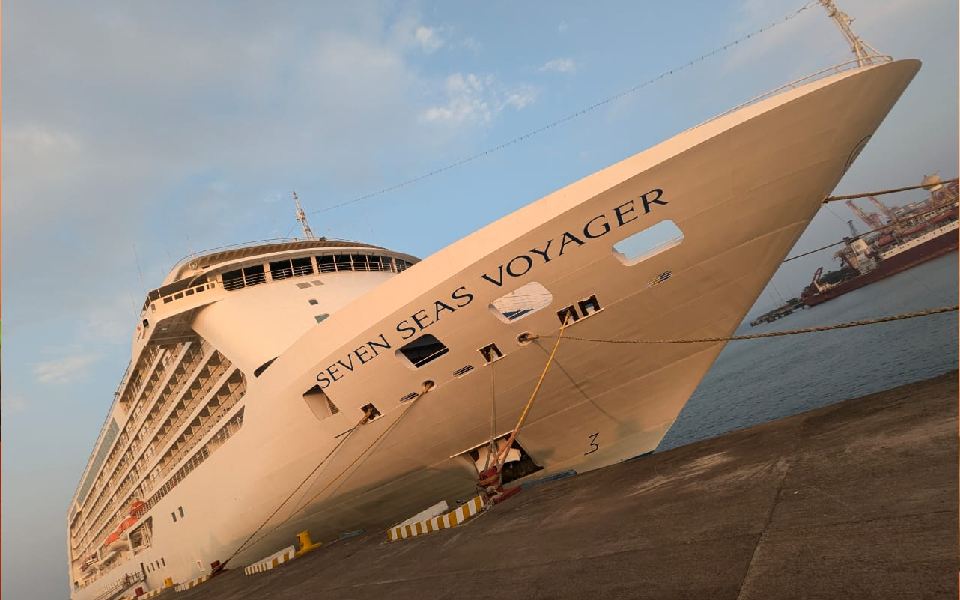
Mangaluru (Karnataka), Dec 27: The New Mangaluru Port Authority (NMPA) on Friday, welcomed the Bahamian luxury cruise ship Seven Seas Voyager, marking another milestone in its journey as a premier global cruise tourism destination.
Operated by the Norwegian Cruise Line, Seven Seas Voyager docked at the port at 6:30 AM and departed at 5:30 PM, officials said.
According to a statement by NMPA, the ship carried 650 passengers and 450 crew members. Measuring 206.5 meters in length and boasting a gross registered tonnage (GRT) of 42,363. The vessel is sailing the Arabian Sea on an itinerary that includes stops at Fujairah, Mumbai, Goa, New Mangaluru, and Cochin before reaching Colombo.
Passengers were accorded a traditional Indian welcome, with local cultural troupes performing classical and folk dances to set the tone for an immersive experience of Karnataka's rich heritage.
The port's reception area was adorned with traditional decorations, creating a vibrant atmosphere reflective of the region's hospitality.
"To enhance their visit, guided tours were arranged to some of Karnataka's most iconic attractions. The Gomateshwara Temple in Karkala, featuring a 42-foot monolithic statue of Bahubali, an important Jain heritage landmark," it stated.
Visitors also explored the Thousand Pillar Temple in Moodbidri, an architectural marvel showcasing intricate carvings and reflecting the cultural zenith of the region's past.
Another highlight was a visit to Soans Farm, known for its sustainable practices and exotic fruit cultivation, the Kalbhavi Cashew Factory and the Gokarnanatheshwara Temple, travellers also had the opportunity to explore bustling local markets, taking home handcrafted souvenirs and indulging in the region's culinary delights.
"The arrival of the Seven Seas Voyager follows the visit of MS Silver Whisper, which marked the beginning of this year's cruise season at NMPA. With consistent arrivals of luxury cruise liners, the port has emerged as a vital gateway for international tourists exploring coastal Karnataka," it stated.
NMPA proudly welcomes the luxurious Seven Seas Voyager from the Bahamas! With 650 passengers & 450 crew onboard, the ship arrived on 27th Dec at 6:30 AM & departs at 5:30 PM. Another milestone in promoting cruise tourism & hosting world-class voyages! #CruiseTourism pic.twitter.com/dZg0Q2Kd6X
— New Mangalore Port Authority (@NewMngPort) December 27, 2024
Let the Truth be known. If you read VB and like VB, please be a VB Supporter and Help us deliver the Truth to one and all.
Two people killed as poultry vehicle rams into parked truck in Belagavi
Belagavi (Karnataka) (PTI): Two people were killed, and another was severely injured after a goods vehicle transporting poultry birds allegedly rammed into a stationary truck on a national highway in Belagavi in the early hours of Tuesday, police said.
The deceased have been identified as Wasim (28) and Mubarak (22), both natives of Shivamogga district, they said.
The driver of the vehicle, Basavaraj Eerappa Hanchinamani (37), suffered critical injuries and has been admitted to a hospital, police said.
According to police, the accident occurred when the driver reportedly lost control of the vehicle, allegedly due to drowsiness, and crashed into a truck parked along the highway.
The goods vehicle was en route from Kolhapur to Sorab in Shivamogga district, carrying poultry. Several chickens were also killed in the impact, a senior police officer said.
Police personnel from the Hirebagewadi Police Station visited the spot and conducted an inspection.
Injured people and the bodies of the deceased were shifted to a hospital, police added.