NIA files charge sheet in Mangaluru pressure cooker IED blast case
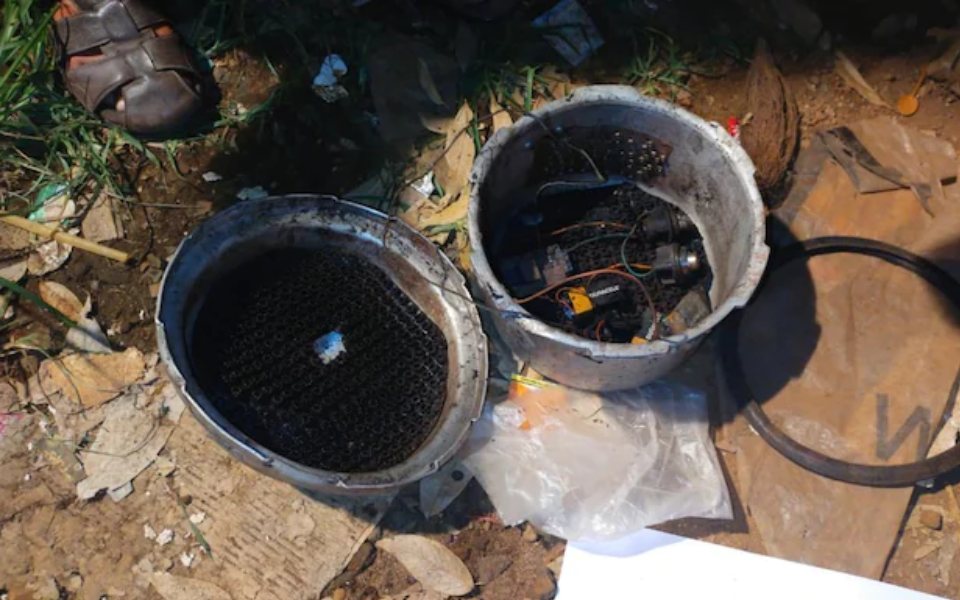
New Delhi, Nov 29: The NIA on Wednesday filed a charge sheet against two arrested accused in the alleged Islamic State-sponsored pressure cooker blast in Karnataka's Mangaluru last year, an official said.
The charge sheet was filed against Mohamed Shariq and Syed Shariq in a special National Investigation Agency (NIA) Court under various sections of the Indian Penal Code and the Explosive Substances Act, a spokesperson for the federal agency said.
Mohamed Shariq, who was carrying the pressure cooker IED (improvised explosive device) in an autorickshaw, had allegedly planned to plant it at Mangaluru's Kadri Manjunatha Temple with the aim to create terror among the Hindu community. The low intensity bomb, however, accidentally exploded on the way on November 19, 2022, the spokesperson said.
The official said a case was registered on November 23, 2022, and Mohamed Shariq and co-accused Syed Shariq were arrested by the NIA in July.
According to the investigations, the two along -- with an online handler -- had planned the explosion as part of a conspiracy to establish a Caliphate (Sharia law), the spokesperson said.
As part of the conspiracy, Mohamed Shariq prepared the pressure cooker IED and Syed Yasin -- another accused -- provided material support, the official added.
The official said Mohamed Shariq first came on the radar of security forces in November 2020 when he was arrested by the Karnataka Police for painting a pro-terror graffiti in Mangaluru City.
He and his associates had put up the graffiti in support of the global terror outfit, the Islamic State, the spokesperson said.
Subsequently, Mohamed Shariq was also named in the Shivamogga Islamic State conspiracy case of 2022, in which 10 accused have been arrested so far.
Of the 10 arrested, nine -- including Mohamed Shariq and Syed Yasin -- were chargesheeted on June 30 for radicalising and recruiting gullible Muslim youths, raising funds and conducting trial blasts to further the anti-India activities of the Islamic State, the spokesperson said.
Let the Truth be known. If you read VB and like VB, please be a VB Supporter and Help us deliver the Truth to one and all.
No unannounced load shedding in Kerala, outages due to overload, says Minister
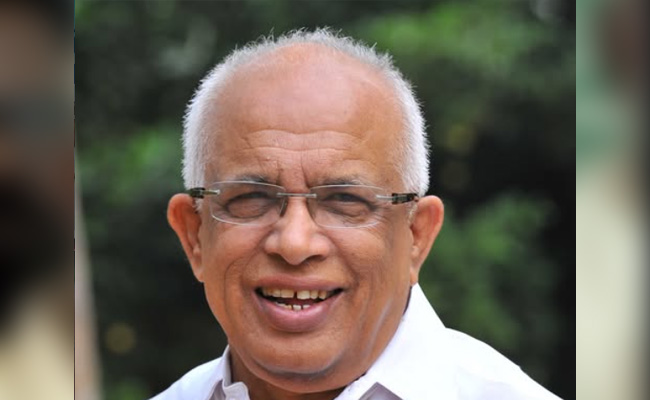
Palakkad (PTI): Kerala Electricity Minister K Krishnankutty on Saturday said there was no unannounced load shedding in the state, attributing recent power interruptions to temporary overload caused by high consumption.
Clarifying concerns raised from various parts of the state, the minister said the disruptions are not deliberate but occur when demand peaks, particularly between 10 pm and 11 pm.
"It is not being done intentionally. Power consumption has risen sharply, and when there is excessive and indiscriminate usage, the system experiences overload, leading to natural supply interruptions," he told reporters here.
His remarks come amid complaints that several areas have been witnessing frequent power cuts, often lasting around 15 minutes and occurring multiple times during the night.
Krishnankutty said the state's power demand has crossed 6,195 MW, putting pressure on the supply system. He added that around 70 per cent of Kerala's electricity is procured from outside, and existing power banking arrangements have been exhausted.
"We have approached the Regulatory Commission seeking permission to purchase more power. However, this will come at a higher cost," he said.
The minister said the government is trying to avoid increasing electricity tariffs and urged consumers to exercise restraint in usage to help manage the situation.
Responding to opposition criticism over the ruling LDF's earlier claims of a decade without power cuts, he said the current situation is not unique to Kerala.
A power crisis is emerging across the country, he said, and sarcastically asked the Opposition to take note of the role of natural factors in this.
Krishnankutty expressed confidence that the situation would improve within two days, while cautioning that long-term energy security would depend on enhancing in-state power generation.
He also warned that future generations could face serious challenges if adequate electricity production capacity is not developed within Kerala.